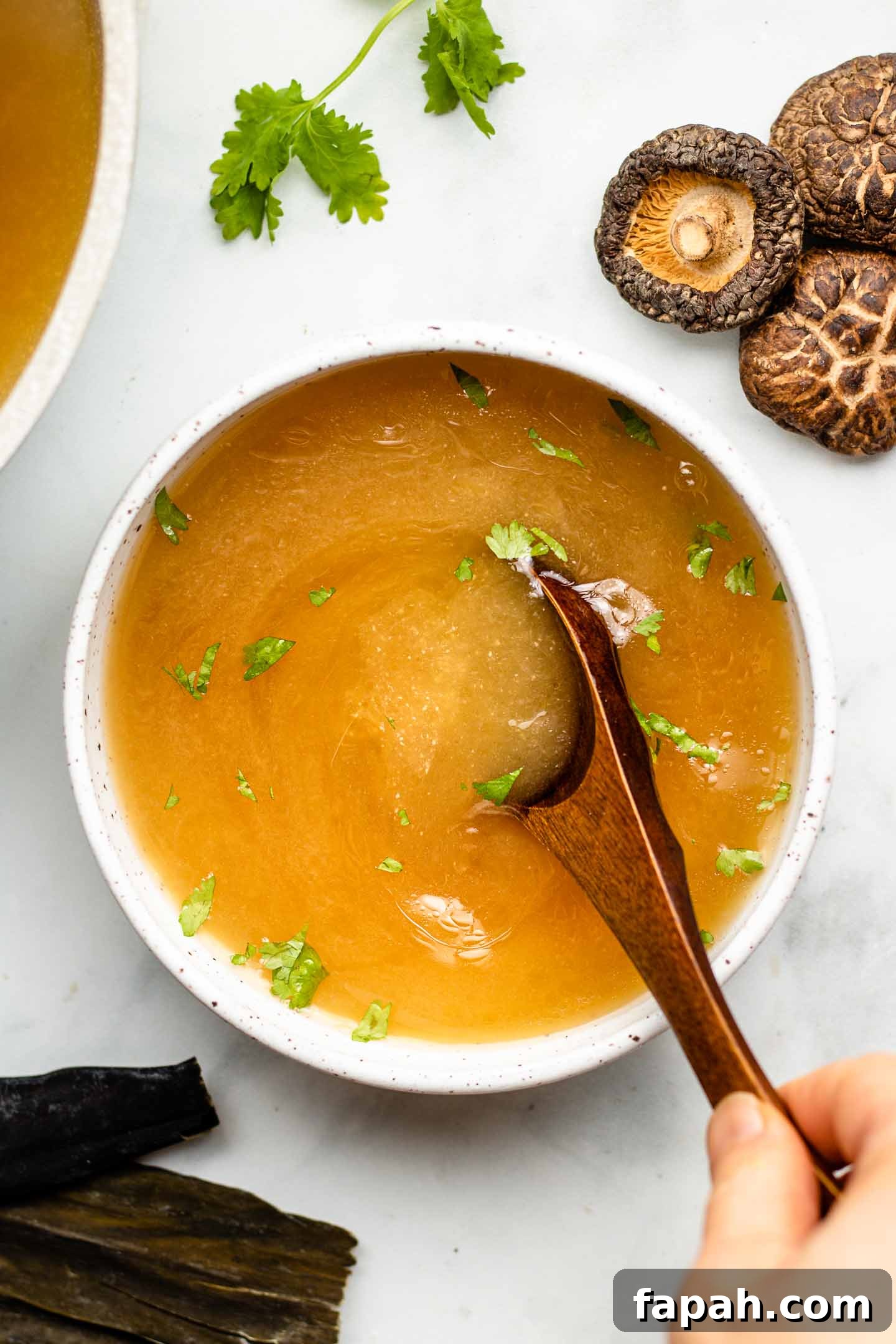
Vegan Umami Broth made with vegetable scraps and umami-packed ingredients for a deeply flavorful vegetable broth. This vegan “bone” broth is soothing, gut-friendly, and perfect for sipping or using in noodle soups, stews, and more.
Now that the temperatures are cooling, I find myself craving warm drinks, soups, and stews. One of my favorite morning and evening rituals is a simple bowl of miso soup — it’s cozy and calming. When I want something with a little more depth and restorative warmth, I reach for this umami-packed vegan broth. It has a richer, more savory profile and is built from ingredients that are gentle on the gut. Think of it as a plant-based take on bone broth: comforting, nourishing, and versatile.
This broth is especially satisfying because it makes use of vegetable scraps, takes roughly an hour to develop full flavor (with minimal hands-on time), and can be adapted to what you have on hand. I’ve made large batches to recover from illness or medical procedures, and it always helps restore a sense of well-being. It’s not a medical cure, but it’s a soothing ritual that tastes great and keeps well in the fridge.
Umami Broth Ingredients
The broth is composed of three main parts: vegetables, umami boosters, and optional flavor enhancers.
Vegetables
I often save vegetable peels, stems, and ends in a container in the freezer until I have enough to make a batch. You don’t need a specific list — use whatever scraps or produce you have: carrot tops and peels, celery ends, onion skins, mushroom stems, squash peels, leafy green stems, and so on. These scraps form the body of the broth and reduce waste.
Umami Boosters (good for flavor and the gut)
- dried shiitake mushrooms
- kombu (or wakame)
- miso paste (koji or red miso recommended)
- fresh ginger
- citrus peels (lemon or orange)
Optional add-ins
- turmeric
- chili pepper
- peppercorns
- sesame oil
- soy sauce or tamari
There’s flexibility here: omit or swap ingredients based on availability and taste. The broth will still be delicious.
How to Make It
This broth takes about an hour on the stove, but it requires very little active time — mostly simmering and a final strain.
- Place all ingredients except the miso paste in a large pot. Add water and bring to a boil, then reduce to a low simmer. Let simmer for 45–60 minutes, or up to 90 minutes for a deeper flavor. The kitchen will fill with a fragrant, savory aroma.
- Strain the solids through a fine-mesh sieve or strainer, pressing gently to extract the liquid. Return the clear broth to the pot.
If you’re serving immediately, dissolve the miso paste into a small amount of warm broth in a fine mesh sieve or bowl, then whisk it into the pot off the heat. Adding miso to boiling liquid can reduce its beneficial enzymes and probiotics, so mix it in at a lower temperature to preserve those qualities. If you’re storing the broth, keep the miso separate and add it when you reheat a serving.
Why you shouldn’t boil miso
Miso contains live cultures and delicate nutrients that can be diminished by prolonged or vigorous boiling. For maximum benefit, stir miso into warm (not boiling) broth right before serving. If you care only about flavor and not the live cultures, you can add miso earlier, but I recommend avoiding high heat after adding it.
Ways to Use Umami Broth
This broth is delicious on its own as a warming sip, but it also makes an excellent base for many recipes that call for vegetable broth. Ideas include:
- clear soups and ladle soups
- hearty stews
- noodle soups such as ramen, pho, udon, or soba
- creamy pasta sauces that benefit from a savory stock base
- vegetable gratins and casseroles
- cooking grains like rice or quinoa to infuse extra flavor
SAVE IT FOR LATER! ↓
I hope you enjoy this Vegetable Umami Broth and feel inspired to make it your own. If you recreate the recipe, share how it turned out — I love hearing which ingredients you used and how you served it. Tag and mention your recipe notes when sharing with friends or on social platforms.
Hungry for more? Subscribe to newsletters or follow your favorite food channels for additional plant-based recipes, tips, and seasonal cooking ideas. Homemade broth is an easy way to deepen flavor in everyday cooking and waste less in the kitchen.

Vegan Umami Broth
- Author: Lisa Kitahara
- Total Time: 70 minutes
- Yield: 8 cups
Ingredients
Broth
- 1 thick knob of ginger, sliced thinly
- 1 head of garlic, halved crosswise
- 8–10 spring onion bulbs
- 4 cups veggie scraps: carrots, celery, kale stems, squash stems, leafy greens, etc.
- 1 orange or lemon peel
- 80 g dried shiitake mushrooms
- 40 g kombu or wakame
- 10 cups water
- handful of cilantro
- 2 tbsp miso paste (about 30 g)
Optional add-ins:
- 1 tbsp turmeric
- 1 chili pepper
- 1 tbsp peppercorns
- 1 tbsp sesame oil
- 1 tbsp tamari or soy sauce
Instructions
- Add all ingredients except the miso paste to a large pot with the water. Bring to a boil, then lower the heat and simmer for 45–90 minutes until very fragrant.
- Strain the broth through a fine-mesh sieve, pressing gently on solids to extract flavor. Return the clear broth to the pot.
- To serve: off the heat, dissolve miso in a small amount of warm broth and whisk into the pot. Add optional seasonings to taste and serve warm.
- To store: cool the broth, transfer to an airtight container, and refrigerate. Keep miso separate until serving for best probiotic benefit. Reheat gently and add miso just before serving.
Notes
- Helpful Equipment: fine mesh sieve, large pot, ladle, strainer.
- Nutritional Information Disclaimer: Nutrition values are estimates calculated with an online tool and may vary based on ingredients and portion sizes.
- Prep Time: 10 minutes
- Cook Time: 60 minutes
- Category: Soups
- Method: Stovetop
- Cuisine: Gluten free, Japanese-inspired, Vegan
Nutrition
- Serving Size: 1 cup
- Calories: 20
- Sugar: 1.5g
- Sodium: 800mg
- Fat: 0.4g
- Saturated Fat: 0.1g
- Carbohydrates: 3.1g
- Fiber: 0.2g
- Protein: 1g
- Cholesterol: 0
Okonomi Kitchen participates in affiliate programs that help support recipe development. Thank you for supporting plant-based cooking and reducing food waste.