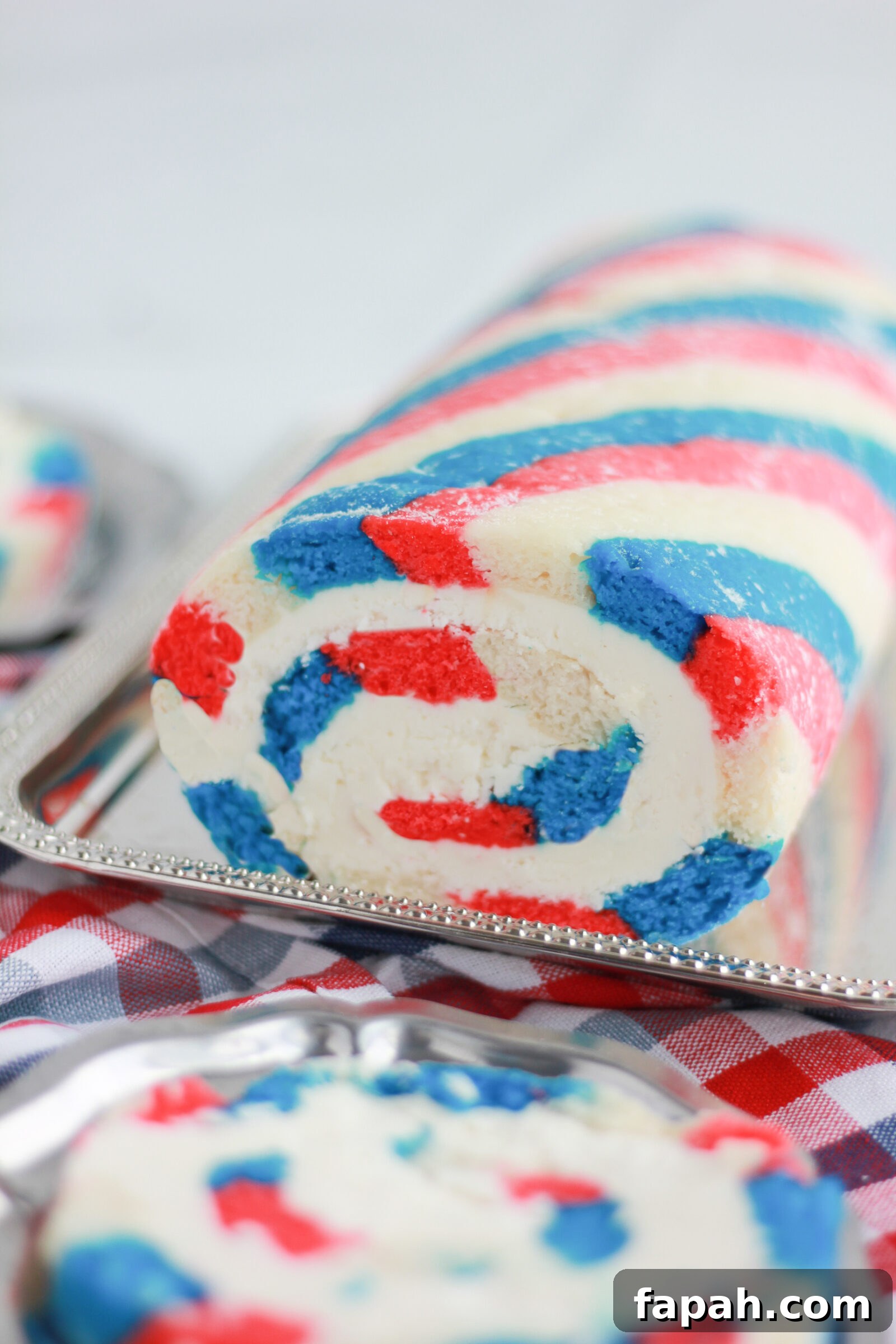
The cake roll is back, this time dressed up in red, white, and blue for 4th of July celebrations.
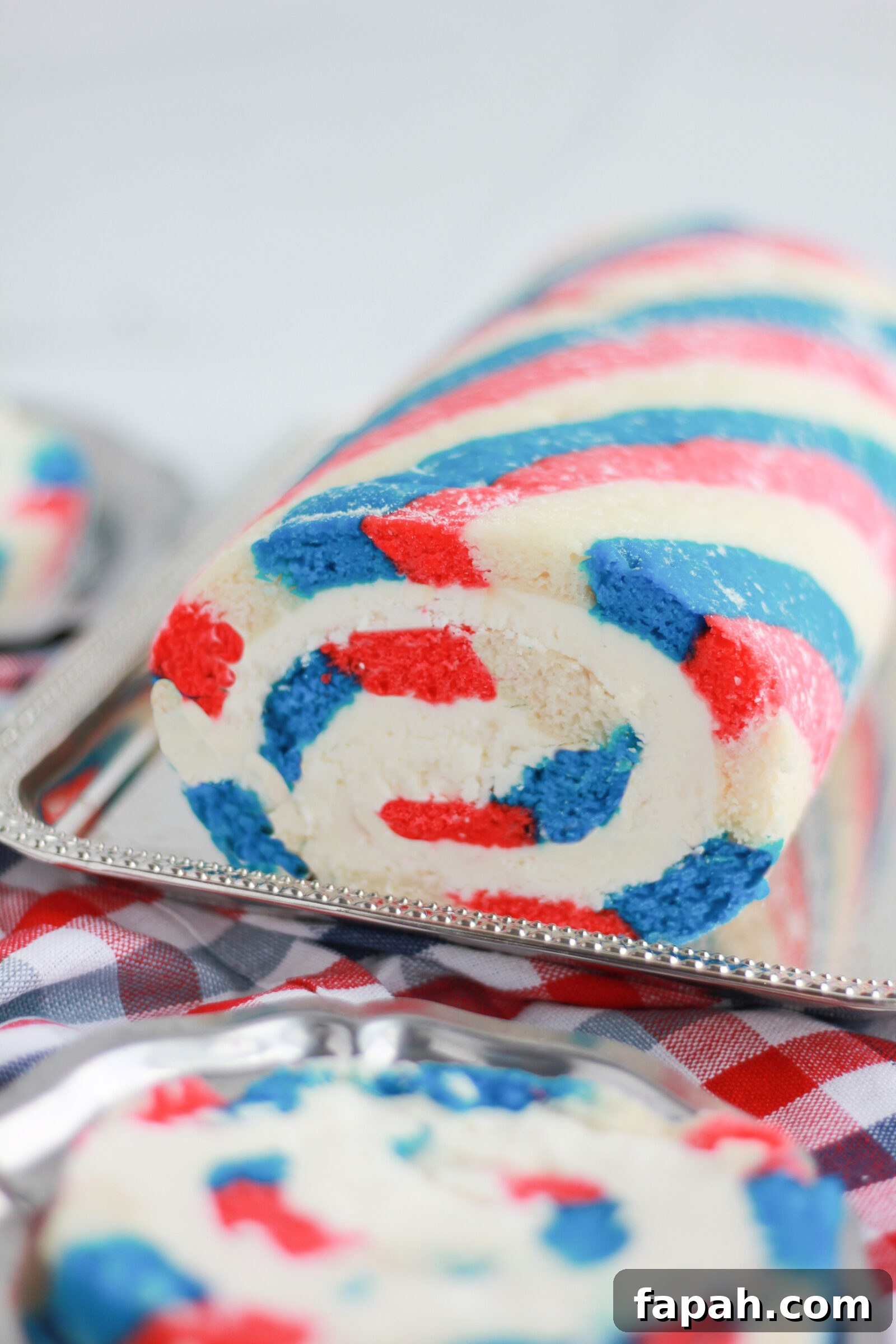
Instead of rainbow colors, this version uses patriotic shades to create a festive striped cake roll.
How to Make a Rainbow Roll Cake
Soft white buttercream spiraled inside a colorful sponge makes a bright, nostalgic dessert with a modern twist. This striped roll cake borrows from retro techniques while adding a fresh, celebratory look that’s perfect for summer gatherings.
I enjoyed both making and eating this cake. The idea began when I tested my white cake batter across several baking methods (full post coming soon). Turning the batter into a cake roll was an obvious choice and it worked beautifully. I experimented with various finishes and decided to try a red, white, and blue approach for a festive variation. Baking like this — experimenting and learning — helps you grow: sometimes things fail, sometimes they shine, and you always pick up tips for next time.
Rolled cakes can be a bit temperamental, especially when rolling and unrolling. Be patient, follow the steps below, and you’ll have a much better chance of success.
For a detailed, step-by-step photo tutorial, refer to the full guide on the original recipe source.
Stripe Cake Batter
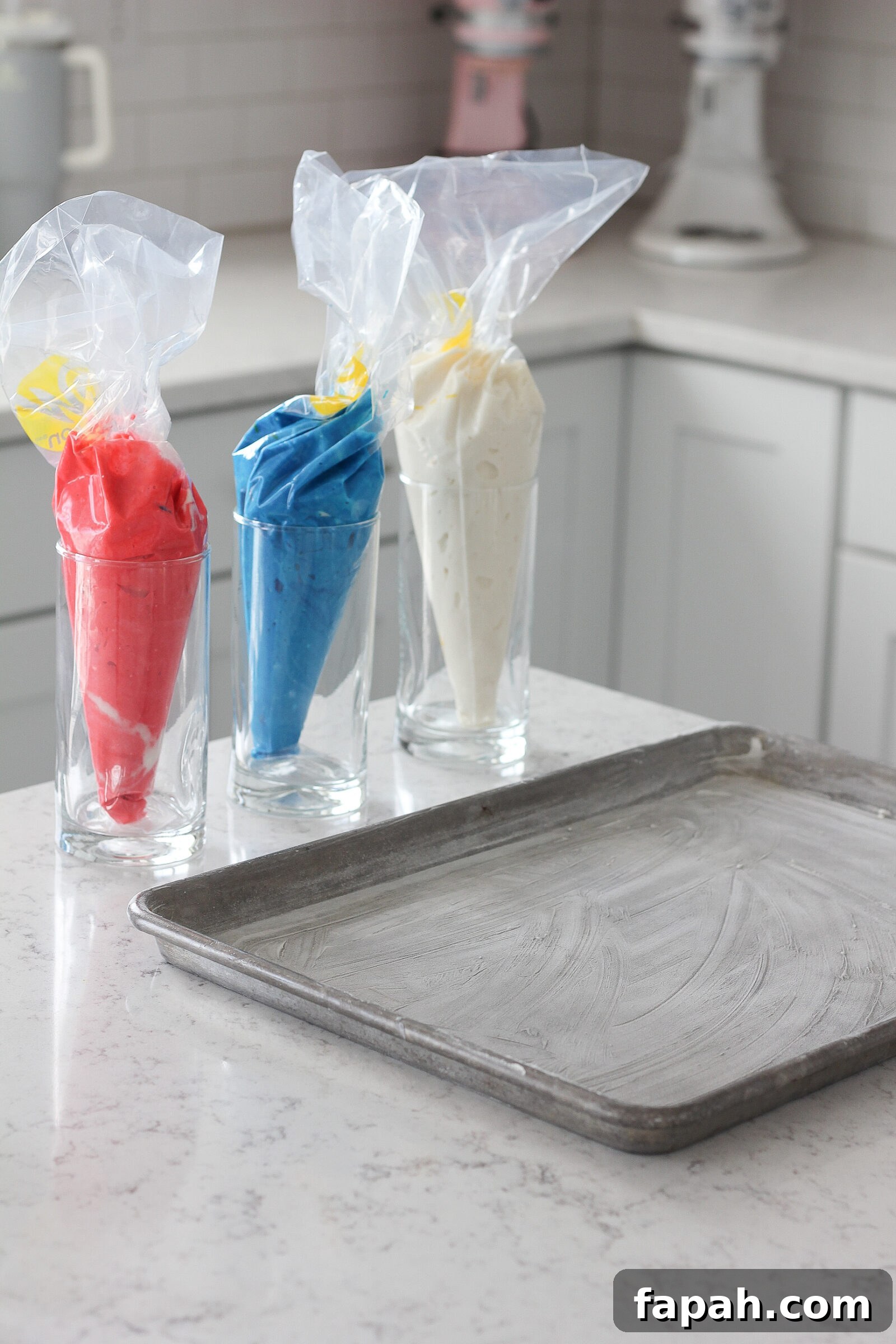
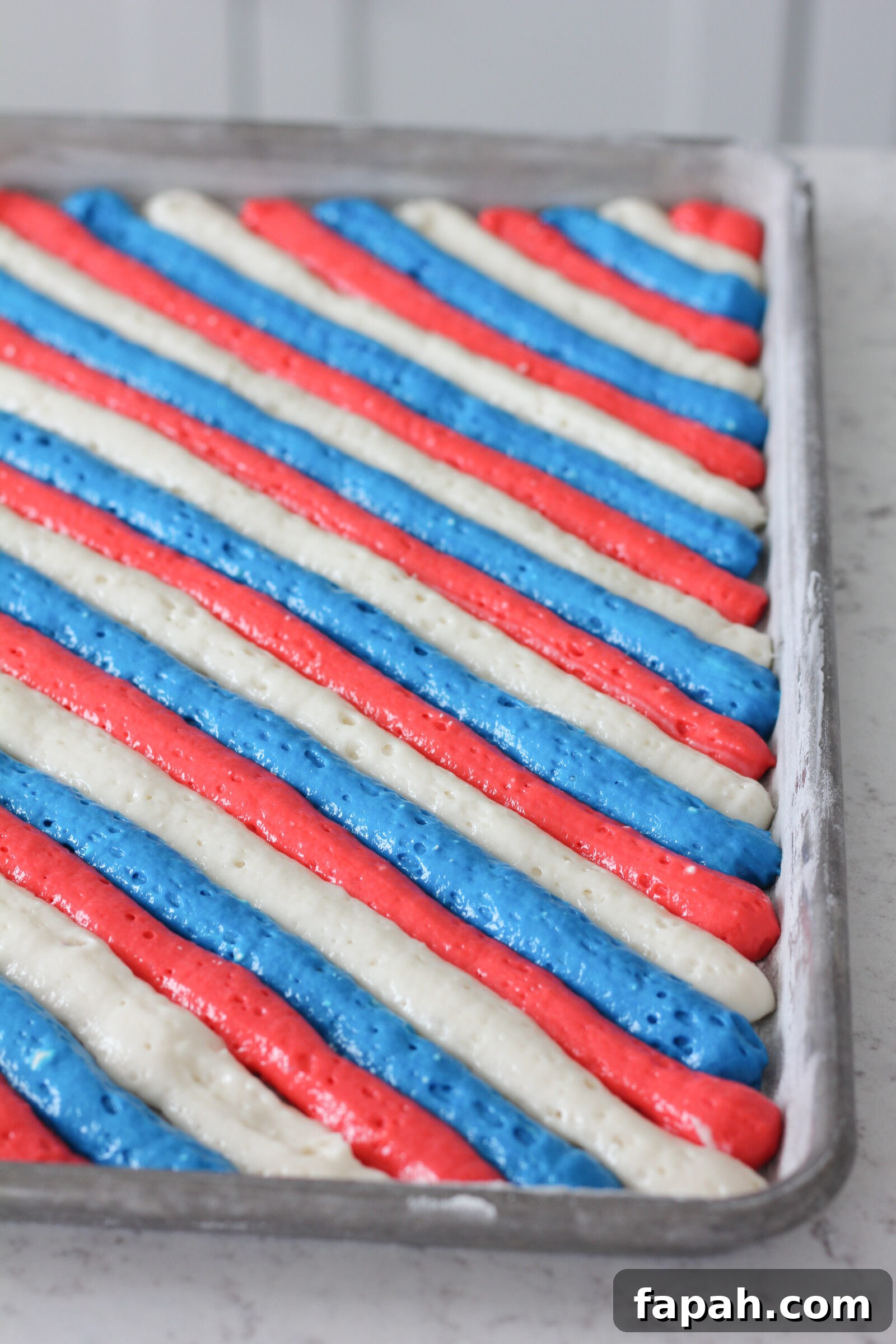
Step 1: Prepare a batch of white cake batter (recipe referenced below). Divide the batter into five portions and tint each one with gel food coloring to get your red, white (leave one uncolored), and blue shades. Place each colored batter into a piping bag. Tip: don’t snip the bag tips until you’re ready to pipe — batter is slightly runny and this minimizes mess.
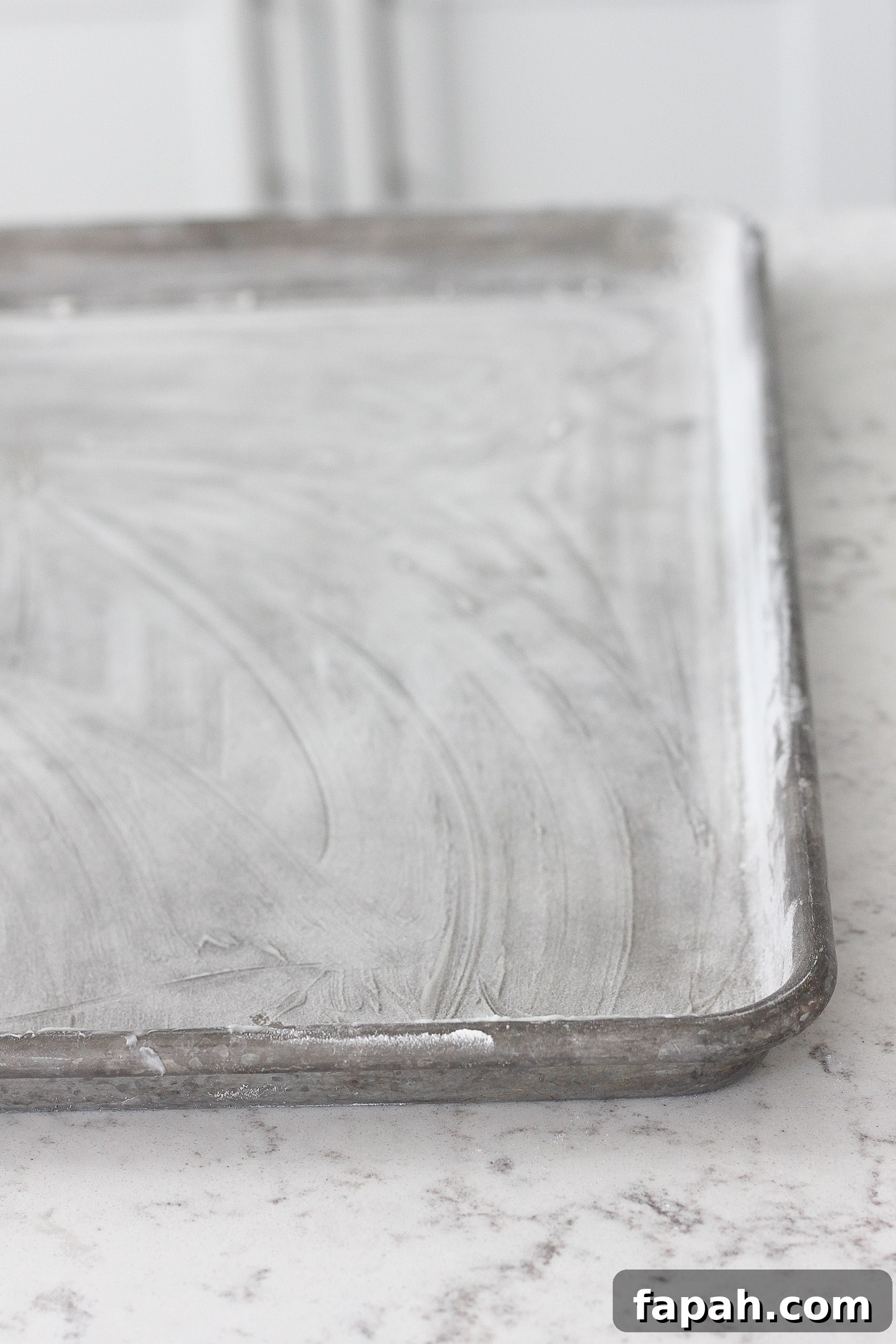
Step 2: Prepare your jelly roll pan by lightly coating it with shortening and dusting with flour. Using a light-colored pan helps bake evenly and makes it easier to release the cake after baking. A smooth, well-prepared surface also keeps stripes neat.
Step 3: Pipe stripes of batter across the pan. Work steadily so you don’t run out of a color before the pan is covered. Pipe thin lines first — you can add more batter later if needed. Once filled, tap the pan on the counter to level the batter and place it into the oven.
Step 4: Bake at 325°F on convection for about 17 minutes, or until the cake is fully set and springs back slightly when touched.
Step 5: Allow the cake to cool on the counter for 2–4 minutes. It should still be soft but stable enough to handle. Give it a short rest so it develops some tolerance for movement before rolling.
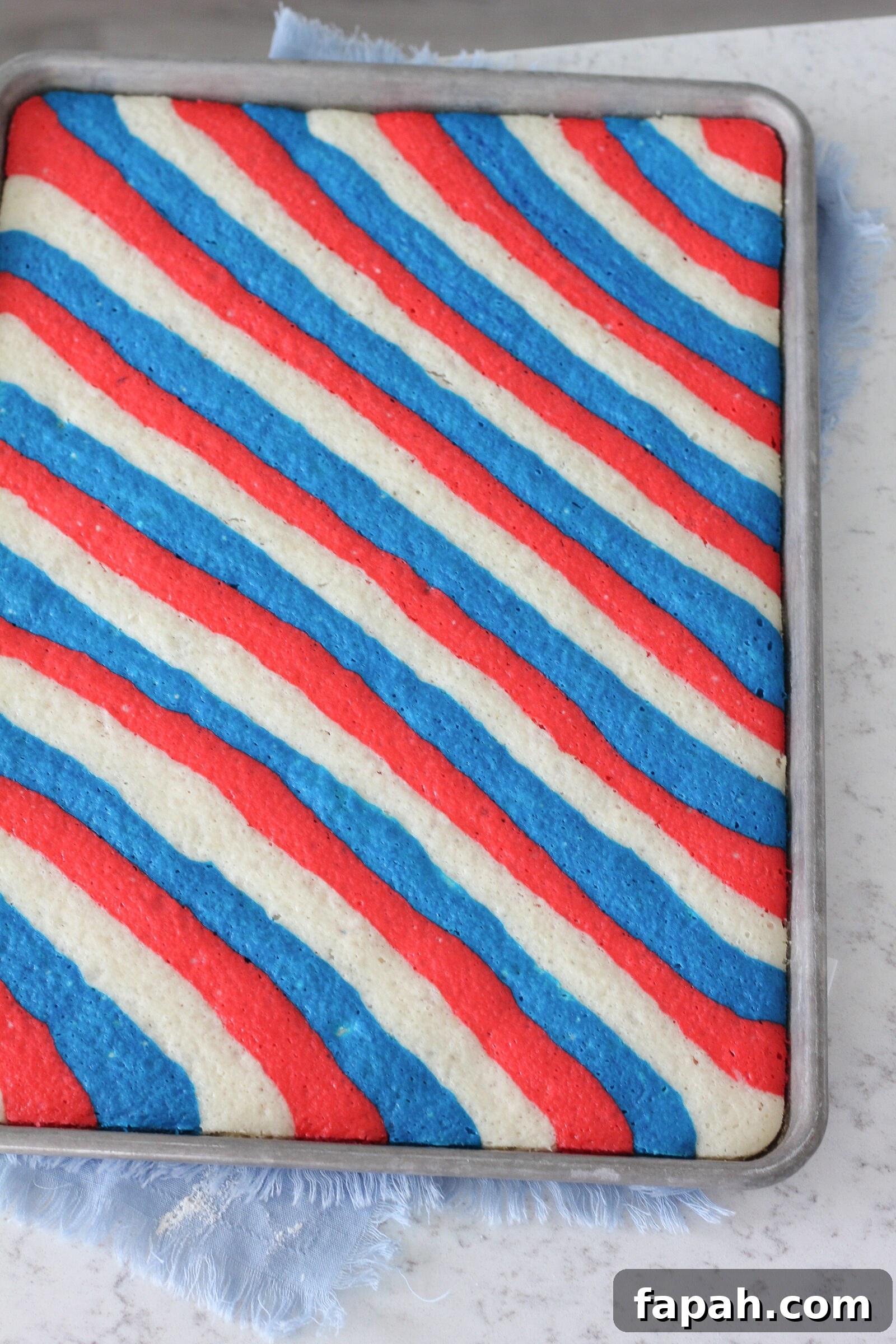
Step 6: Invert the cake onto a floured fabric napkin. The flour prevents sticking while the fabric helps form a smooth roll. Lay a second floured napkin on top of the cake and carefully roll the cake up along the shorter side of the rectangle. Let the rolled cake cool completely at room temperature.
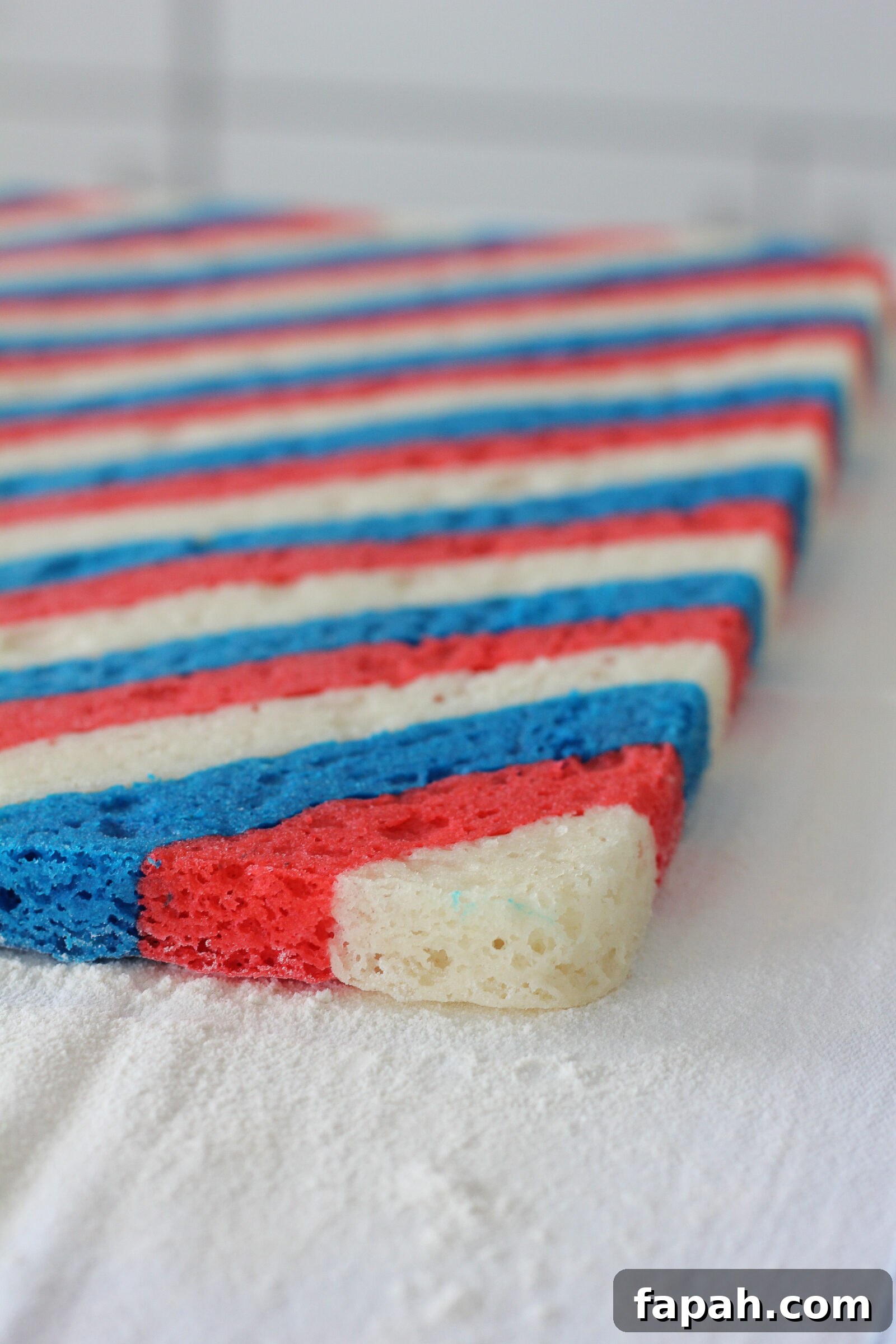
Step 7: Unroll the cooled cake gently. Small cracks are not a disaster — they happen when conditions like kitchen temperature vary. Spread a layer of vanilla buttercream evenly across the sponge. Using a cookie scoop to dollop frosting and an offset spatula to smooth it works well. Re-roll the cake, wrap it tightly in plastic wrap, and chill it: freeze for one hour or refrigerate for a few hours until firm. Working with a chilled cake produces cleaner slices.
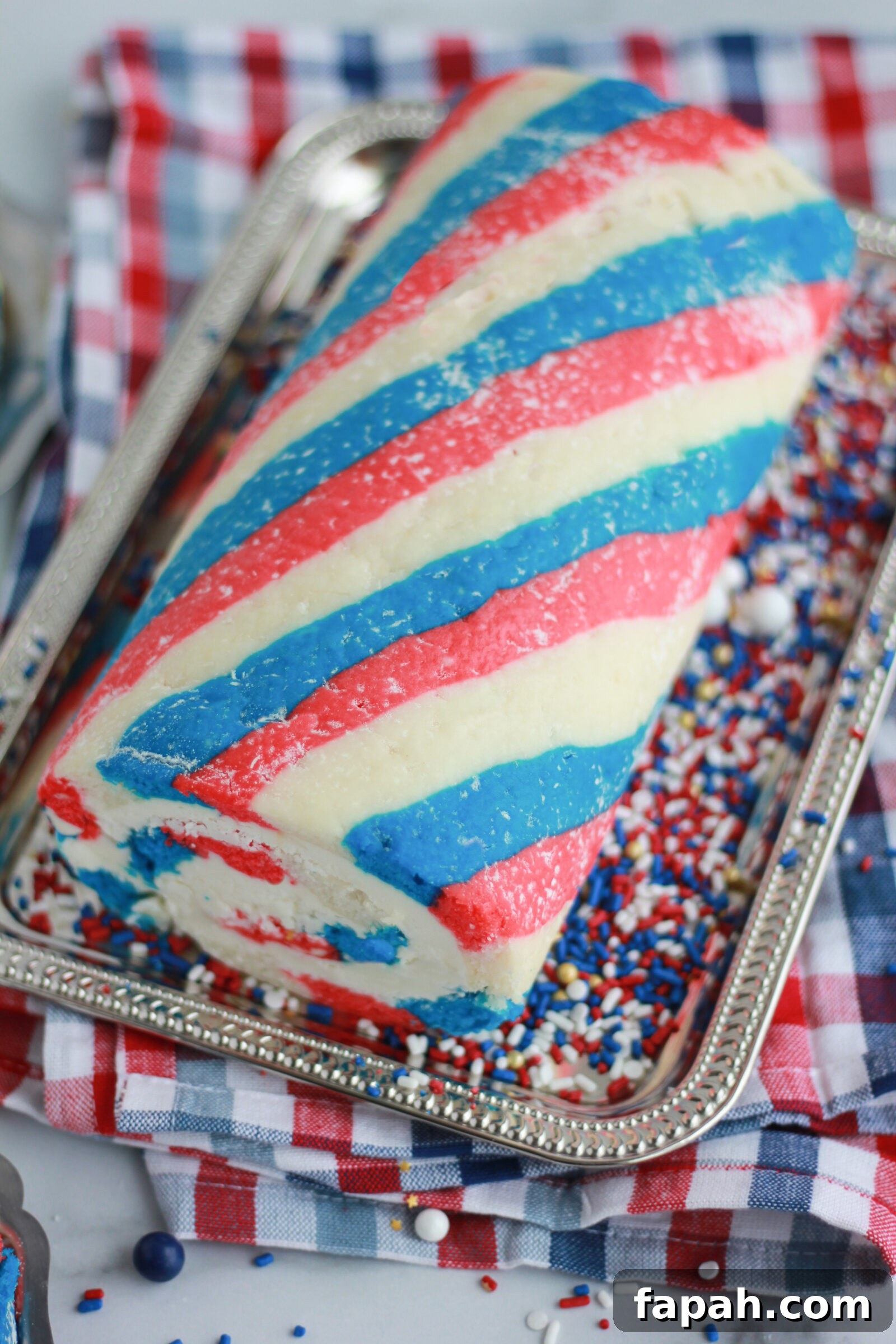
Step 8: For neat slices, use a hot knife and cut the cake while it’s cold. Each slice will show a slightly different swirl pattern, which adds to the charm of the finished roll.
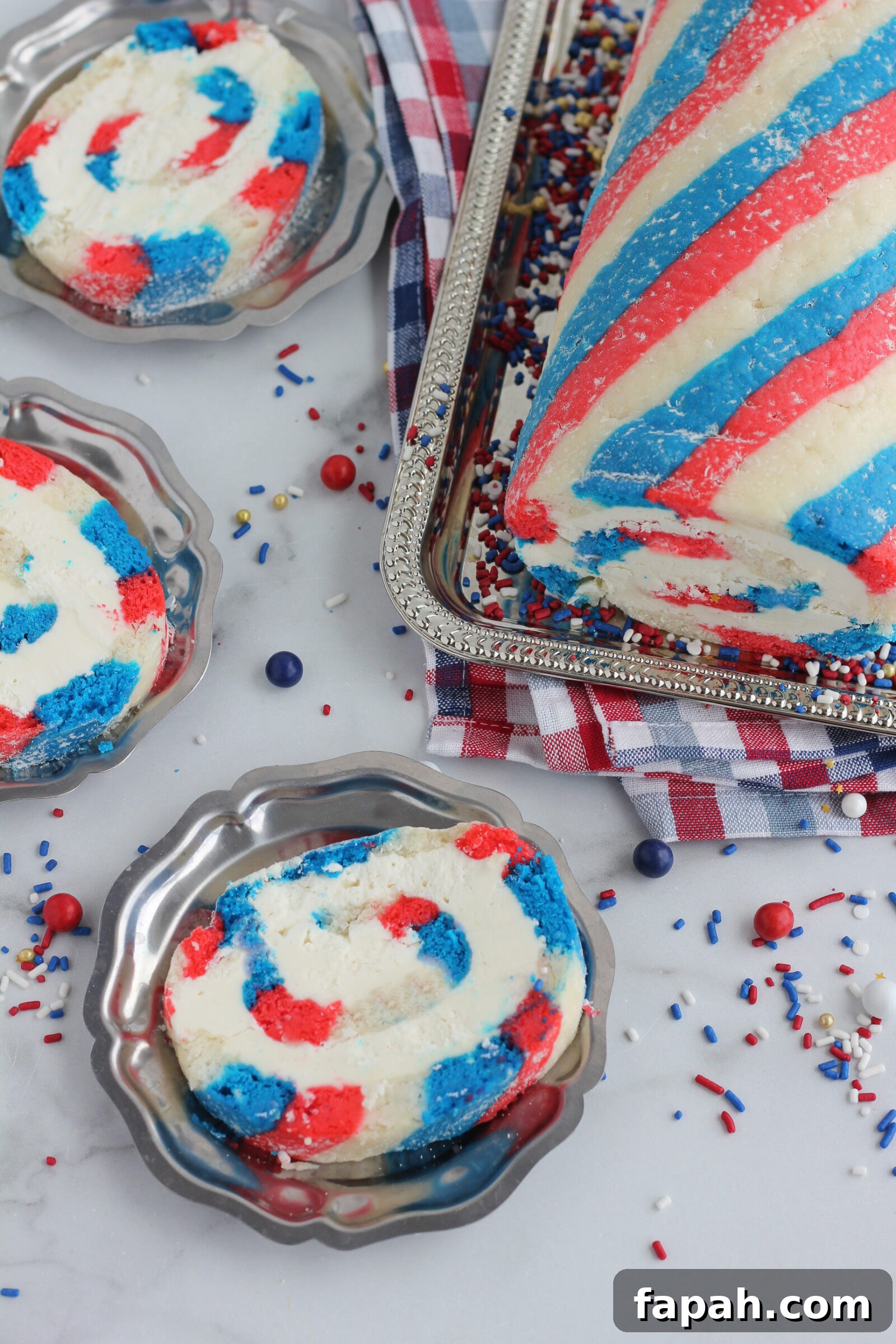
My white cake and vanilla buttercream recipes are linked in the original recipe source for full ingredient lists and measurements.
Below is a short video demonstrating the whole process for reference.
Enjoy your baking and have a great holiday weekend. If you try this cake, tag social posts so the baker can see your creations.
xo,
Mandy