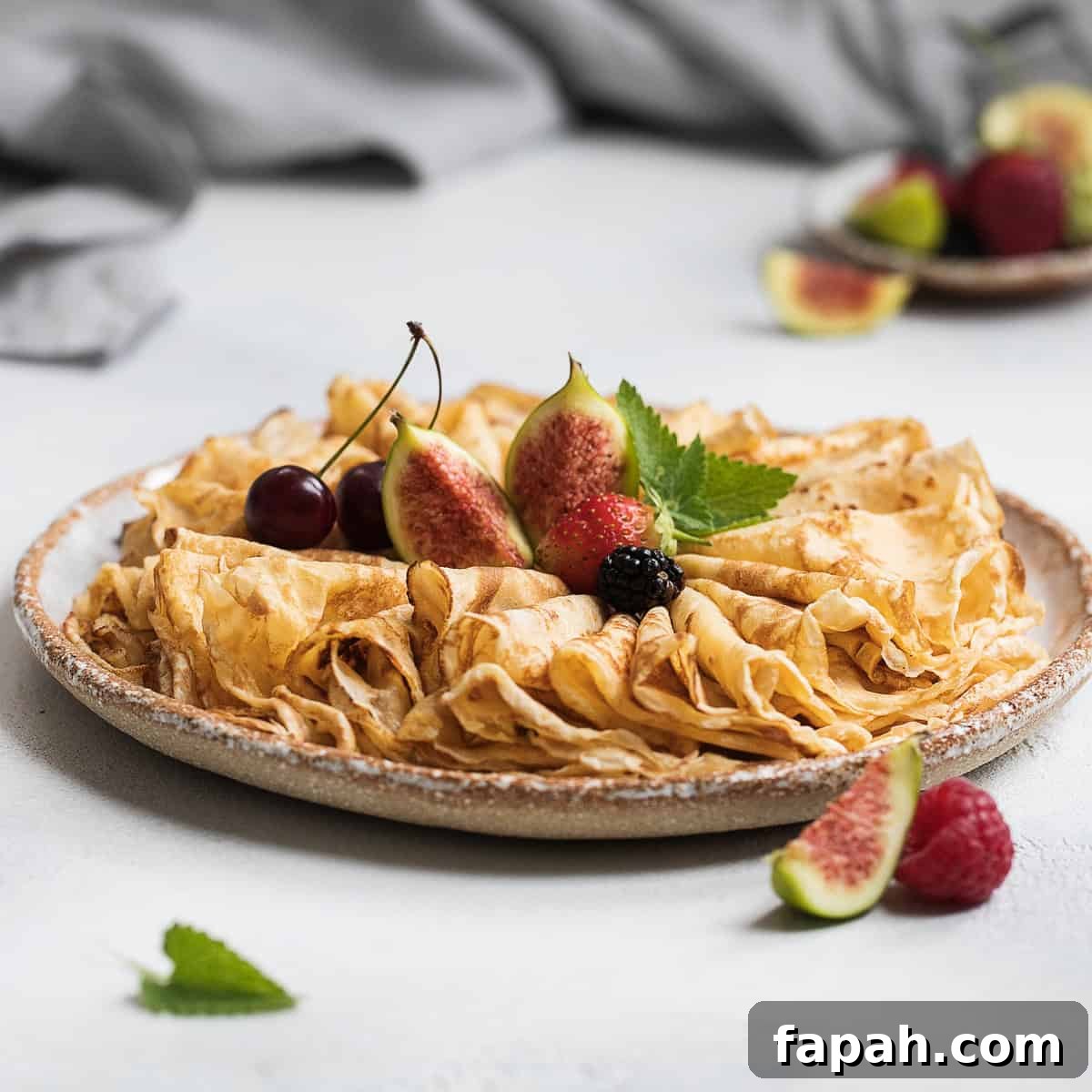
Learn how to make thin, tender French crepes using a handful of simple ingredients. This authentic recipe produces delicate crepes perfect for breakfast, brunch, dessert, or a light dinner. With a short resting time and a few straightforward techniques, you can recreate the classic crepes served throughout France.
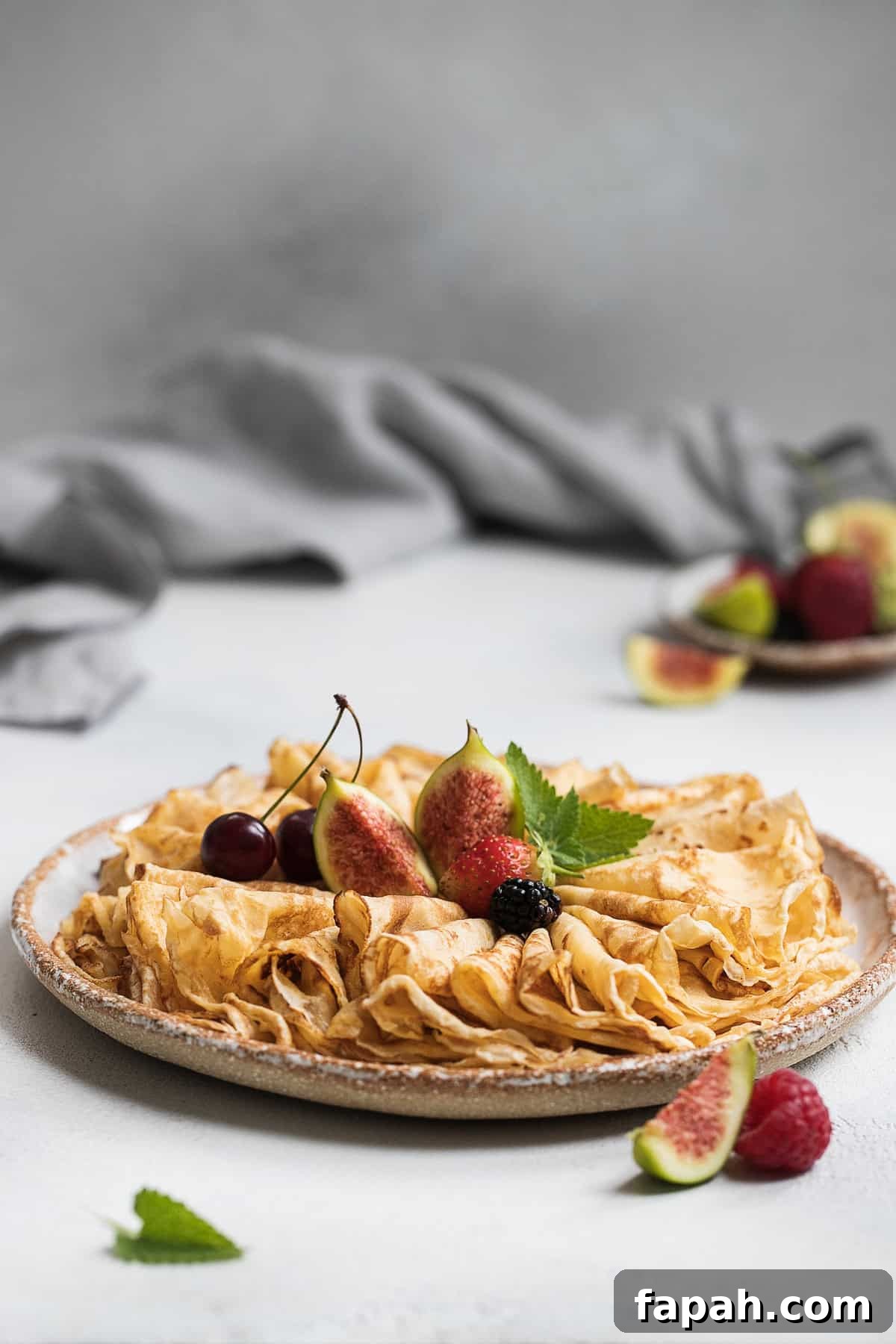
French crepes recipe
In France, February 2 is celebrated as La Chandeleur, commonly called crêpe day. Families gather to flip crêpes and enjoy them with sweet or savory toppings. This easy, authentic recipe brings the classic texture and flavor of French crepes to your kitchen.
What is a crepe?
A crepe (French: crêpe) is an ultra-thin pancake made without a leavening agent. Unlike American-style pancakes, crepes are very thin and flexible, making them ideal for folding or rolling with a wide range of fillings.
Ingredients
Detailed ingredient quantities are listed in the recipe card below.
- Flour: All-purpose flour yields classic crepes. Allowing the batter to rest up to an hour improves texture by letting the flour hydrate and the gluten relax.
- Salt: A pinch of salt balances and enhances sweetness.
- Eggs: Provide structure, richness, and moisture—use large eggs at room temperature for best results.
- Milk: Whole milk gives a rich, silky batter; lower-fat milk or a plant-based milk (such as almond milk) can be used to suit dietary needs.
- Rum (optional): A splash of dark rum adds a subtle fruity aroma. For a non-alcoholic option, substitute with orange juice, water, or a flavored extract.
- Butter: Melted unsalted butter adds flavor and helps produce a tender crepe; it is usually added to the batter and lightly wiped in the pan rather than heavily greasing the surface.
How to make French crepes
Step 1 — Make the batter: In a large bowl, sift the all-purpose flour with a pinch of salt. Make a well in the center and add the eggs. Whisk gently to combine until the mixture is smooth and free of lumps.
Step 2 — Add milk: Gradually pour in half of the cold milk while whisking to form a thin, even batter. Add the remaining milk and pass the batter through a fine-mesh sieve or strainer for a silky texture.
Step 3 — Flavor and rest: Stir in a tablespoon of dark rum or your preferred flavoring, then add a small amount of water if the batter needs loosening. Cover the bowl with plastic film and let the batter rest at room temperature for about one hour. Resting is essential for tender, evenly cooked crepes.
Step 4 — Prepare to cook: Just before cooking, melt the unsalted butter and whisk it into the batter. Heat a nonstick crepe pan or skillet over medium-high heat and wipe it lightly with a paper towel to remove excess butter—do not heavily grease the surface.
Step 5 — Cook the crepes: Pour a small amount of batter into the center of the hot pan and tilt it quickly to spread the batter into a thin, even layer that covers the bottom. Cook until the edges begin to brown and lift slightly from the pan, then flip the crepe with a flexible spatula and cook the second side until golden. Repeat with the remaining batter, stacking the finished crepes on a plate and keeping them warm.
Expert Tips
- Adding sugar is optional—up to one tablespoon will create a slightly sweeter crepe suitable for desserts.
- For a child-friendly version, replace the rum with an equal amount of water or a mild fruit juice.
- Do not skip the resting time: it yields a smoother batter and more tender crepes.
- Flavor variations include vanilla extract, orange blossom water, or citrus zest for delicate aromatic notes.
- If serving crepes the same day, stack them directly without parchment between layers to preserve moisture and texture.
Traditional French crepe fillings
A simple and classic way to enjoy a warm crepe is to sprinkle it with sugar or vanilla sugar and fold it into quarters. Crepes also pair beautifully with many sweet and savory fillings—just avoid combining more than three components for the best balance of flavors.
Savory filling ideas:
- Ham and melted cheese
- Bacon with fried or scrambled eggs
- Crème fraîche with grated Emmental
- Sautéed mushrooms or mixed vegetables
- Diced fresh tomatoes with herbs
Sweet filling ideas:
- Fresh fruit with whipped cream
- Nutella with sliced banana
- Warm fruit compote or apple butter
- Chocolate with strawberries
- Lemon curd and a dusting of powdered sugar
- Ice cream with caramel or toasted nuts
Storing and freezing
Crepes are best eaten warm, but they can be prepared ahead. Store cooled crepes in the refrigerator for up to two days. If stacking, place parchment or wax paper between each crepe and seal in an airtight container or zip-top bag.
For longer storage, freeze stacks of crepes separated by parchment for up to two months. Thaw overnight in the refrigerator or at room temperature for an hour or two. Reheat gently in the microwave for short bursts, in a warm skillet, or over a bain-marie to preserve tenderness.
Recipe FAQ
For lighter crepes, replace part of the milk with beer or cider, or substitute half the milk with water. This creates a lighter texture while keeping the crepe thin.
If short on time, warm the milk slightly before adding it to the batter; this helps the flour hydrate faster and allows you to cook crepes immediately with acceptable results.
Crepe batter can be refrigerated for up to two days, but it is best used the same day for optimal flavor and texture.
Folding depends on the filling and occasion. Common methods include folding in half, into quarters, rolling, making a pocket, or folding into small cones for handheld servings.
Love crepes and pancakes? Try these next!
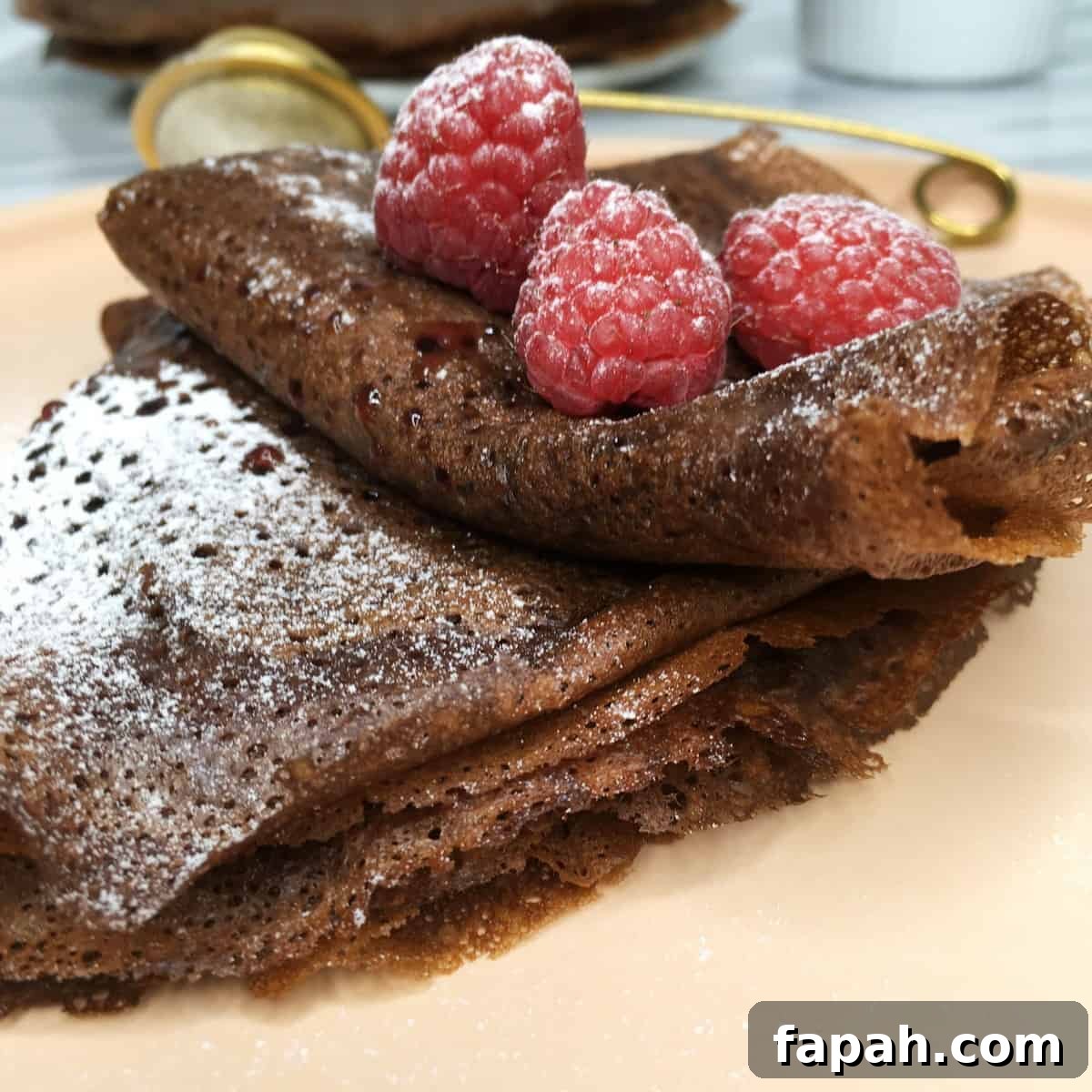
- Chocolate crepes — a rich variation for dessert
- Crepes Suzette — orange-flavored, traditionally flambéed
- Vanilla Dutch baby (puffed pancake) — a dramatic baked alternative
- Beggar’s purses — crepes filled and baked with fruit
- Farmer’s cheese pancakes — a hearty, cheese-forward breakfast
-
French Chocolate Crepes Recipe
-
Crepes Suzette Flambé With Grand Marnier
-
Vanilla Dutch Baby (Puffed Pancake)
-
Apple Cinnamon Crepes (Beggar’s Purses)


Recipe card
Authentic French Crepes (Crêpes Française)

Learn how to make French crepes with a few basic ingredients and enjoy their authentic taste for breakfast, brunch, or dessert.
- Author: Irina Totterman
- Total Time: 40 minutes (plus resting time)
- Yield: 16 crepes
- Category: Crepes
- Method: Cooking
- Cuisine: French
Ingredients
- 1 cup + 5 tablespoons (165 g) all-purpose flour
- 1 pinch of salt
- 4 large eggs, room temperature
- 13.5 fl oz (400 ml) cold whole milk
- 1.7 fl oz (50 ml) water
- 1 tablespoon (15 ml) dark rum (optional)
- 1.4 oz (40 g) unsalted butter, melted
* Use standard baking conversion charts if you need to convert units.
Instructions
- Make the batter: Sift the flour and salt into a large mixing bowl. Make a well in the center, add the eggs, and whisk until smooth.
- Add milk and strain: Whisk in half the milk, then the rest. Pass the batter through a fine-mesh sieve for a silky texture. Stir in rum if using, then add water to adjust consistency. Cover and rest for one hour.
- Finish the batter: Melt the butter, whisk it into the batter, and preheat a nonstick crepe pan. Wipe the pan lightly with a paper towel; avoid heavy greasing.
- Cook crepes: Pour a thin layer of batter into the hot pan and tilt to coat evenly. When the edges brown and lift, flip with a flexible spatula and cook until golden on the second side. Continue until all batter is used.
Notes
- Sugar is optional; add one tablespoon if you prefer sweeter crepes.
- Replace rum with water or a mild juice for a non-alcoholic version.
- Resting the batter is key to authentic texture and flavor.
- Try variations with vanilla, orange blossom water, or citrus zest.
- When storing for the same day, skip parchment between layers to keep crepes moist.
Nutrition (approx.)
- Serving Size: 1 crepe
- Calories: 86
- Sugar: 1.3 g
- Fat: 3.8 g
- Carbohydrates: 9.2 g
- Protein: 3.3 g
The nutritional information is intended as a guideline only and may vary depending on ingredients and portion sizes. This recipe was originally published in 2018 and has been updated to improve content and photos.