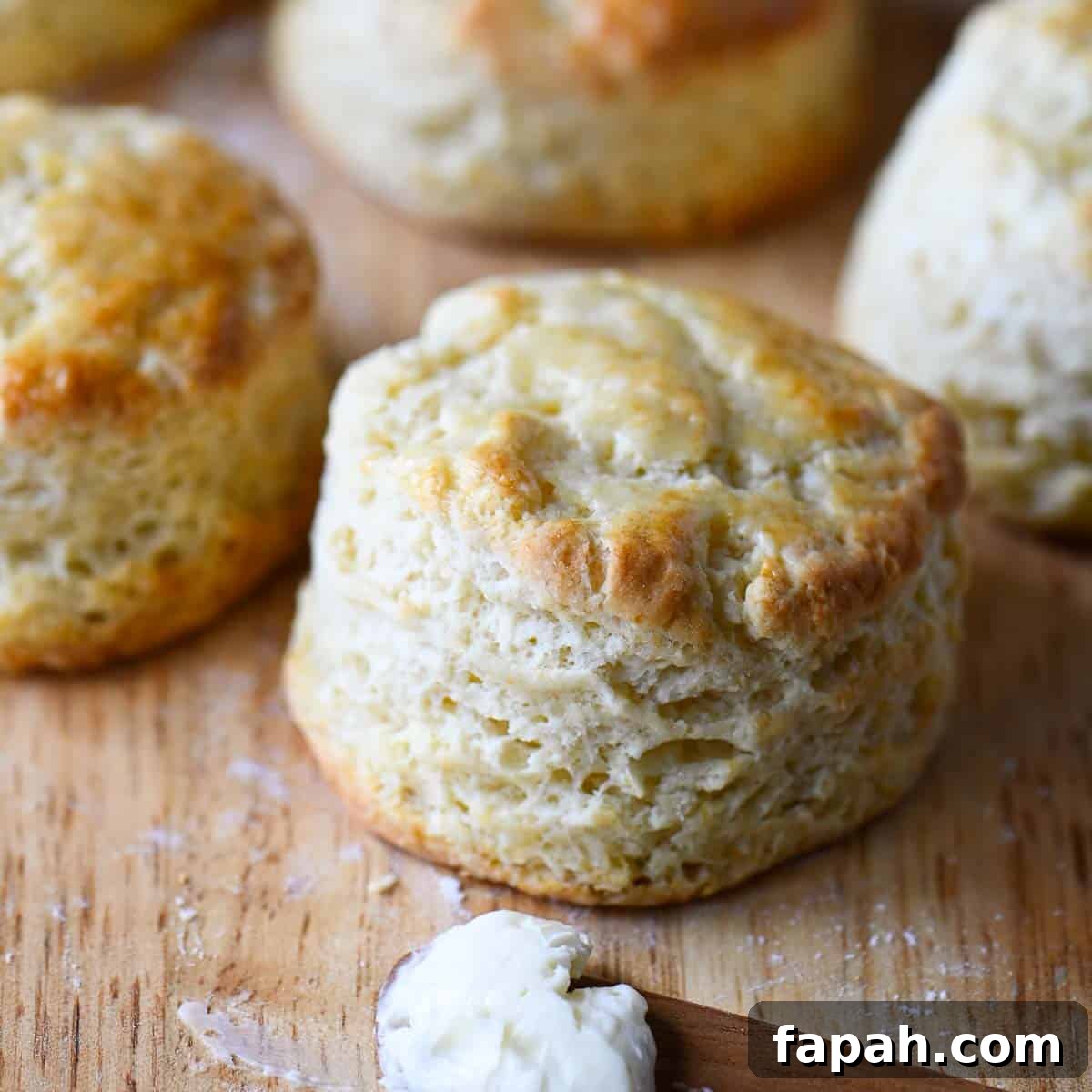
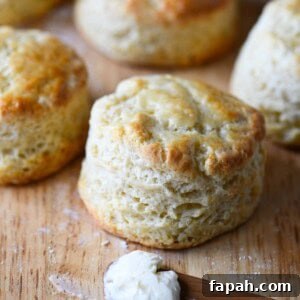
These Cake Flour Biscuits are tender, buttery, and rise beautifully. After testing different flour combinations, this recipe consistently produces bakery-style layers without a dense or heavy texture. The trick is simple: cake flour yields a softer, lighter crumb and an airy bite.
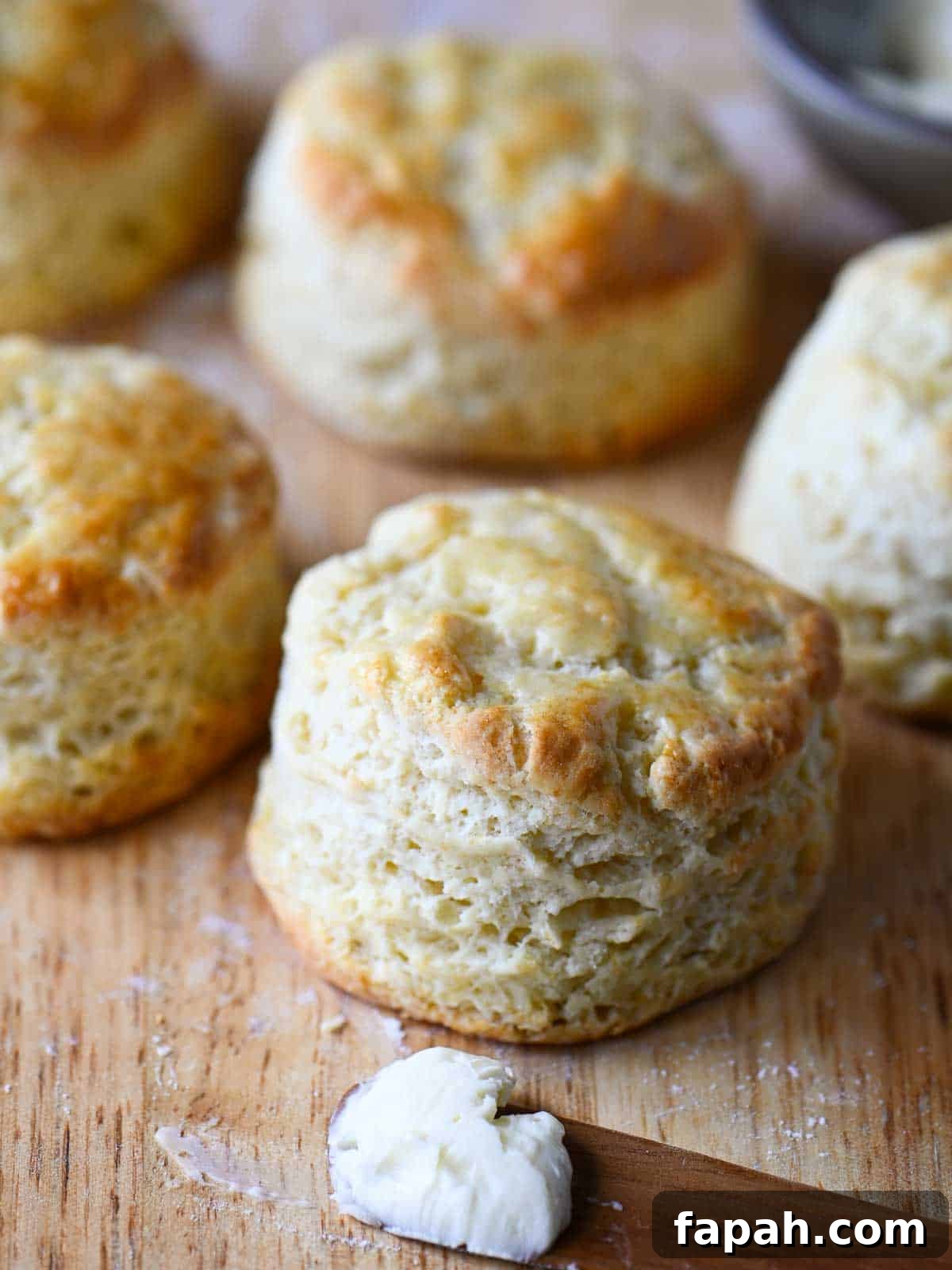
I realized I didn’t have a plain, everyday biscuit recipe on the site, so I developed this one to pair with everything — breakfast, soups, or a simple pat of butter. The goal was a biscuit that’s flaky, buttery, fluffy, and perfectly golden. Cake flour makes a real difference: it has a lower protein content than all-purpose flour, which reduces gluten development and keeps the texture light instead of chewy or heavy.
Key ingredient
Cake flour contains less protein than most other flours, which means less gluten in the dough. Gluten adds structure, but for these biscuits we want tenderness and lift. Using cake flour helps the biscuits stay soft and fluffy while still holding their shape.
Cake flour is usually easy to find near all-purpose flour at the grocery store. For this recipe, a soft cake flour like Swans Down works well.
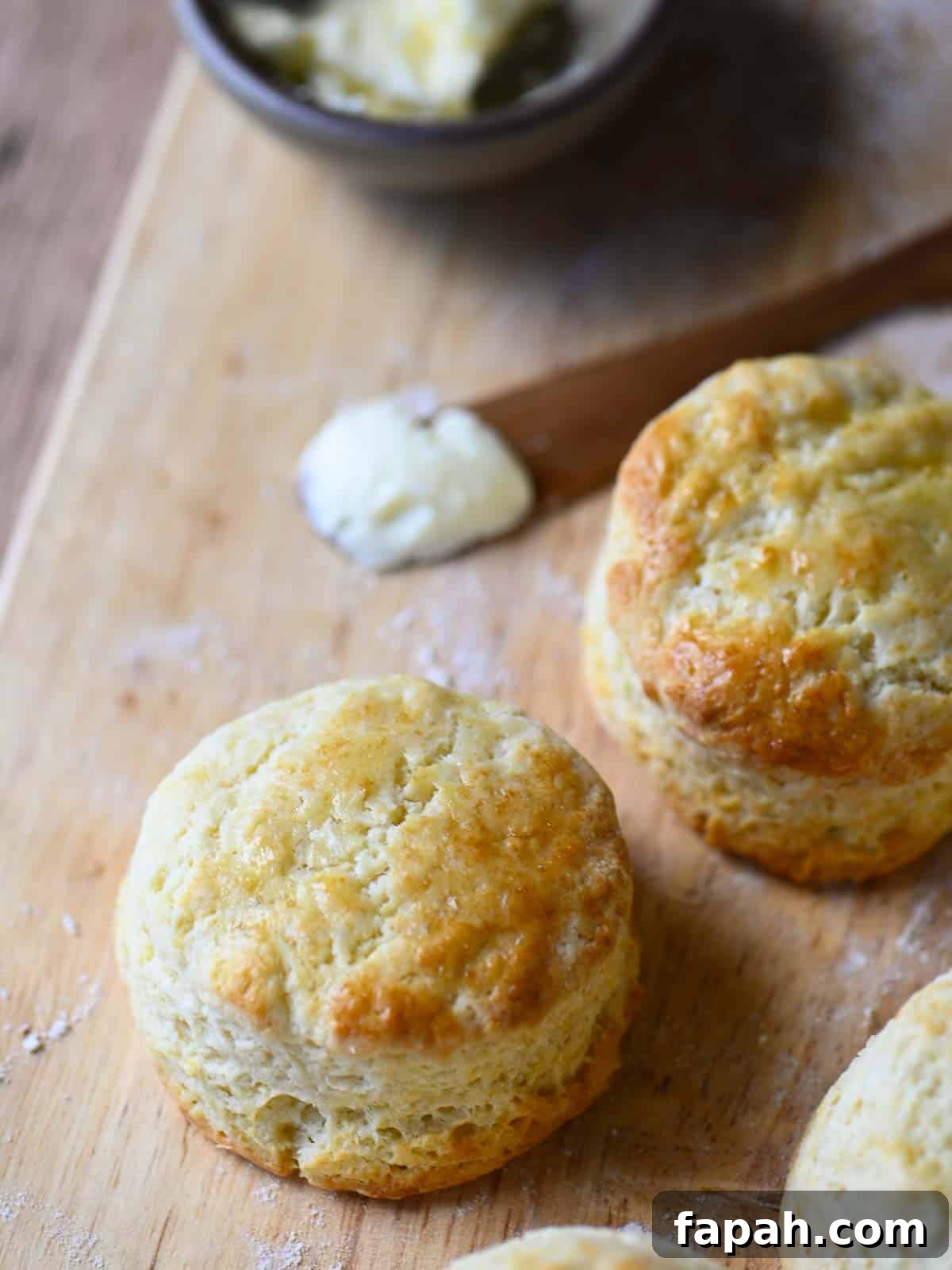
The full ingredient list and exact measurements are included in the recipe card below.
Step-by-step instructions
Don’t be intimidated by the steps — biscuits are straightforward. The key rules: don’t overwork the dough and keep everything cold. Follow these steps for consistent results.
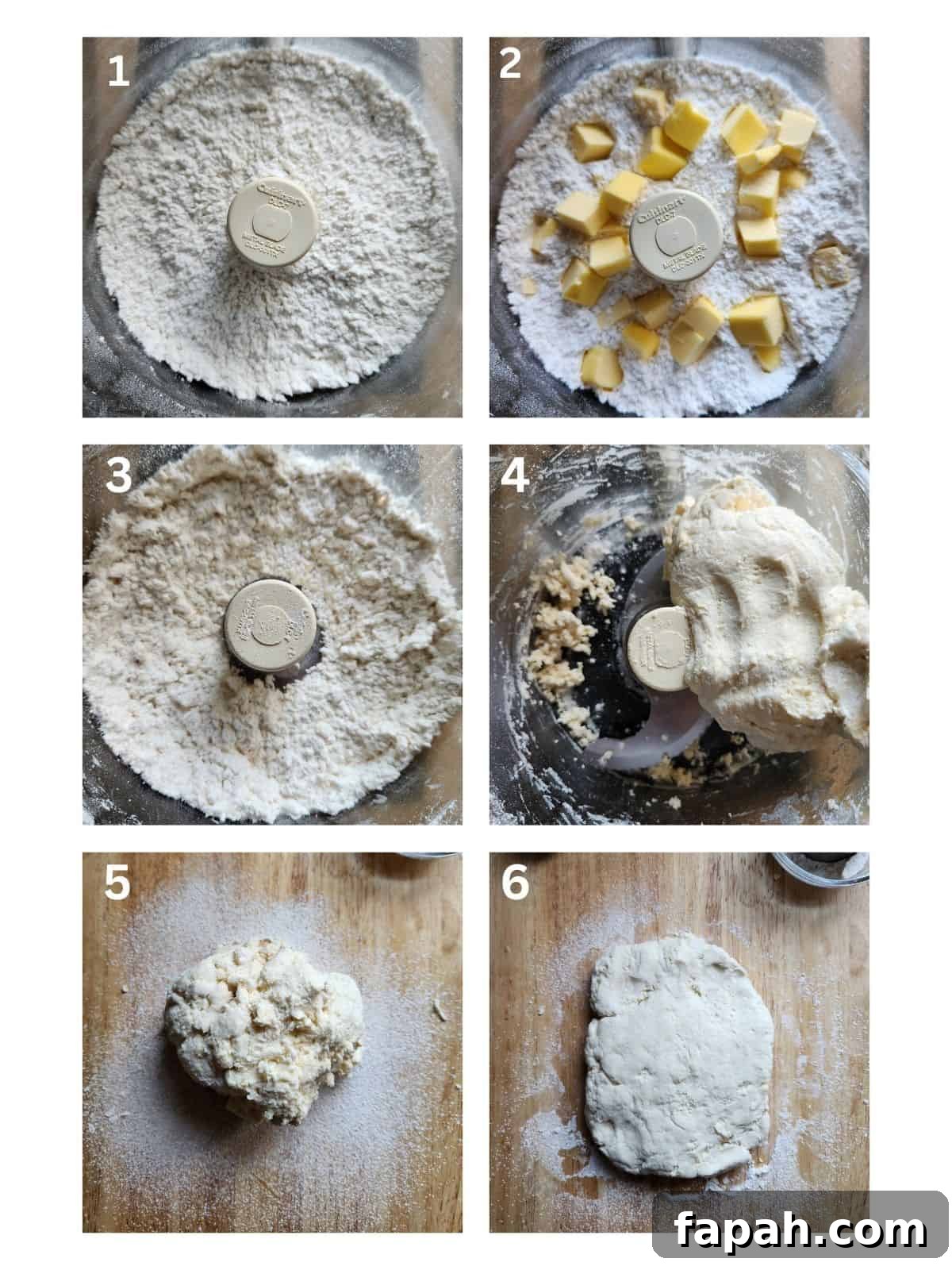
Step 1. Pulse the dry ingredients. Step 2. Add the butter. Step 3. Pulse until the butter is pea-sized. Step 4. Add buttermilk and pulse until the dough comes together. Step 5. Turn the dough onto a floured surface. Step 6. Pat into a rough rectangle.
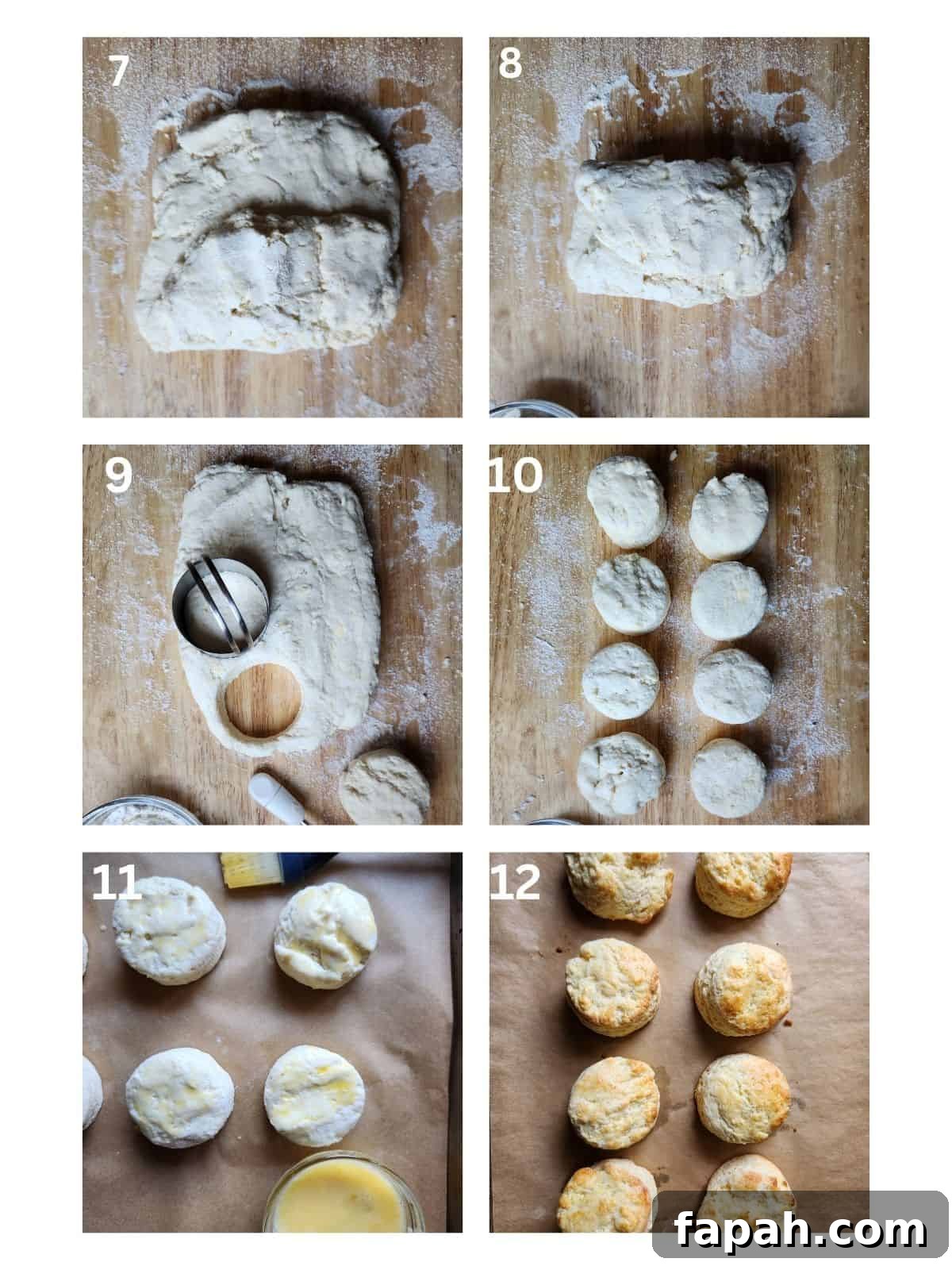
Step 7. Fold the dough in thirds. Step 8. Fold the other side like a letter. Step 9. Use a biscuit cutter and press straight down (no twisting). Step 10. Rework scraps and cut again — you should have about 8 biscuits. Step 11. Chill, then brush with egg wash. Step 12. Bake at 425°F until tall and golden, about 10–12 minutes.
*These are condensed instructions; the complete, detailed directions are in the recipe card below.
👩🍳Expert tips
- Weigh your flour. A kitchen scale helps you get the exact amount every time for a consistent dough.
- Prep ingredients in advance. Measure everything and have your baking sheet ready so you can work quickly and keep ingredients cold.
- Chill butter and buttermilk while the oven heats. Pop the cubed butter and buttermilk in the freezer for a few minutes to keep them very cold; cold butter helps create flaky layers.
- Use a food processor if you have one. It speeds up the process and makes it easy to get those pea-sized butter pieces, though a pastry cutter or your fingers also work.
- Chill the cut biscuits briefly. After cutting, freeze the tray for 5–10 minutes to firm the butter again if it warmed while cutting.
- Wonky biscuits are fine. Scraps won’t always cut perfectly; the irregular ones will still taste great and make perfectly acceptable “drop” biscuits.
Variations
Try these small tweaks to change the flavor while keeping the soft, flaky texture.
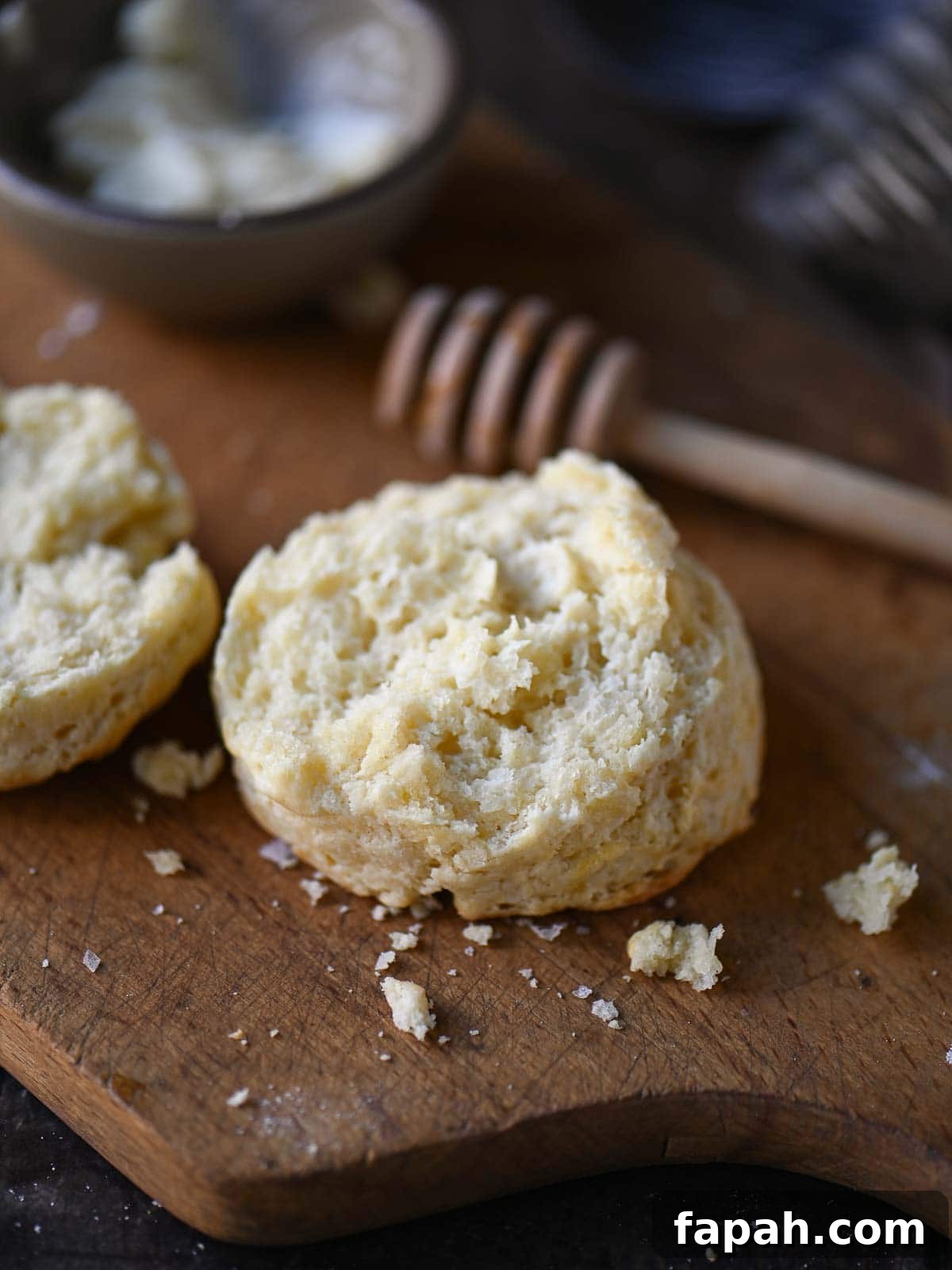
- Honey biscuits. Replace the granulated sugar with honey for a richer, sweeter note. Whisk the honey into the buttermilk first so it blends evenly.
- Cream biscuits. Swap the buttermilk for heavy cream for a richer, more tender biscuit. If you use cream, omit the baking soda.
- Make breakfast sandwiches. Split the warm biscuits and fill with eggs, cheese, and bacon for a hearty sandwich.
- Biscuit shortcakes. Use split biscuits as the base for fruit shortcakes and whipped cream.
- Drop biscuits. No cutter? Scoop the dough into mounds with a large spoon or cookie scoop and bake — rustic, quicker, and still delicious.
Serving suggestions
Serve warm with a pat of salted butter, a drizzle of honey, or your favorite jam. For something more special, try a flavored butter or a savory chutney — the biscuits pair well with sweet and savory toppings alike.

Storage and prep
Store fully cooled biscuits in an airtight container at room temperature for up to 2 days.
To freeze: cut the biscuits, freeze them solid on a tray (don’t brush with egg wash), then transfer to a sealed bag. Bake from frozen, adding 3–5 minutes to the baking time.
Frequently asked questions
This recipe is tested with cake flour, so swapping to all-purpose may lead to a slightly tougher biscuit unless you adjust handling. If you must substitute, try 250g all-purpose flour, remove 1 tablespoon, and replace it with 1 tablespoon cornstarch to mimic cake flour’s lower protein. Handle the dough gently and accept that the texture will be a bit less tender.
Perfect pairings
These biscuits are ideal for dunking into soups, stews, and creamy bowls — or serving alongside roasted vegetables and breakfast potatoes.
-
Crispy Breakfast Potatoes
-
Creamy Asparagus Leek Soup
-
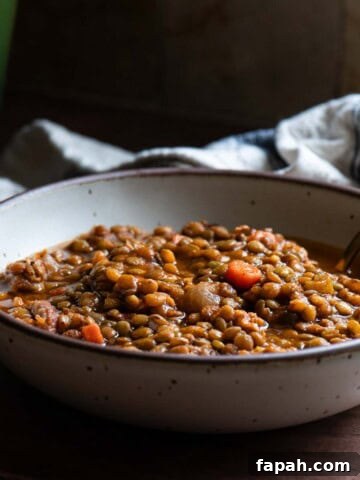
Bacon and Lentil Soup
-
Creamy Autumn Squash Soup

Made this recipe? I’d love to hear about it. Please leave a rating and a comment below the recipe. If you snapped a photo, tag @brunchandbatter on Instagram so I can see your creation!
📖Recipe
Cake Flour Biscuits
Pin Recipe
Equipment
-
food processor optional
-
3½ or 4-inch sharp biscuit cutter
-
baking sheet
-
parchment paper optional
Ingredients
- 2 cups cake flour (not pastry flour)
- 1 teaspoon Kosher or fine sea salt
- 1½ tablespoon white granulated sugar
- 3 teaspoon baking powder
- ¼ teaspoon baking soda
- ¾ cup cold buttermilk
- ½ cup (8 ounces or 1 stick) cold unsalted butter, cubed
- 1 egg + 1 teaspoon buttermilk for egg wash
Instructions
-
Preheat the oven to 425°F. Line a baking sheet with parchment paper and set aside.
-
In a food processor, combine the cake flour, salt, sugar, baking powder, and baking soda. Pulse to blend. Add the cold cubed butter and pulse until the mixture looks like coarse crumbs with pea-sized butter pieces visible.
-
Add the cold buttermilk and pulse until a shaggy dough forms. Turn the dough out onto a floured surface and gently knead just until it comes together. Do not overwork.
-
Pat the dough into a rectangle about ¾ to 1 inch thick. Fold into thirds like a letter, reshape, and repeat once more. Gently press to ¾ to 1 inch thickness.
-
Use a floured biscuit cutter and press straight down without twisting, then lift straight up. Place biscuits on the prepared sheet. Rework scraps and cut 1–2 more biscuits to make about 8 total.
-
Freeze the tray for 10 minutes. Whisk 1 egg with 1 teaspoon buttermilk for an egg wash. Brush the chilled biscuits lightly and bake at 425°F for 10–12 minutes, until tall and golden.
-
Serve warm with salted butter, honey, or jam.
Notes
- Cake flour is preferred. Pastry flour has higher protein and can yield a slightly firmer texture.
- Freeze ingredients during preheat. Giving the butter and buttermilk a quick chill while the oven heats helps keep the butter cold when handling.
- No food processor? Combine the dry ingredients in a bowl, cut in the butter with a pastry cutter or fingers, then stir in the buttermilk until a shaggy dough forms.
Nutrition*
*Nutrition information is an estimate and provided as a courtesy. Actual values may vary based on ingredients, measurements, and substitutions.