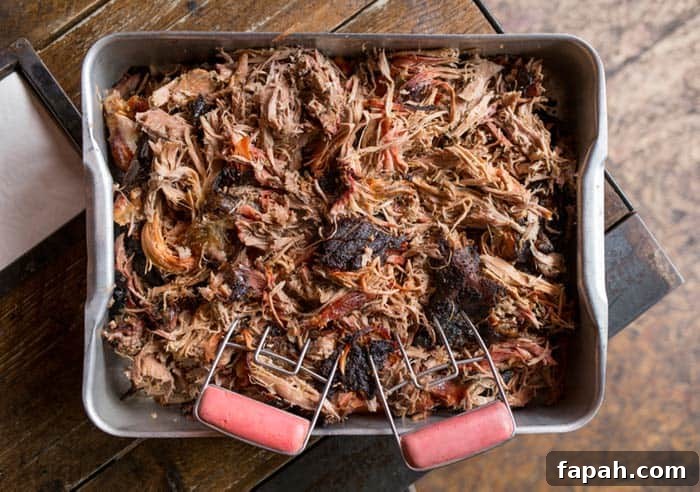
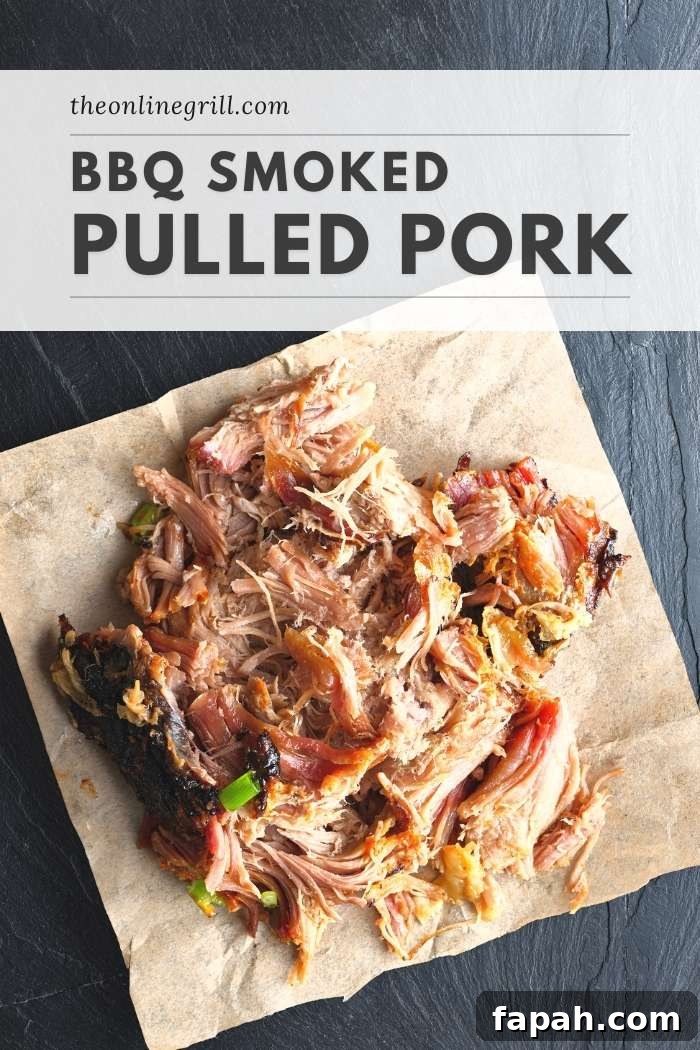
Smoked pulled pork, cooked low and slow over wood fire, is the ultimate barbecue comfort food. This guide explains how to trim, dry brine, and smoke pork shoulder to produce tender, shreddable pulled pork every time.
- How Much Pork Will You Need?
- Pork Butt vs. Pork Shoulder
- Trimming
- Dry Brine
- Times & Temperatures
- Smoking Wood
- How to Smoke Pulled Pork
- Sides & Serving Ideas
- Pulled Pork Leftovers
- Smoked Pulled Pork
The pork shoulder contains abundant fat and connective tissue, which makes it ideal for long, slow smoking. To reach the tender, pull-apart texture, plan on smoking for roughly 8 to 12 hours depending on size and conditions. You can do most of the prep the day before, and the patient approach rewards you with deeply flavored, melt-in-your-mouth pork.
How Much Pork Will You Need?
Meat shrinks during cooking, and pork shoulder is no exception. A reliable rule of thumb is that one pound of raw pork shoulder yields about half a pound of finished pulled pork. For planning, assume one pound of raw pork will feed roughly three people after cooking, which equates to about one-third pound of finished pork per person. For example, an 8-pound raw shoulder typically produces about 4 pounds of shredded pork, serving around 12 people.
It’s better to have extra than not enough—pulled pork stores and reheats well and makes excellent leftovers for sandwiches, tacos, nachos, or casseroles.
Pork Butt vs. Pork Shoulder
Both pork butt (Boston butt) and pork shoulder come from the front shoulder of the pig, but they occupy slightly different areas. Pork butt is taken from above the shoulder blade and tends to have more marbling and fat, making it particularly well suited to smoking. Pork shoulder extends lower toward the foreleg and can include more varied muscle groups.
Both cuts have significant connective tissue that benefits from long, low cooking to break down collagen into gelatin. Choose pork butt if you want a bit more fat for flavor and moisture, but either cut will produce excellent pulled pork when cooked properly.
Trimming
Begin prep the day before your smoke. Place the shoulder on a cutting board and use a sharp knife to remove the thick fat cap that won’t render down. Trim any large pockets of fat or sinew, then locate the natural seam and divide the butt into two pieces if needed—this helps seasoning penetrate and speeds brining and cooking slightly.
Leave some fat in place for flavor; you don’t need a perfectly butchered presentation. Rinse the meat under cold water, pat dry with paper towels, and proceed to the dry brine.
Dry Brine
Dry brining overnight is an efficient way to ensure juicy, well-seasoned pork without diluting its natural flavor. Coat all surfaces evenly with kosher salt and gently massage it into the meat. Refrigerate uncovered for at least eight hours or overnight. The salt will penetrate the meat, improving texture and moisture retention.
Times & Temperatures
Cook pork shoulder at 225°F (107°C) for approximately 90 minutes per pound, or until the internal temperature reaches around 203°F (95°C). For a 5 lb shoulder, expect about eight hours, but several factors—meat thickness, fat content, smoker stability—affect exact timing. Use a reliable meat thermometer and follow temperature rather than clock time.
Pork is technically safe at 145°F, but shoulder needs to reach the higher target to melt connective tissue and allow effortless shredding. At ~203°F the meat becomes tender and easy to pull.
Smoking Wood
Fruit woods such as apple and pecan are excellent choices for pulled pork. Both add a slightly sweet, fruity smoke that complements pork well and pairs nicely with many sauces. Applewood is subtle and works very well during long smokes; pecan brings a slightly richer, nutty note. Choose based on personal taste and cook duration.
How to Smoke Pulled Pork
Preheat your smoker to 225°F (107°C) or set up your grill for indirect heat. Add apple or pecan wood chips to the smoker or coals. Rinse the dry-brined pork, pat dry, spread a thin layer of yellow mustard to help the rub adhere, then apply a generous layer of BBQ dry rub.
Place the pork on the smoker and maintain 225°F, spritzing hourly with a mixture of apple cider vinegar and water to keep the surface moist. Smoke until the internal temperature reaches about 165°F (74°C), which typically takes five to six hours.
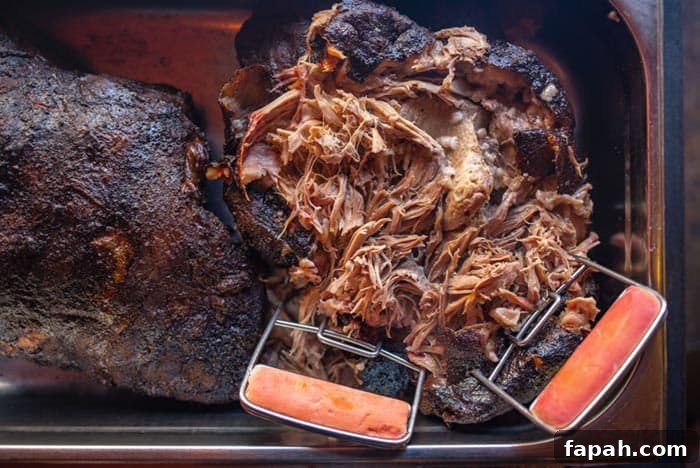
When the pork stalls (often around 150°F), wrap it tightly in aluminum foil—known as the Texas Crutch—to retain moisture and push through to higher temperatures more quickly. Increase the smoker heat if desired to speed the finish and continue until the internal temperature reaches about 203°F (95°C).
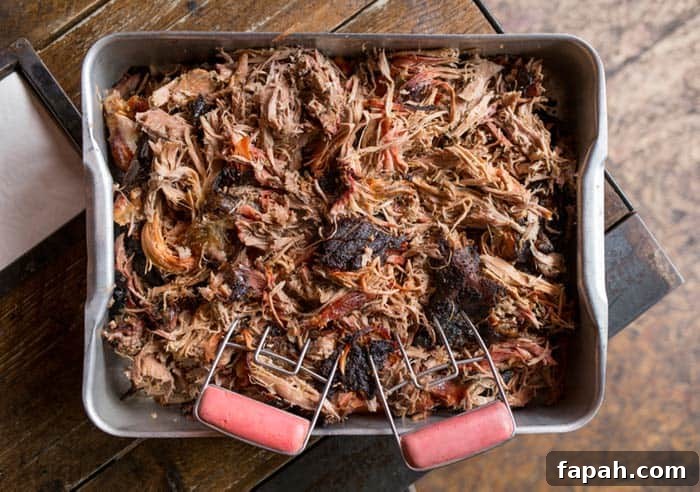
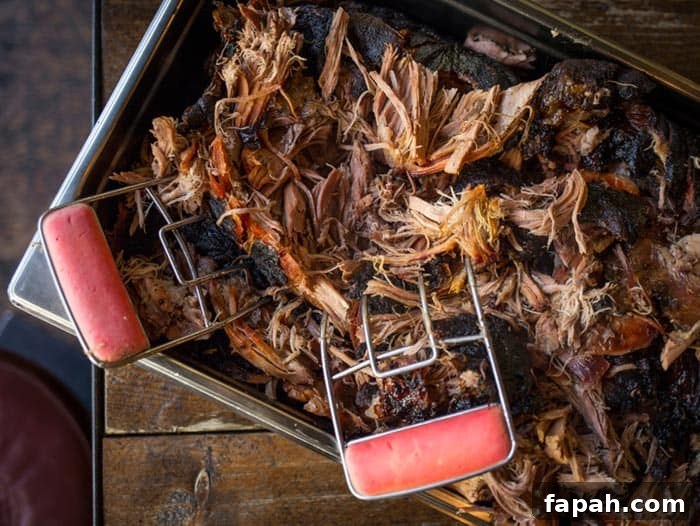
Remove the pork from the smoker and let it rest briefly in a pan. Use shredding claws or forks to pull the meat apart, discard large pieces of fat, and mix in any remaining cooking juices and BBQ sauce to taste. Distribute bark evenly through the pulled pork for texture and flavor.
Sides & Serving Ideas
Smoked pulled pork pairs well with classic barbecue sides. Consider:
- Southern-style smoked beans
- Red cabbage slaw
- Potato bread rolls
- Sweet corn fritters
Serve about one-third pound of finished pork per person as a sandwich, taco filling, or plated entree.
Pulled Pork Leftovers
Leftover pulled pork stores and reheats beautifully. Reheat gently in a saucepan over medium-low heat with a splash of BBQ sauce or cooking juices to keep it moist. Leftovers can be repurposed into many dishes.
Pulled Pork Tacos
Warm tortillas filled with pulled pork, a squeeze of lime, diced red onion, and a drizzle of BBQ sauce make quick, flavorful tacos.
Nachos
Top tortilla chips with pulled pork, cheese, jalapeños, and pickled onions, then melt under the broiler for party-ready nachos.
Jalapeño Poppers
Stuff jalapeños with pulled pork, cream cheese, and bacon for a smoky, spicy appetizer.
Pizza Topping
Use pulled pork as a pizza topping on a simple margherita base, add BBQ sauce and extra cheese, and bake until bubbly.
Smoked Pulled Pork
Equipment
-
Apple or pecan wood
-
Aluminum foil
-
Food-safe spritz/spray bottle
-
Meat shredding claws or forks
Ingredients
- 5 lb pork butt
- 2 ½ tsp kosher salt
- 2 tbsp yellow mustard
- ½ cup BBQ dry rub
- 1 cup BBQ sauce
Spritz
- 1 cup apple cider vinegar
- 1 cup water
Instructions
-
Trim the fat cap off the top of the pork butt and remove any large excess fat.
-
Find the seam on the opposite side of the fat cap and divide the butt into two pieces to help seasoning penetrate. Trim any remaining excess fat.
-
Cover all sides with kosher salt and refrigerate uncovered overnight to dry brine.
-
The next day, rinse off excess salt with cold water and pat dry. Rub a thin layer of mustard over the pork, then coat with BBQ dry rub.
-
Preheat your smoker to 225°F (107°C) or set up your grill for two-zone cooking.
-
Add apple or pecan wood chips and place the pork on the smoker grates. Smoke for 5–6 hours, spritzing every hour, until the internal temperature reaches about 165°F (74°C).
-
Wrap the pork in foil (Texas Crutch), raise the smoker to around 325°F (163°C), and continue cooking 2–3 hours or until the internal temperature reaches about 203°F (95°C).
-
Remove the pork and transfer to a pan. Use shredders or forks to pull the meat, discard large chunks of fat, mix in any juices and BBQ sauce, and distribute the bark evenly.
-
Serve about ⅓ lb per person as a sandwich, taco filling, or plated entrée.