
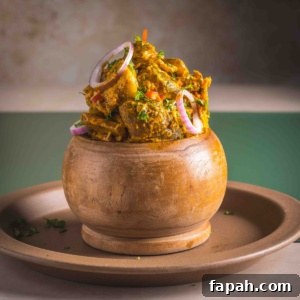
Spice up your culinary adventures with this nkwobi recipe. Tender cow foot is slow-cooked until soft, then tossed in a bold, fragrant palm oil sauce that showcases African nutmeg (ehuru) and warm spices.
Serve it as a side or a main course. This traditional, mouthwatering delicacy transports your taste buds to the heart of southeastern Nigeria.
What is Nkwobi
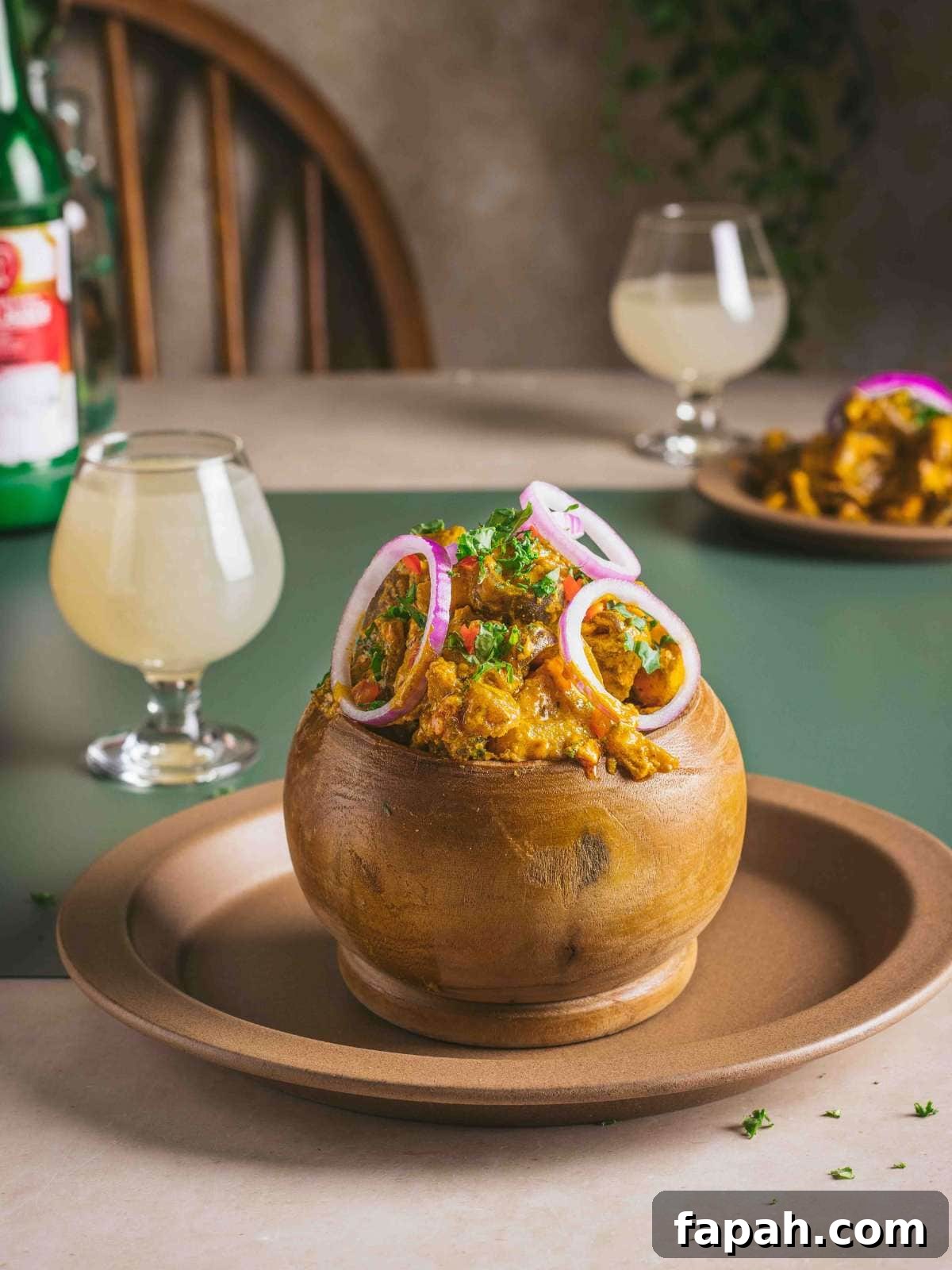
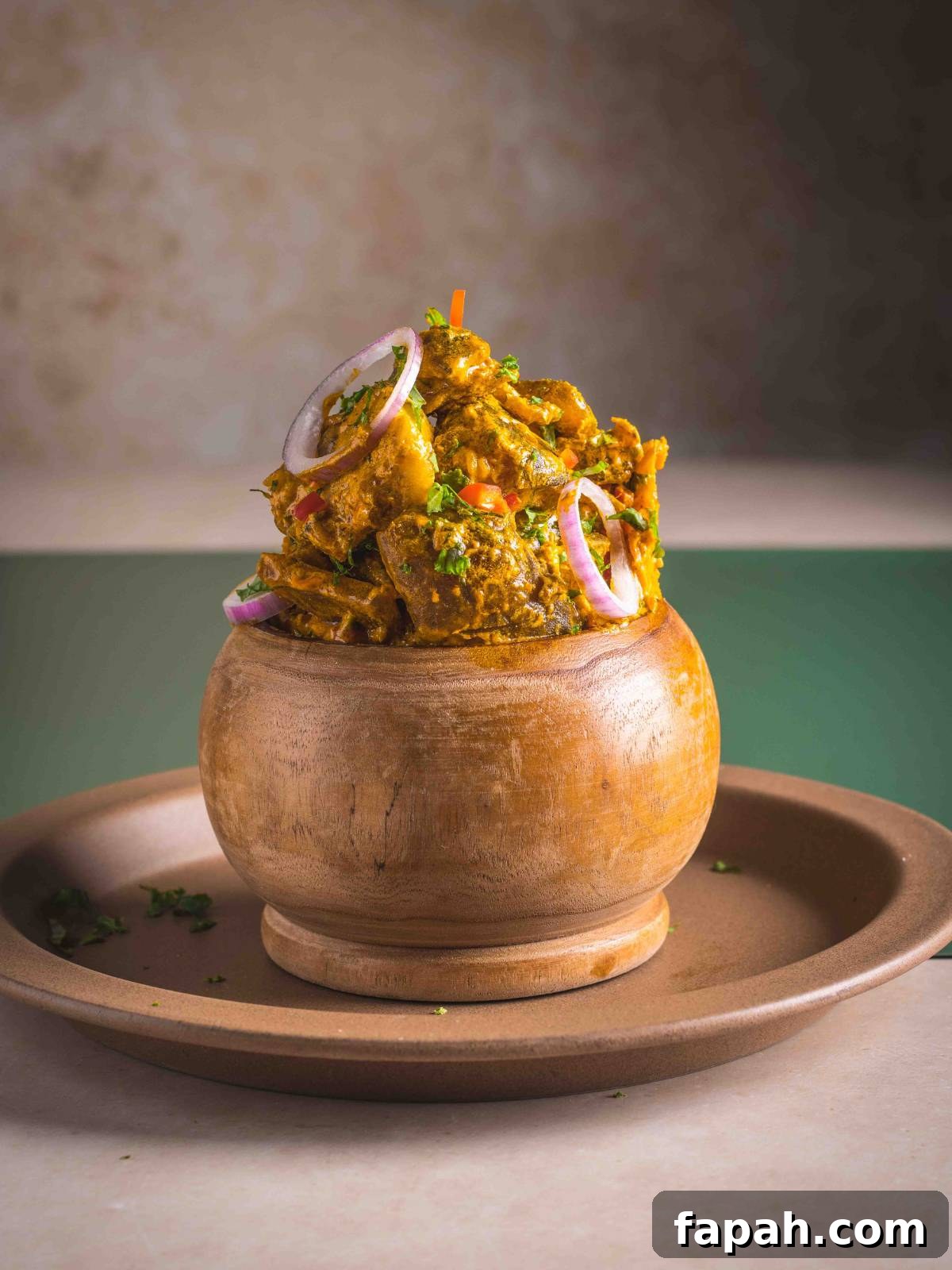
Nkwobi is a beloved dish from southeastern Nigeria made from tender cow foot (cow leg) coated in a silky, brightly colored palm oil sauce scented with ehuru (African nutmeg). The sauce has a rich umami depth from ground crayfish and a mild heat from fresh peppers.
Traditionally served in a shallow wooden bowl, nkwobi is a common celebratory dish in homes, restaurants, and the popular “beer parlors.” It pairs well with palm wine, cold beer, or soft drinks.
Reasons why this recipe works
- Easy to make: With a few authentic ingredients and basic kitchen tools, you can make a restaurant-quality nkwobi at home and impress guests.
- Flavorful: The combination of palm oil, ehuru, ground crayfish, and fresh peppers creates a deep, savory profile typical of southeastern Nigerian cuisine.
- Versatile: Use cow leg alone or combine it with other proteins like ponmo (cow skin) and stock fish for added texture and flavor.
- Nutritious: Cow foot provides protein and collagen, and unrefined palm oil offers vitamin A and E along with healthy antioxidants when used in moderation.
Ingredients
Key ingredients for authentic-tasting nkwobi:
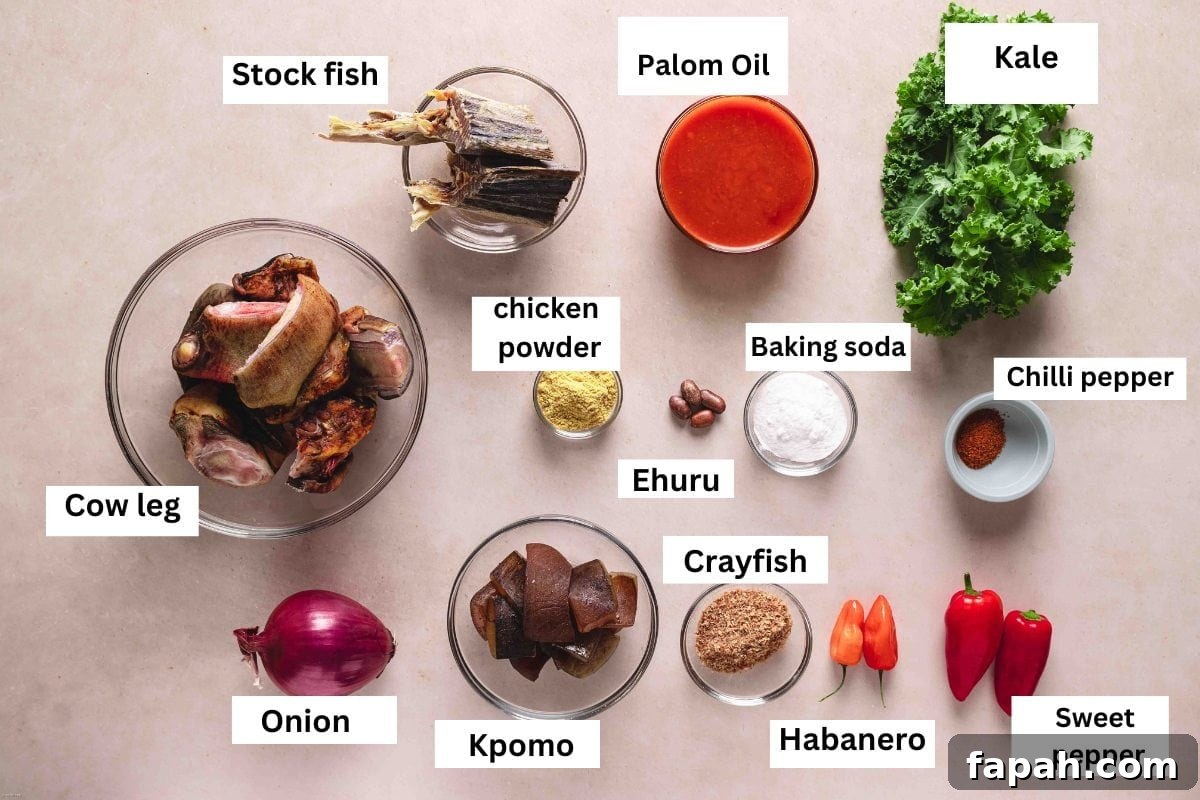
Palm oil (unrefined): Use pure red palm oil for the characteristic color and texture.
Baking soda: Traditionally potash (kanwu) is used to thicken and change the palm oil texture. Baking soda is a common substitute that works well and is widely available.
Animal proteins: Cow leg is traditional. You can also include ponmo (cow skin) and stock fish for depth.
Ground crayfish: Dried, ground prawns add umami and authentic flavor.
Ehuru (ehu) seed: Also called African nutmeg, this spice gives the dish its distinctive aromatic note. Roast and grind the seeds for best results.
Herbs: Utazi leaves are traditional and slightly bitter; if unavailable, use fresh kale, uziza, or another pungent leafy herb as a substitute.
Substitutions and Variations
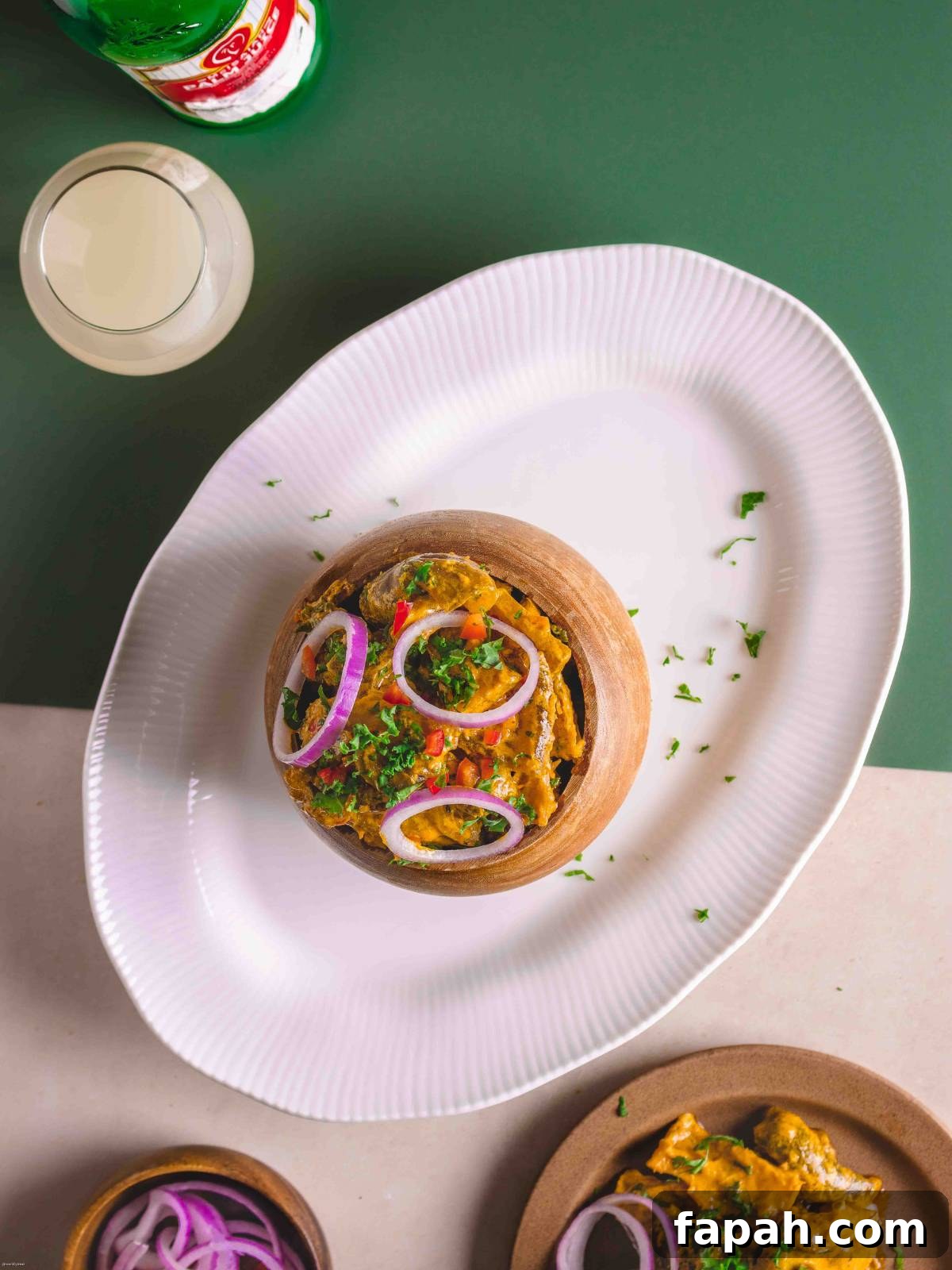
If some traditional ingredients are hard to find, use these alternatives without losing the authentic feel:
- Other proteins: Swap cow leg for oxtail, goat meat, goat head (isi ewu), or even chicken for a different take.
- Herbs: Replace utazi with uziza leaves, kale, or other slightly bitter greens.
- Extras: Abacha (African salad) and ugba can be layered into the dish for texture variation and visual interest.
Step-by-Step Instructions on how to prepare cow leg
Follow these steps to make traditional nkwobi:
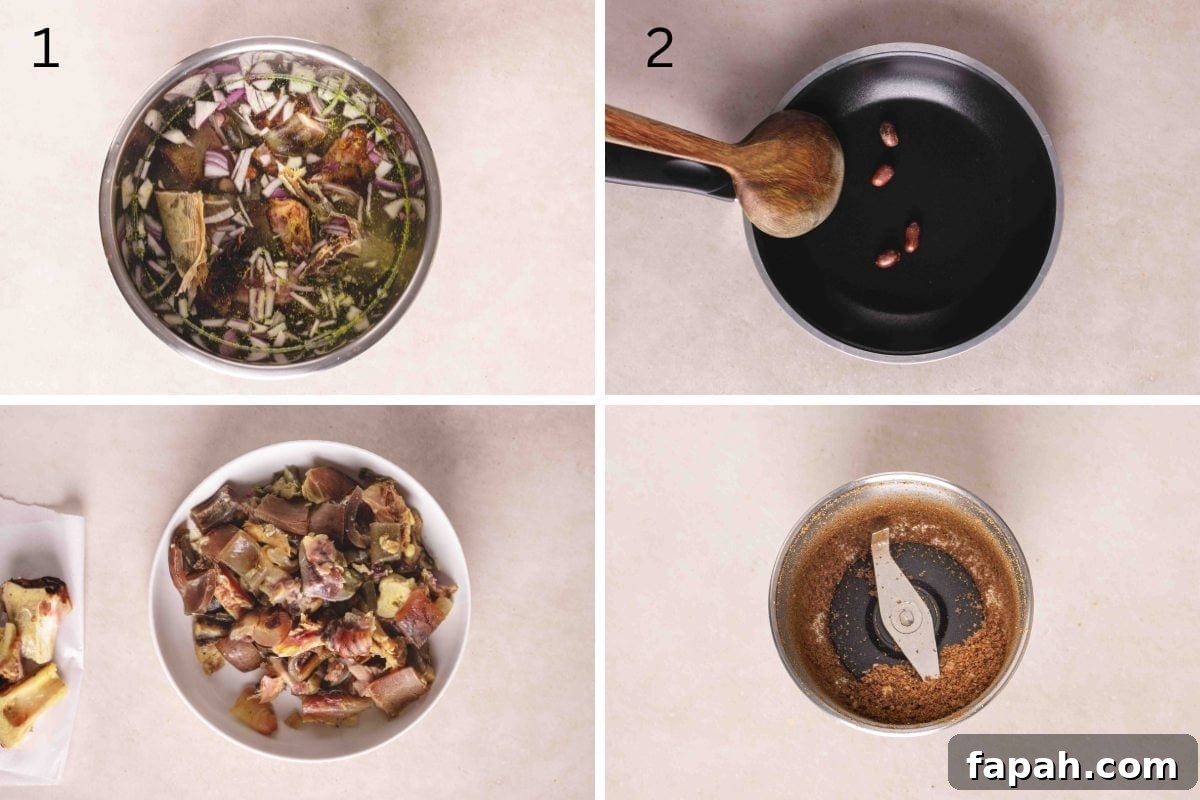
Step 1: Season and cook the cow leg until tender. If using a pressure cooker or instant pot, add enough water to cover and cook until the meat easily separates from the bone. Reserve some cooking stock.
Step 2: Roast ehuru seeds over a pan or open flame until they crack, remove shells, and grind to a powder.
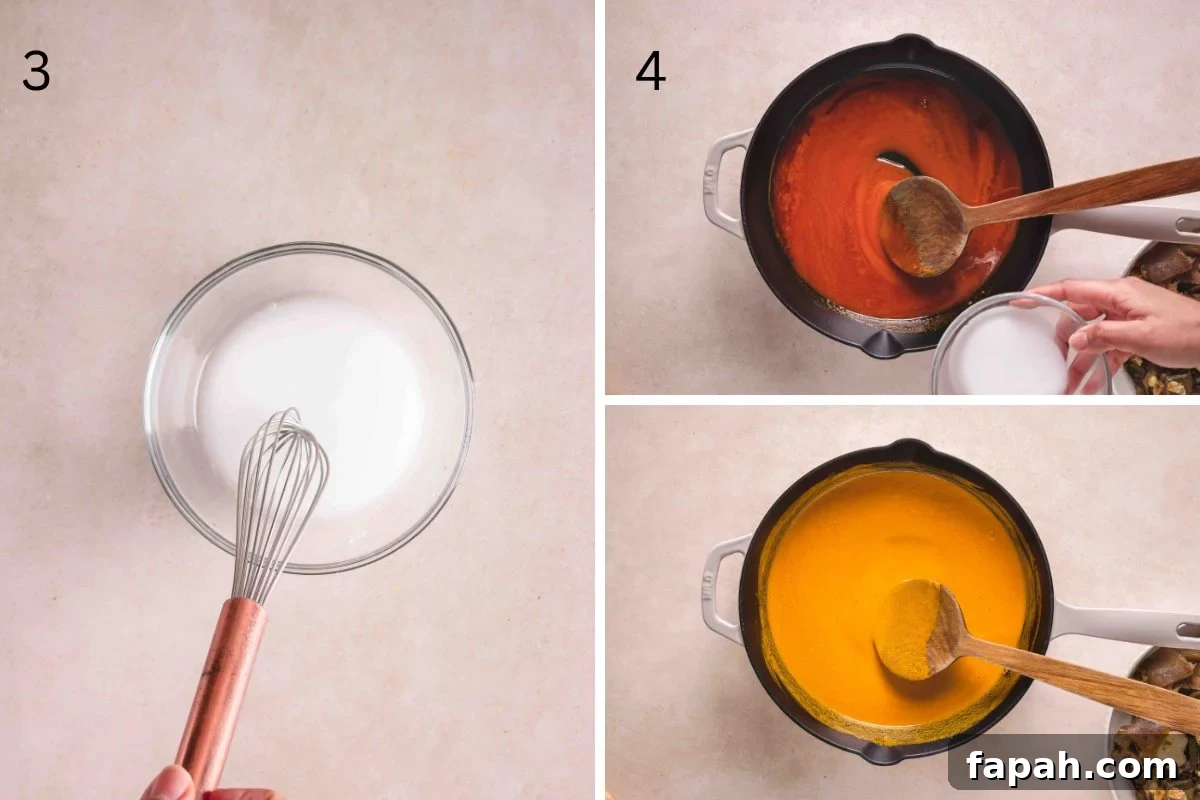
Step 3: Mix baking soda with water to form a slurry and set aside.
Step 4: In a saucepan, add palm oil and slowly stir in the baking soda slurry. Keep stirring until the oil changes from bright red to a pale, creamy yellow and thickens.
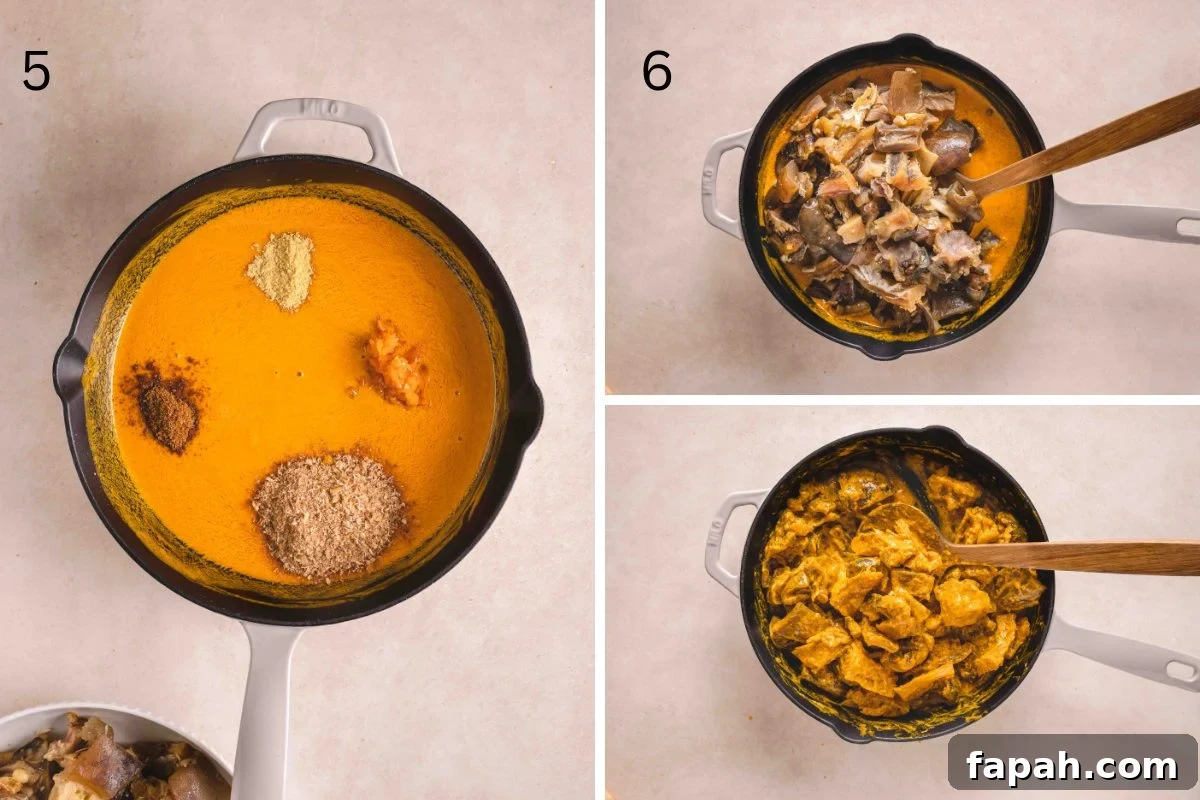
Step 5: Add ground crayfish, ground ehuru, chicken powder or stock cube (optional), salt, and chopped peppers to the palm oil and mix thoroughly.
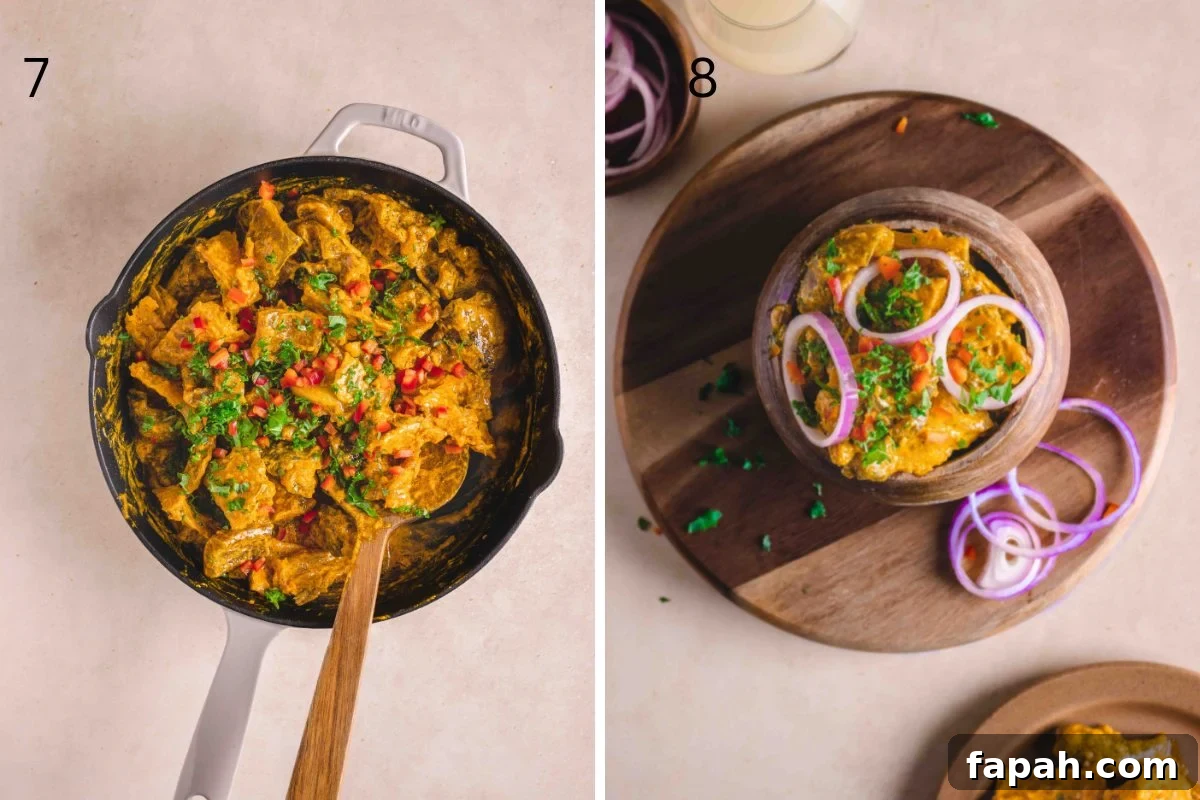
Step 6: Fold in the cooked cow leg, ponmo, and stock fish. Add reserved stock if you prefer a looser consistency.
Step 7: Stir in chopped kale or utazi leaves and the mini sweet pepper or scotch bonnet.
Step 8: Transfer to a wooden or ceramic bowl, garnish with onion rounds and herb leaves, and serve immediately.
Expert’s Tips
- Do not reheat the finished nkwobi directly on high heat. The dish should be mixed using the residual heat from the cooked meat; overheating makes the sauce oily rather than creamy.
- If you prefer the traditional hue and texture produced by potash (kanwu), you can use it instead of baking soda, but the color may be deeper and the method requires care.
- Eat immediately for best flavor. Leftovers freeze well; reheat gently over low heat or in a steaming basket to preserve texture and flavor.
Recipe FAQs
Nkwobi is made with tender chunks of cow foot mixed into a fragrant palm oil sauce featuring ehuru, ground crayfish, chili peppers, seasoning, and leafy herbs like utazi or kale.
Substitute potash with an equal amount of baking soda. The baking soda helps the palm oil thicken and creates a creamy sauce similar to the traditional method.
Nkwobi offers a rich umami flavor with a spicy undertone and aromatic notes from ehuru. The texture is silky and slightly chewy from the cow foot and ponmo.
No. Both share similar sauce preparations, but nkwobi is usually made with cow leg while isi ewu is made with goat head.
LOVE AFRICAN DISHES? HERE ARE MORE TASTY AFRICAN DISHES TO TRY:
-
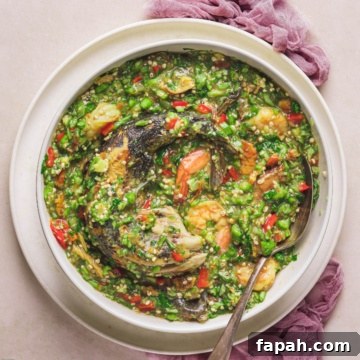
Okro Soup
-
Smoky Nigerian Jollof Rice
-
Bissap (Roselle Tea)
-
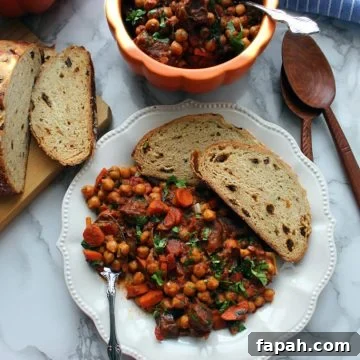
Stewed Goat with Chickpeas – Moroccan Style


If you try this recipe, share a spoon with us on social media using the hashtag worldlytreat (#worldlytreat). We’d love to see your creation.
PEACE & LOVE
Maureen
📖 Recipe
Nkwobi – Spicy Cow Leg
Equipment
- Pressure cooker or Instant Pot
- Saucepan or cast iron skillet
Ingredients
- 1.5 lbs cow leg
- 160 g cow skin (ponmo), cooked or raw
- 168 g stock fish
- 1 stock cube (or 2 tsp chicken powder)
- Salt to taste
- 4–6 ehuru seeds, de-shelled or 1 tbsp ground ehuru
- 2 tbsp baking soda
- 3 tbsp water
- ½ cup pure unrefined palm oil
- 2 tbsp ground crayfish
- 1 tsp chicken powder (optional)
- 2 small habanero peppers, finely chopped (adjust to taste)
- 1 mini sweet pepper, finely chopped or scotch bonnet
- ½ cup fresh chopped kale (or utazi)
- 1 small purple onion, thinly sliced, divided
Instructions
- Add the cow leg, stock fish, ponmo, chopped onion, stock cube, salt, and pepper to a pressure cooker. Stir to combine.
- Pour enough water to cover the meat (about 4 cups). Close and lock the pressure cooker.
- For an Instant Pot, cook on high pressure for 13 minutes and release. For a stovetop pressure cooker, cook 25–30 minutes after pressure is reached, then release steam.
- Remove the meat with a slotted spoon and reserve some stock.
- Roast ehuru seeds for about 3 minutes until they crack, remove shells, and grind to a powder.
- Mix baking soda with water to make a slurry and set aside.
- In a medium pan, add palm oil and stir in the baking soda slurry. Stir until the oil turns pale yellow and thickens.
- Add ground crayfish, ground ehuru, chopped peppers, chicken powder (if using), and salt. Stir to combine.
- Fold in the chopped cow leg, stock fish, and ponmo. Add reserved stock if you prefer more liquid.
- Add kale or utazi leaves and sweet pepper, then mix until everything is well combined.
- Spoon into a wooden or ceramic bowl, garnish with onion rounds and herb leaves, and serve immediately.
Notes
- Do not reheat the finished nkwobi on high. The residual heat from the meat heats the sauce as you mix; overheating makes it oily.
- Serve immediately for best texture and flavor.
- Leftovers freeze well. Reheat gently on low heat or over a steaming basket.
*See the post body for step-by-step photos and substitution ideas.*
Nutrition
Calories: 384 kcal |
Carbohydrates: 9 g |
Protein: 27 g |
Fat: 39 g