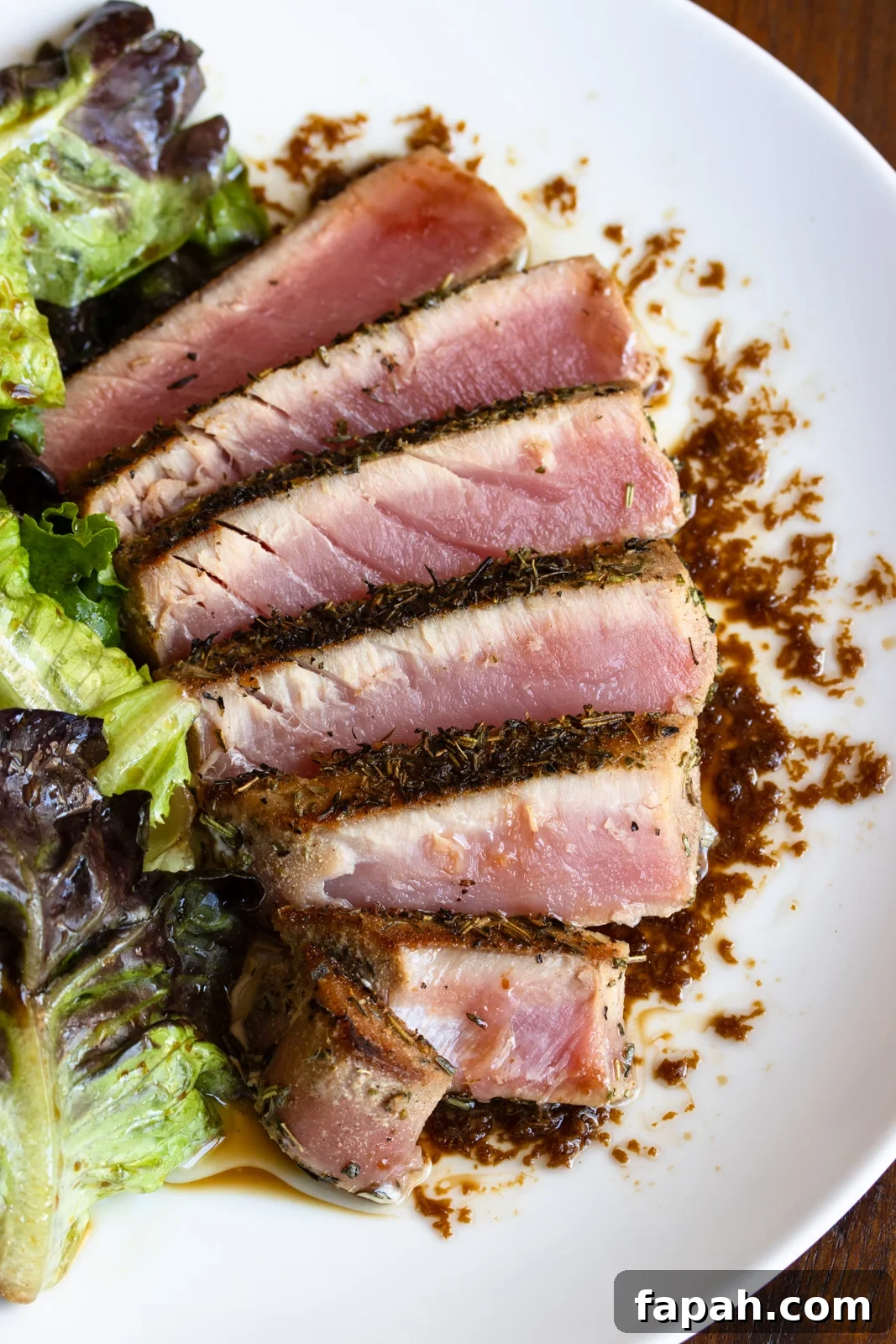
If you hesitate to cook fish, try this grilled tuna steak recipe. With a short ingredient list and fast preparation, it delivers bold, satisfying flavor in minutes.
This is a family favorite. The tuna steaks are easy to prepare, tender, and full of flavor. Best of all, the whole meal takes about 15 minutes from start to finish.
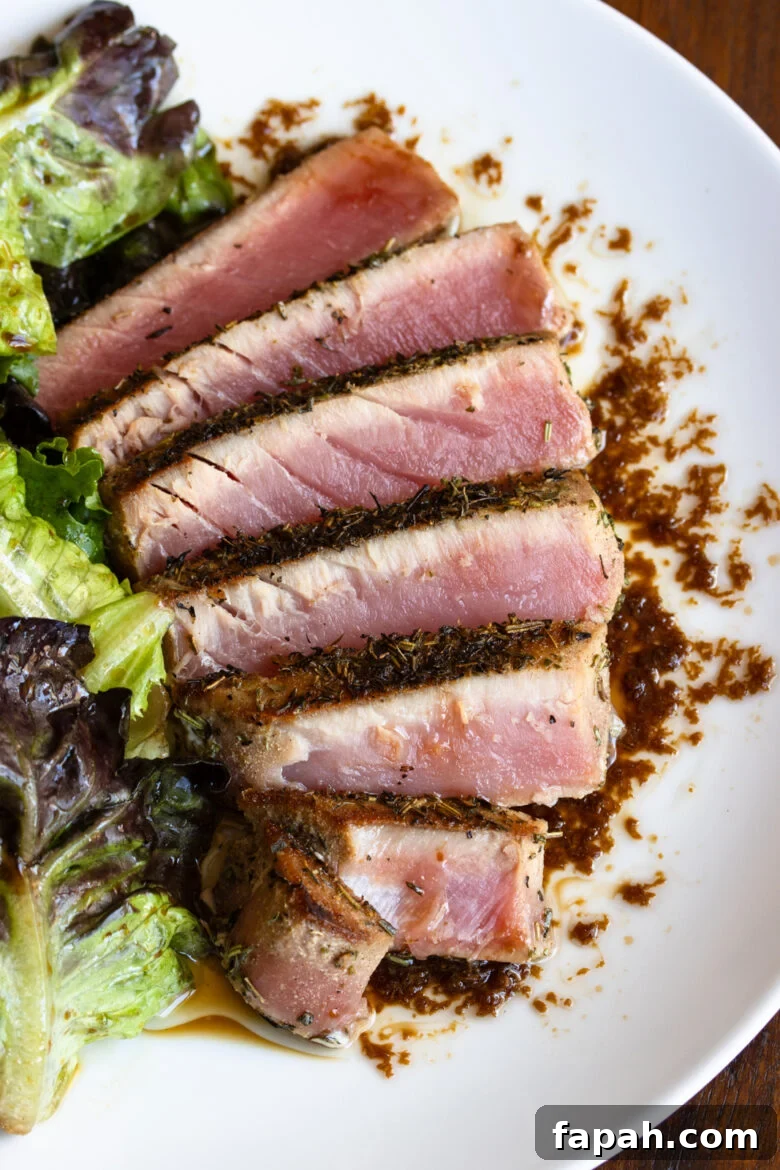
I love seafood and could eat it most nights. Tuna steaks are among the simplest fish to cook and reliably turn out tender. Coated with herbes de Provence and seared over high heat, they develop a subtle smoky aroma that elevates the dish.
Serve this quick, elegant dinner year-round for family or guests.
In this Article
- Why you will love this recipe
- Different types of tuna steaks
- Herbes de Provence
- Ingredients needed to make this recipe
- Equipment Needed
- How to cook tuna steaks with herbes de Provence
- Giangi’s Pro Tips
- What dishes can you enjoy with this grilled tuna steak?
- Variations and Substitutions
- Storing and Reheating
- Frequently Asked Questions
- If you enjoy this grilled tuna recipe, you may want to try my other recipes.
- Grilled Tuna Steak
Why you will love this recipe
Fast: The tuna sears in minutes, making this a perfect weeknight meal.
Easy: A few pantry ingredients and a quick sear are all you need. There’s no complicated technique.
Delicious: Herbes de Provence and a ginger-soy dressing give the tuna a bright, savory finish.
Different types of tuna steaks
Common tuna steaks include yellowfin, albacore, bigeye, and bluefin.
Albacore is often canned but sometimes sold as steaks; it has a milder flavor and typically higher mercury content, so consume it less frequently.
Yellowfin (often called ahi) is leaner and milder, commonly used in sushi.
Bigeye has a darker, meatier texture and a stronger tuna flavor.
Bluefin, prized for sushi, is the most expensive option.
Ahi is a Hawaiian term applied to yellowfin and sometimes bigeye tuna.
Herbes de Provence
Herbes de Provence is a fragrant blend from southern France, commonly including thyme, rosemary, marjoram, oregano, lavender, fennel, and tarragon. Its floral and peppery notes season fish, meats, vegetables, and grilled foods beautifully.
It’s a versatile staple in the kitchen.
Ingredients needed to make this recipe
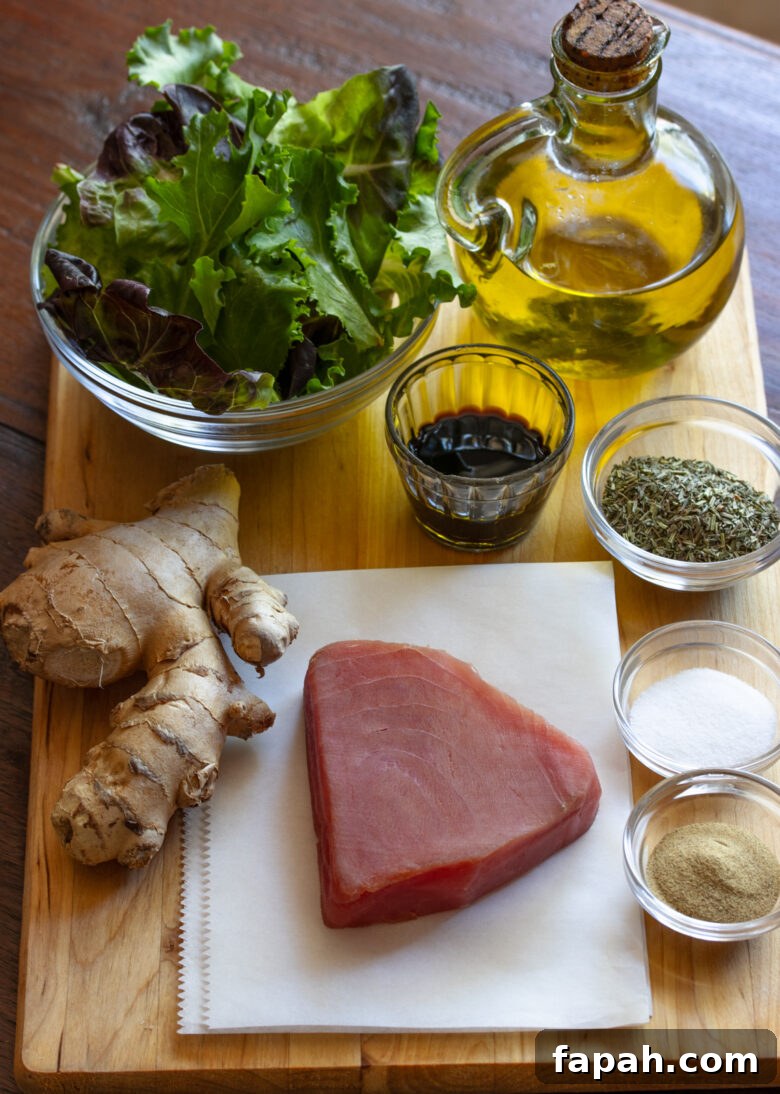
The ingredient list is short and likely contains items you already have. Read the instructions for full details.
Tuna steaks: Choose steaks at least 1 inch thick and similar in size for even cooking. Look for deep red, firm flesh.
Extra virgin olive oil: Used for the dressing and to oil the pan.
Fresh ginger: Grated into the dressing for bright, fresh flavor.
Soy sauce: Adds savory depth to the dressing.
Herbes de Provence: Coats the tuna and adds aromatic flavor when seared.
Salt and ground white pepper: Season the fish. White pepper is milder and leaves a subtle finish.
Crispy green salad: A simple side to balance the seared tuna.
Equipment Needed
Basic tools make this easy: a stovetop grill pan (or outdoor grill), a pastry brush, a flexible seafood spatula, and a very sharp chef’s knife.
How to cook tuna steaks with herbes de Provence
Gather all ingredients and have the salad washed and dried before you start—the cooking is fast.
- Preheat a grill pan or grill to very high heat and turn on ventilation.
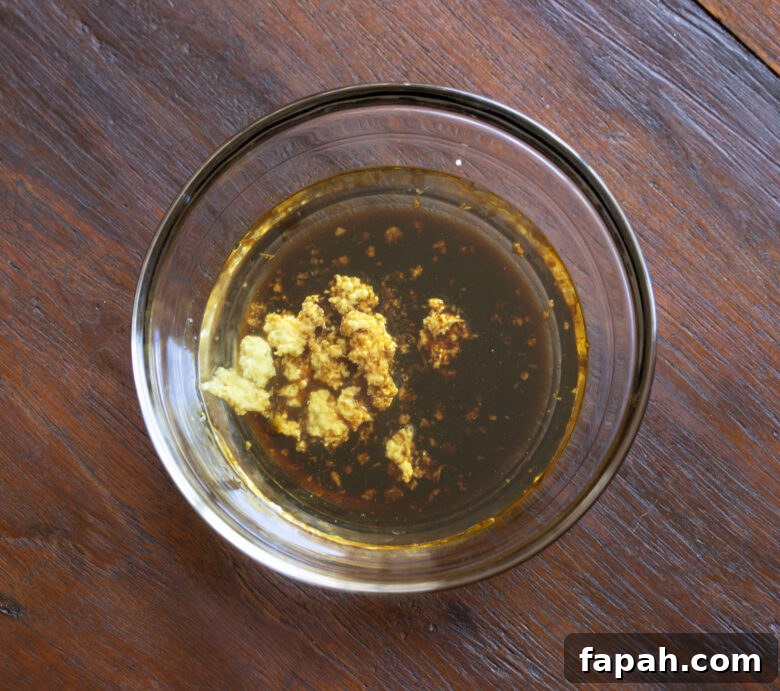
- Whisk olive oil, grated ginger, and soy sauce in a small bowl; set aside.
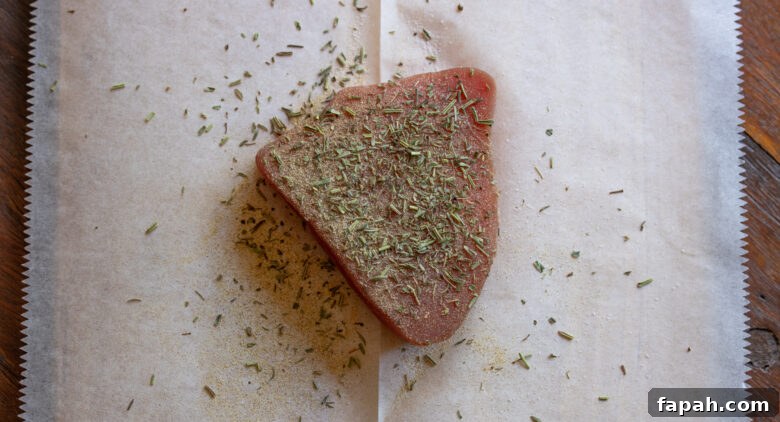
- Pat the tuna dry with paper towels. Season generously with salt and ground white pepper. Press herbes de Provence onto both sides so the herbs adhere. Lightly drizzle with olive oil.
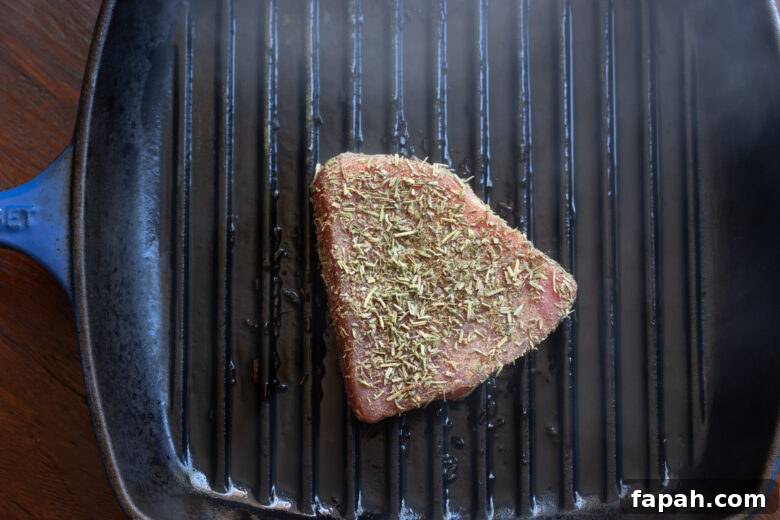
- Brush a little olive oil on the hot grill pan. Place the steaks on the pan and cook without moving for 1 minute.
- Turn gently and cook the other side for 1 minute. Remove to a cutting board.
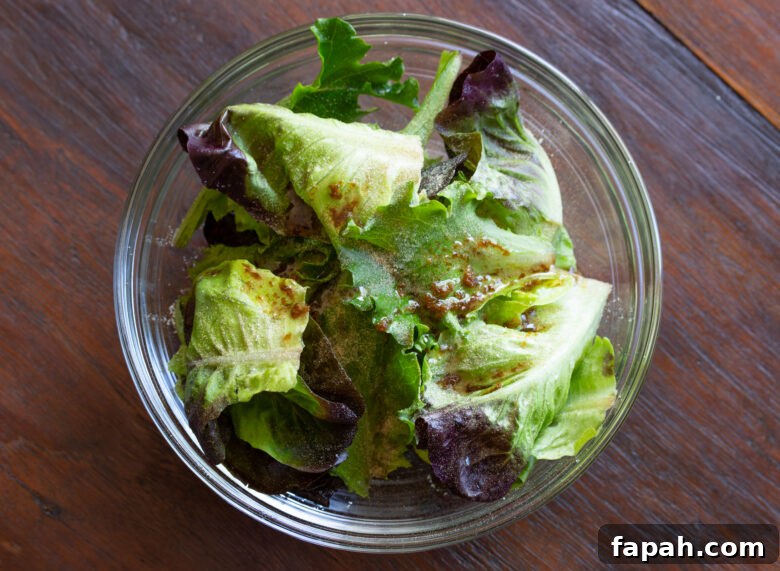
- Toss the greens with a few tablespoons of the ginger-soy dressing and season with salt and white pepper.
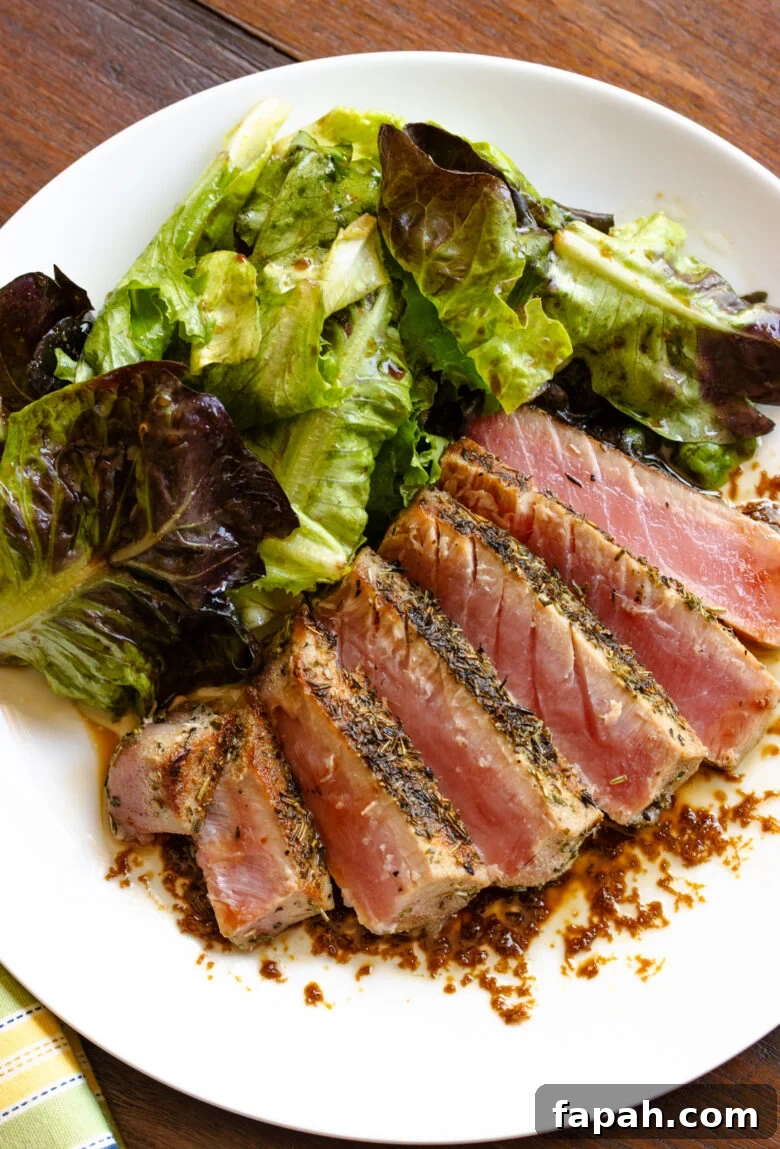
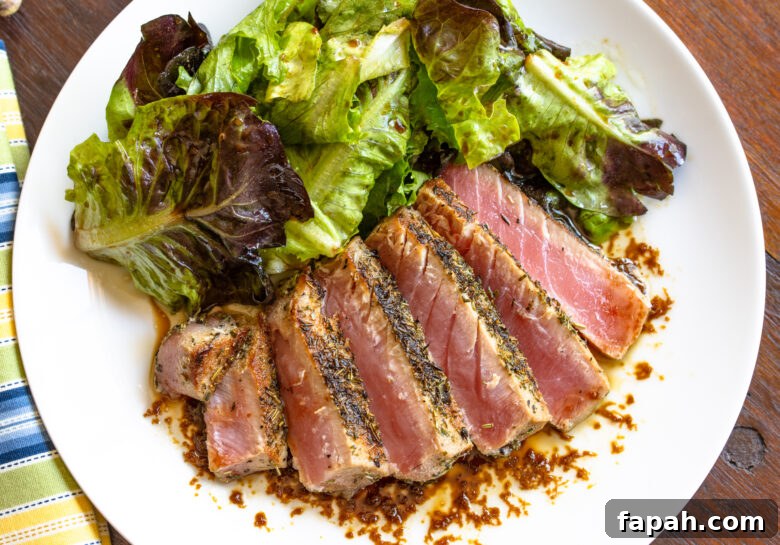
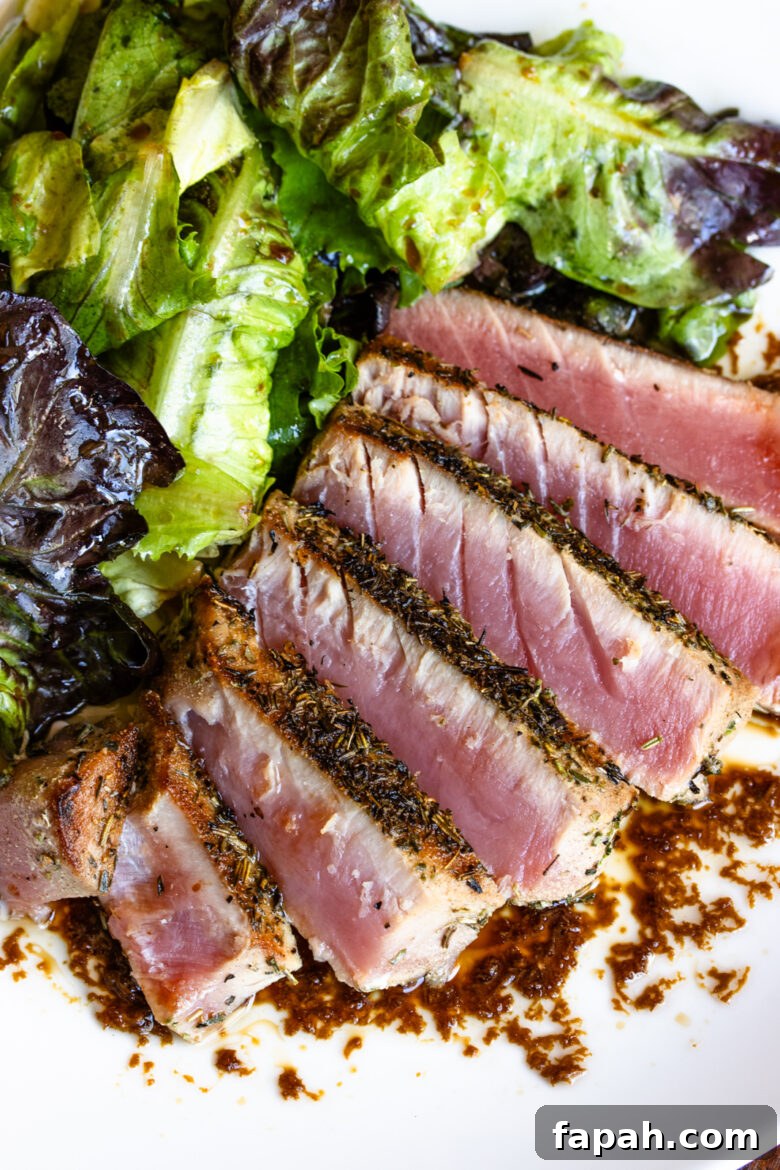
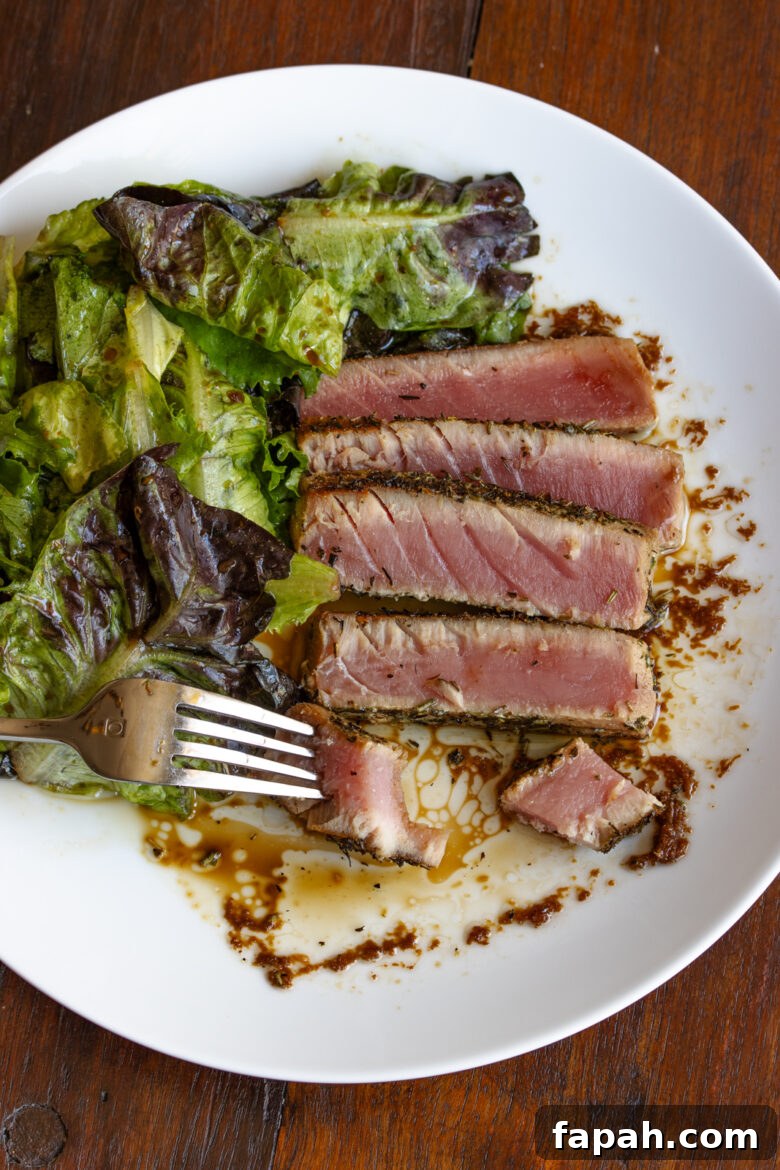
- Slice the tuna into roughly 1/2-inch slices, fan them on plates, arrange the salad alongside, spoon more dressing over the tuna, and serve immediately.
Giangi’s Pro Tips
- Pat tuna gently—pressing too hard can damage the flesh. Use doubled paper towels and dab lightly.
- Bring steaks to room temperature before cooking so they sear evenly.
- Use a very hot grill pan to get a good sear and attractive grill marks.
- Because the fish cooks so quickly, have plating and sides ready—slicing and plating take longer than the cook time.
- Serve tuna warm and rare to medium-rare for the best texture and flavor.
What dishes can you enjoy with this grilled tuna steak?
This preparation stands alone as a complete meal paired with a crisp green salad. It also works well with light seafood starters and simple desserts to finish the meal.
Variations and Substitutions
Yellowfin was used here, but bigeye or bluefin are fine substitutes. Their meatier texture holds up well to high heat and gives a robust flavor.
Storing and Reheating
Store: Refrigerate leftovers in an airtight container for up to two days.
Reheat: Tuna is often best eaten cold or at room temperature; remove from the fridge and enjoy. If you prefer warm, briefly warm gently—avoid overcooking.
Ideas: Leftover slices are excellent over salad or added to pasta at the last minute for extra flavor.
Frequently Asked Questions
What are the common mistakes when grilling tuna?
Common errors include overcooking (which dries the fish), not preheating the grill enough (which causes sticking and poor sear), and moving the steaks too often so they don’t form a crust.
How long do you grill tuna?
Cook time depends on thickness and desired doneness. For 1-inch steaks, 2–4 minutes total (about 1–2 minutes per side) yields rare to medium-rare. Adjust a little longer for medium.
How should tuna steaks be cooked?
Generally, 2–3 minutes per side for medium-rare and 3–4 minutes per side for medium to medium-well, depending on steak thickness.
Is tuna steak good for eating?
Yes. Tuna is flavorful, relatively low in calories, rich in protein, and a source of healthy fats and nutrients, including omega-3s.
If you enjoy this grilled tuna recipe, you may want to try my other recipes.
Yellowfin Tuna with Spicy Mango Salsa
Fresh Tuna with Paccheri
Pan Seared Steak
Broiled Salmon with Tarragon Sauce
Grilled Tuna Steak
Ingredients
- 5 tablespoons olive oil, plus for the tuna steak
- 1 tablespoons grated fresh ginger
- 2 tablespoons soy sauce
- 4 6-ounces tuna steak, moisture-padded out and at room tempearture
- 4 tablespoons herbes de Provence
- 2 cups crispy greens salad
- salt
- ground white pepper
Instructions
-
Preheat a stovetop grill pan to high heat.
-
In a small bowl, whisk the olive oil, soy sauce, and ginger, and set aside.
-
Season the tuna generously with salt and white pepper, then coat both sides with the herbes de Provence, pressing firmly without breaking the tuna steaks so the herbes adhere. Lightly drizzle olive oil over it.
-
When the grill (or pan) is hot, brush a small amount of olive oil onto the pan with a pastry brush. Place the steaks in the hot pan and cook for 1 minute. Gently turn the tuna over to cook for 1 more minute. Remove to a cutting board.
-
Lightly season the crispy greens salad with salt and pepper. Toss a few tablespoons of ginger soy dressing in the bowl and mix well.
-
Using a very sharp knife, cut the tuna steaks into ½-inch thick slices. Evenly fan the slices on four plates and place the salad next to the tuna. Spoon the dressing around the tuna and serve immediately.
Equipment
-
Stovetop grill
-
Pastry Brush
-
Seafood spatula
-
Sharp Chef’s knife
Notes
- Pat the tuna gently; pressing too hard can break the membranes.
- Bring steaks to room temperature before cooking for an even sear.
- Make sure the grill pan is very hot to achieve a good crust and marks.
- Everything happens quickly—have plating and sides ready before you start.
- The tuna is best served warm and rare to medium-rare.
Nutrition
Giangi’s Kitchen provides nutritional information as estimates; they are not calculated by a registered dietitian.
- Course: Fish, Dinners
- Cuisine: International
- Occasion: Valentine’s Day, Mother’s Day, New Year
- Type: Under 45 minutes
Did you make this?
Leave a comment below and tag @giangiskitchen on Instagram