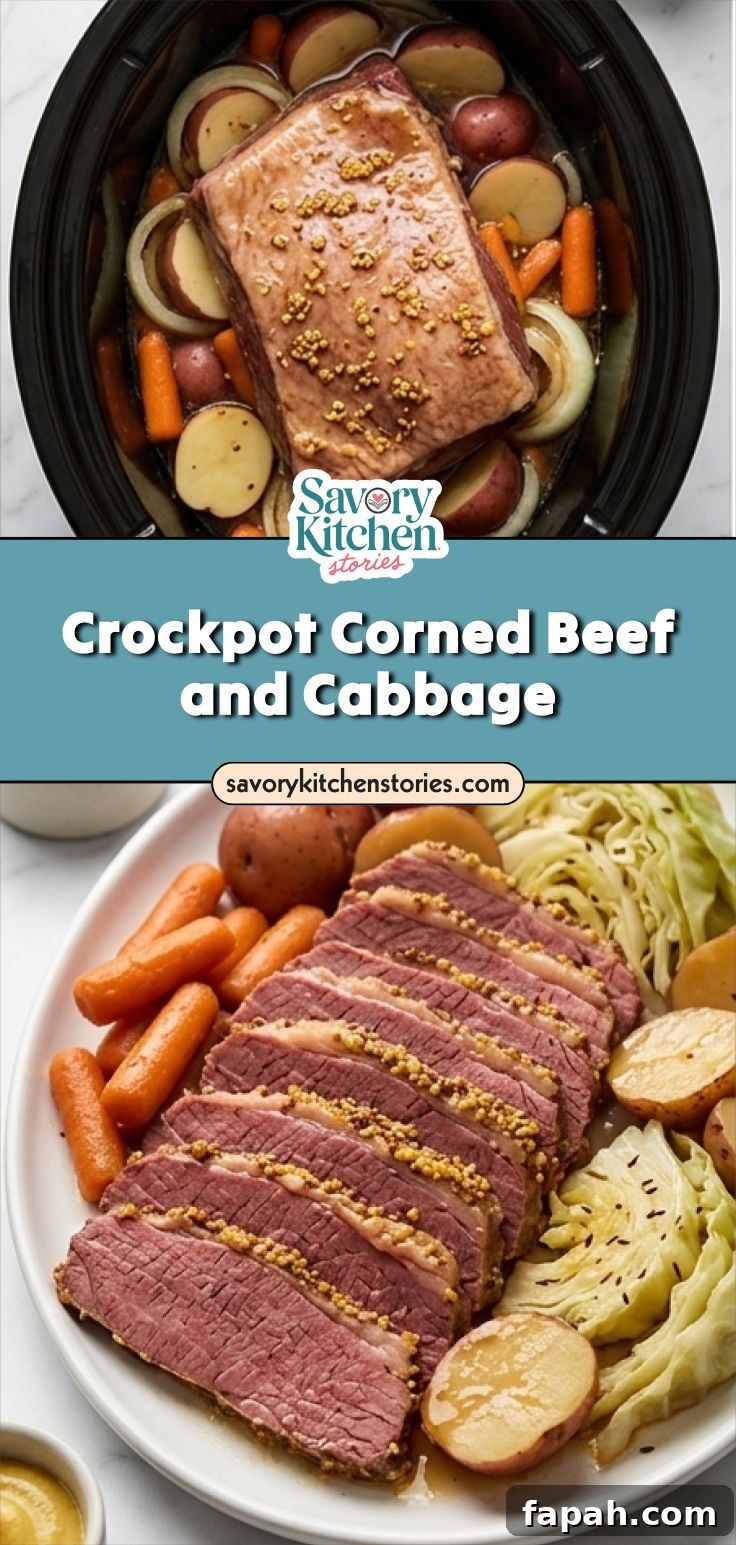
Crockpot Corned Beef and Cabbage is my go-to comfort meal when the skies turn gray and I want something that smells like home. I learned this method from a neighbor who swore that slow cooking does half the work and all the flavor. The crockpot handles the heavy lifting, leaving you free to relax while the kitchen fills with a savory, briny aroma. If you enjoy one-pot dinners that feel like a warm hug, this recipe deserves a regular spot in your rotation.
How this recipe became my rainy-day favorite
One cold, rainy Sunday I tried a corned beef brisket my aunt recommended. The house filled with rich, meaty scents brightened by sweet onion and caraway, and the first forkful was tender and unexpectedly comforting. It was a reminder that simple ingredients, given time, can be deeply satisfying. Ever since, making Crockpot Corned Beef and Cabbage brings that memory to mind: steam on the window, friends gathered, and a cozy plate passed around. It’s more than food—it’s a comforting ritual.
What makes the ingredients sing
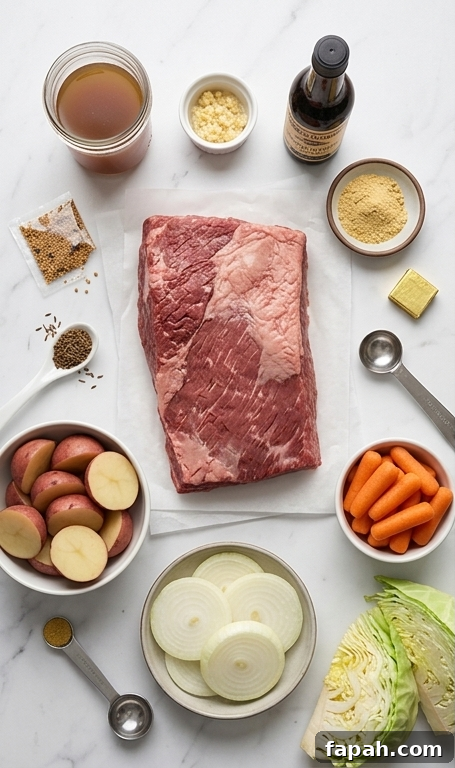
- Corned beef brisket: The centerpiece—choose a well-marbled 2½-pound piece for even tenderness. A larger brisket works too; just increase cook time accordingly.
- Red potatoes: They add body and soak up the braising liquid; Yukon Golds are a fine substitute.
- Cabbage: Brings texture and brightness; green or savoy cabbage both work well.
- Carrots and onion: Form a flavorful bed; shallots add a sweeter, more delicate note.
- Beef broth and bouillon: Provide depth—use low-sodium broth if you’re watching salt.
- Garlic, Worcestershire, dry mustard, caraway: Small additions that layer flavor without overpowering the meat.
Essential kitchen tools and why they matter
A few basic tools make this dish easy and stress-free. A reliable crockpot maintains a low, steady temperature so the brisket becomes fork-tender. A sharp carving knife slices cleanly across the grain, and a sturdy cutting board protects your counters and keeps prep organized.
- Crockpot / slow cooker: A 6-quart model fits this recipe well and allows for even, unattended cooking.
- Sharp chef’s knife: Essential for trimming fat, slicing cabbage, and carving the meat.
- Cutting board: Use a large wooden or plastic board and keep meat and vegetables separate when prepping.
- Small bowls or ramekins: Helpful for pre-measured spices so everything’s within reach.
- Tongs and slotted spoon: For lifting meat and vegetables without losing the juices.
If you don’t have a crockpot, a heavy Dutch oven set in a low oven will also produce excellent results.
Step-by-step preparation guide
Step 1: Trim and prep the brisket
Trim most of the visible fat from the corned beef and pat it dry. Slice the onion into thin rings, halve the potatoes, trim the carrots, mince the garlic, and cut the cabbage into large wedges so it holds together during the final hour of cooking. Keep the bouillon, dry mustard, Worcestershire, and any spices close at hand in small bowls for easy measuring.
Step 2: Layer vegetables and set the brisket in the crockpot
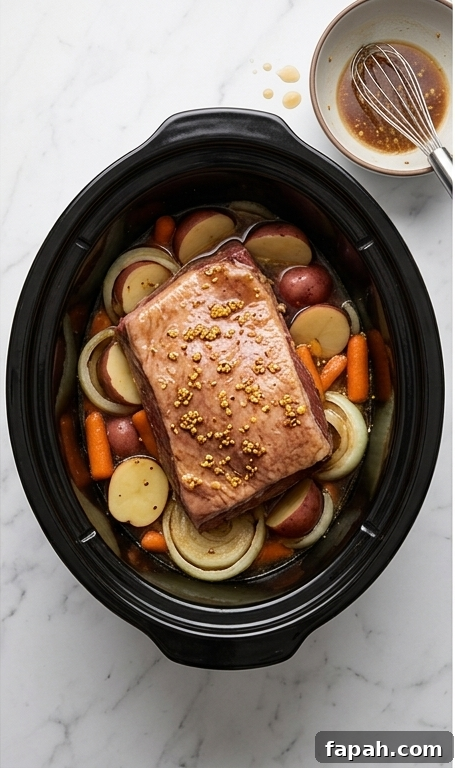
Lightly spray the crockpot, then arrange the onion rings, potato halves, and carrots in an even layer across the bottom to form a vegetable cushion. Place the brisket fat-side up on top so the melting fat bastes the meat. If your brisket includes a spice packet, you can sprinkle it over the meat now for added seasoning.
Step 3: Whisk the braising liquid and pour to cover
Mix dissolved beef bouillon, minced garlic, Worcestershire sauce, dry mustard, and low-sodium beef broth until combined. Pour the braising liquid around the brisket and vegetables so the meat is partially submerged; this encourages slow breakdown and tenderness during the long cook.
Step 4: Cover and slow-cook, finish with cabbage and caraway
Cover and cook on low for 8–10 hours or on high for 4–5 hours. About an hour before the end, nestle the cabbage wedges into the braising liquid and scatter caraway seeds over the top so they steam, soften, and absorb the beefy aroma. The result should be fork-tender beef; properly cooked corned beef will be very tender and reach a safe internal temperature.
Step 5: Rest, drain, slice, and serve warm
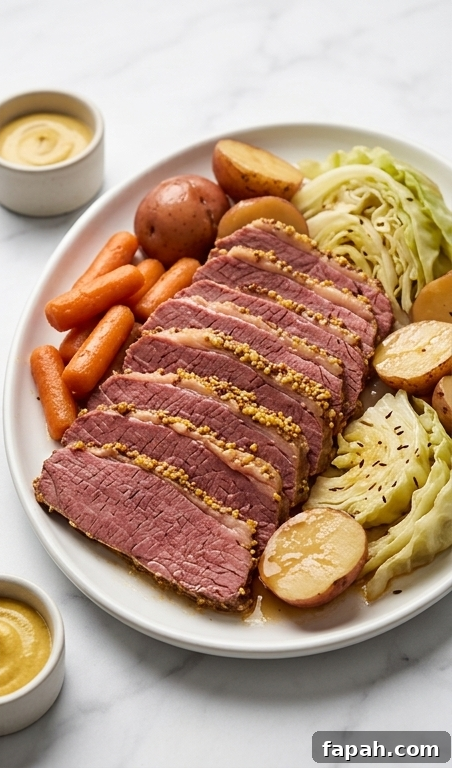
When the meat is tender, transfer the brisket to a carving board and discard excess cooking liquid. Let the meat rest briefly so juices redistribute, then slice across the grain into even, slightly thick slices that show a warm pink interior. Arrange the slices on a platter with potatoes, carrots, and cabbage, and serve with mustard for a bright contrast.
Making it your own
Adjust this recipe to suit the season and your tastes. In winter, add a few whole cloves and a diced parsnip for extra earthiness. For a lighter spring version, swap half the potatoes for turnips and lean on fresh herbs rather than a spice packet. For gluten-free cooking, confirm your Worcestershire sauce is gluten-free or substitute tamari. For deeper flavor, sear the brisket quickly before slow cooking to build a crust and a subtle smoky note.
How to serve
For company, arrange sliced corned beef and vegetables on a large platter. Offer whole-grain mustard, a drizzle of reserved jus, and crusty bread to soak up the juices. Scale the recipe by choosing a larger brisket and increasing veggies for a crowd, or halve the ingredients for a smaller meal. A bright, acidic salad or some pickled vegetables pairs well to balance the richness.
Storage and reheating tips
Cool leftovers quickly and store in an airtight container for up to four days in the refrigerator. If possible, separate meat and vegetables to avoid overcooking the cabbage when reheating. To freeze, slice the meat, pack it with a little cooking liquid, and freeze for up to three months.
Reheat gently in a low oven or simmer briefly in a covered pan with a splash of beef broth to restore moisture. Microwaving works for single portions—use short bursts to avoid drying the meat.
Common mistakes and how to avoid them
Adding all the vegetables too early is a common mistake—add cabbage near the end so it keeps some texture. Also, avoid leaving too much fat on the brisket; trim excess but keep a thin layer for moisture and flavor. Finally, resist overcooking: slow, steady heat at low temperature yields the best tenderness without drying the meat.
Final thoughts
Try this Crockpot Corned Beef and Cabbage when you want an easy, satisfying meal that fills your home with inviting aromas. It’s forgiving, makes reliable leftovers, and serves a crowd with minimal effort. I hope it becomes a comforting favorite for your chilly evenings and relaxed Sunday dinners.
Frequently asked questions
- What size crockpot should I use and how long will it take? – A 6-quart crockpot is ideal; cook on low for 8–10 hours or on high for 4–5 hours.
- Can I skip the spice packet that comes with the brisket? – Yes, the spice packet is optional; dry mustard and caraway seeds provide great flavor instead.
- How do I know when the corned beef is done? – The beef should be fork-tender and tender throughout; it will be easy to pierce with a fork and slice across the grain.
- Can I make this ahead of time for a dinner party? – Absolutely. Cook earlier in the day, keep warm in the crockpot, and slice just before serving.
- What can I serve with this for a complete meal? – Rye or crusty bread, mustard, a bright salad, or pickled vegetables all complement the dish well.