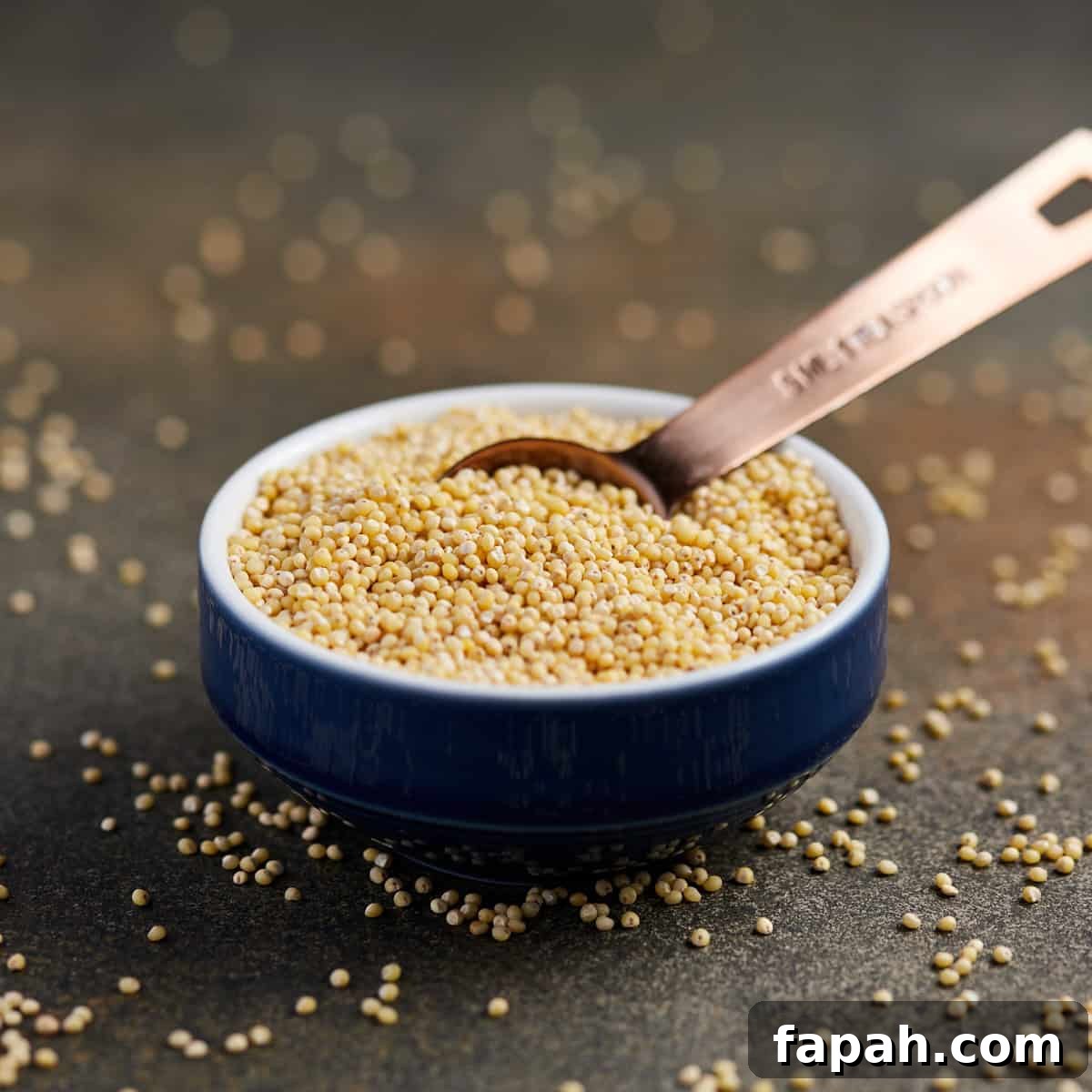
Millet is an underused, nutritious whole grain with a compact, couscous-like appearance that cooks and serves similarly — but unlike couscous, millet is naturally gluten-free. It’s also an environmentally friendly crop, tolerant of drought and pests, and quick and inexpensive to grow. Below you’ll find practical information on millet’s benefits, varieties, cooking tips and several tasty ways to use it.

What’s So Good About Millet?
- Gluten-free – millet is naturally free of gluten, making it an excellent alternative to grains like couscous or bulgur for people avoiding gluten.
- Environmentally friendly – millet is pest- and drought-resistant, needs far less water than rice, and grows well in hot, dry conditions. It is also quick and economical to cultivate.
- Nutritious – as a whole grain, millet contains fiber, protein, polyphenols and antioxidants, and provides several B vitamins and minerals such as magnesium, copper and zinc.
Read on to learn how to cook millet perfectly, when to soak it, the main types you’ll find, and how to use it in meals from porridge to pilafs and salads.
What is Millet?
Millet is an ancient grain in the grass family Poaceae, the same botanical family as wheat, rice and maize. Although in some regions it’s mainly known as birdseed, millet has a long history as human food and has been cultivated for thousands of years. It is widely grown and eaten across Asia and Africa and is used for creamy porridges, ground into flour for flatbreads, or cooked whole as an alternative to rice or couscous.
What Does Millet Taste Like?
Millet has a mild, slightly sweet flavor reminiscent of corn. It can be subtle or a bit bland on its own, so it benefits from good seasoning and pairs well with bold flavors, herbs and dressings.
Health Benefits of Millet
As a whole grain, millet is nutrient-dense: it provides complex carbohydrates that digest more slowly for lasting energy, along with protein, fiber, antioxidants and several essential minerals and B vitamins. Because whole millet lacks a rough outer husk, it is often acceptable to children who prefer refined grains. Its gluten-free nature makes it suitable for people with coeliac disease or gluten intolerance.
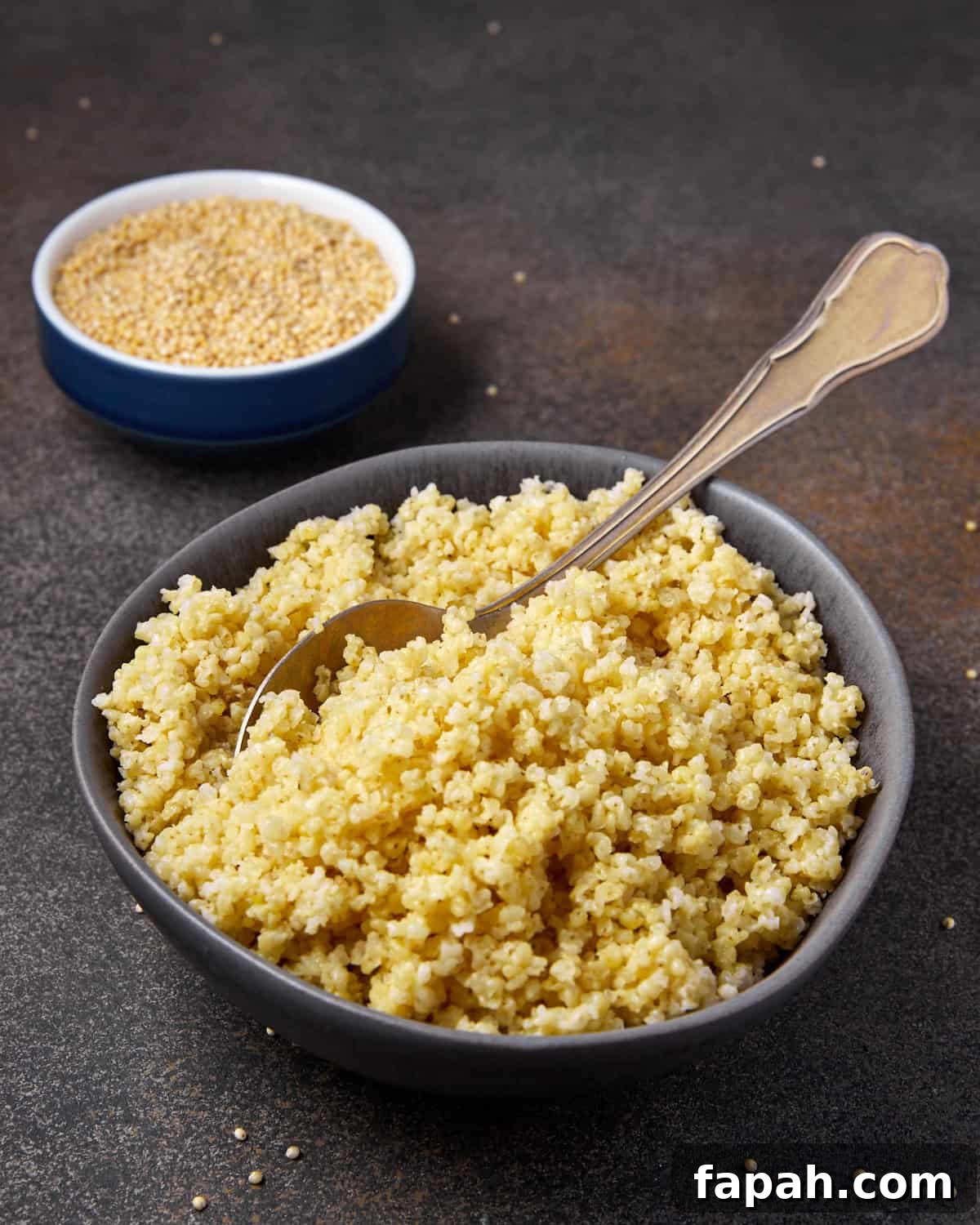
Should You Soak Millet Before Cooking?
Millet, like many whole grains, contains some phytic acid, which can reduce mineral absorption. Soaking for at least 10 minutes (or longer, up to overnight) can reduce anti-nutrients and improve digestibility. Sprouting is another option to enhance nutrient absorption. If you don’t have time to soak, millet still offers good nutrition and will cook fine without soaking.
Types of Millet
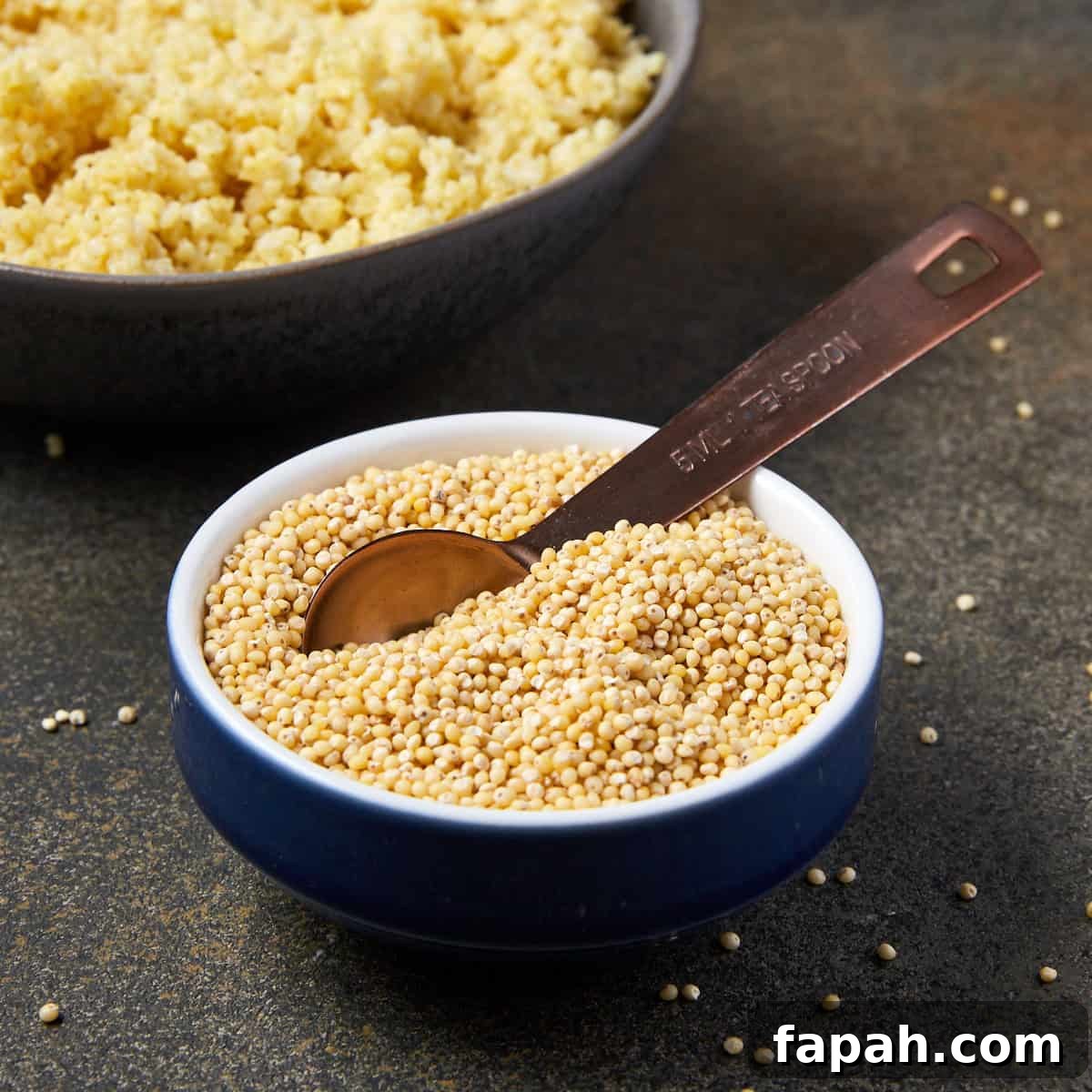
Millet is sold under a single label in many stores, but there are several varieties with different sizes and textures. Types range from very small grains to larger ones such as sorghum. They are often grouped as sorghum, major millets and minor millets. Common major millets include pearl, foxtail, proso and finger (ragi). Minor millets include kodo, barnyard, little millet, guinea, fonio and others. Pearl millet is widely available and is often the variety found in generic millet packs.
Cooking Experiment: Different Millets Compared
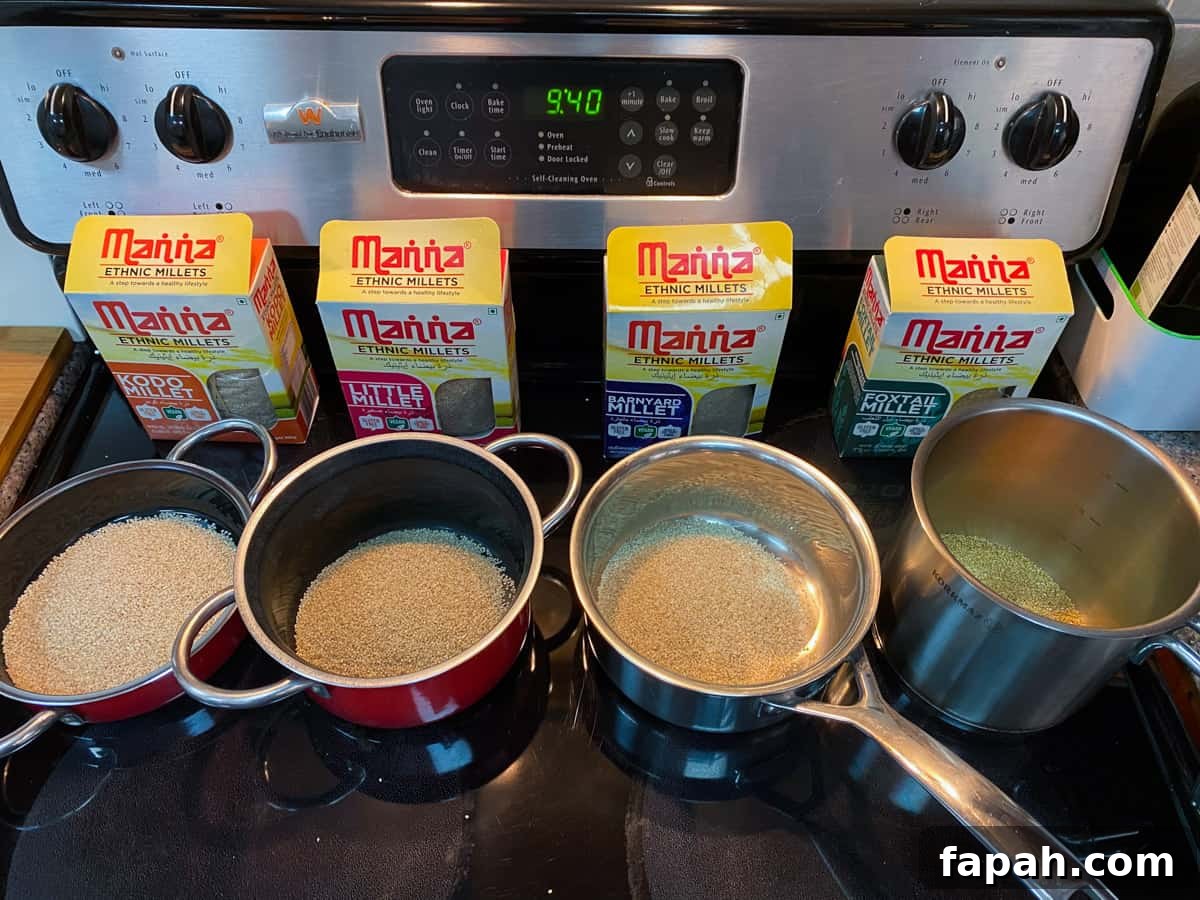
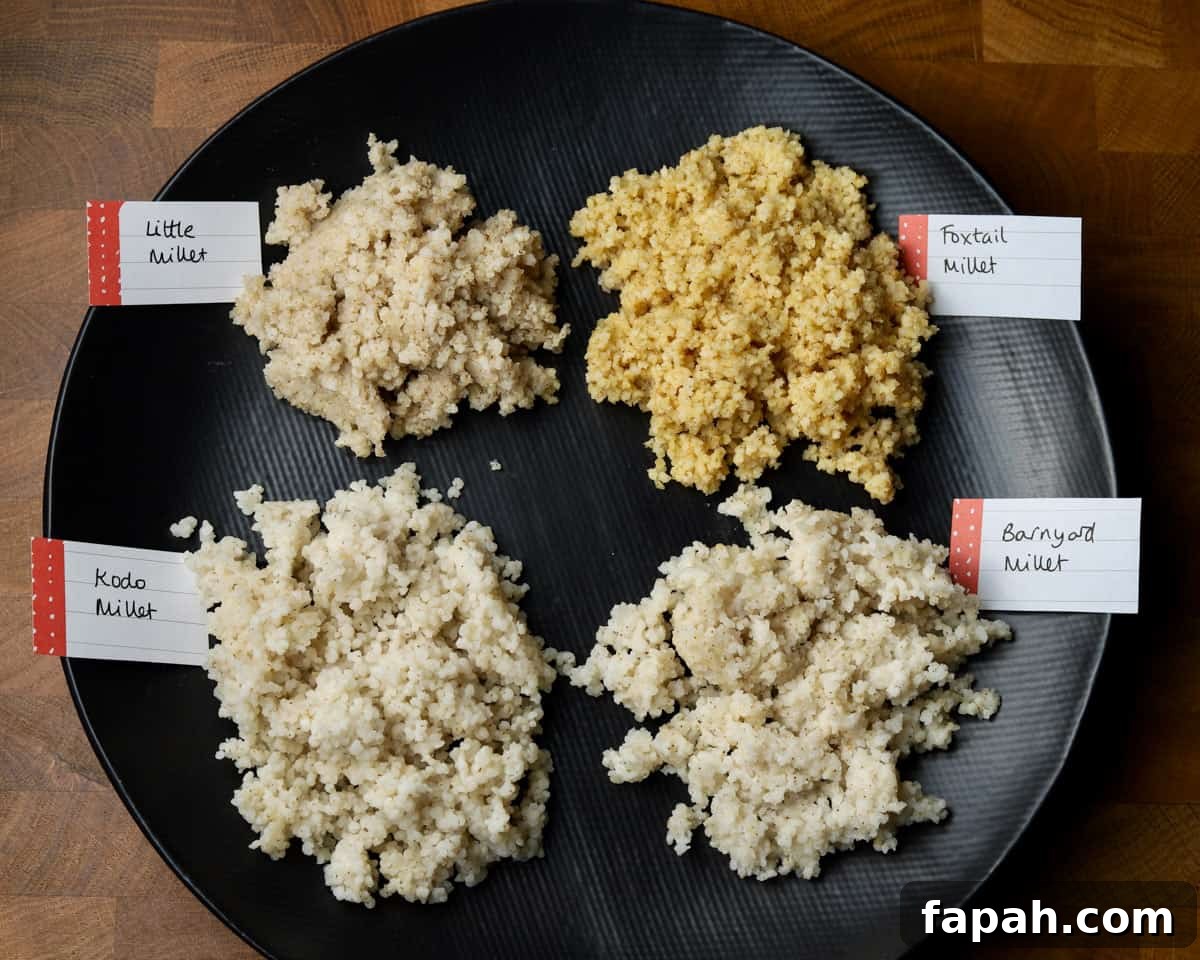
I tested foxtail, barnyard, kodo and little millet, cooking each the same way so I could compare texture and flavor. All were soaked briefly, rinsed and simmered in a 2:1 water-to-millet ratio for about 10 minutes.
Results
- Little millet and barnyard millet break down more quickly and become porridge-like when cooked.
- Foxtail and kodo millet hold their shape and remain light and fluffy, making them good substitutes for couscous or rice.
Conclusion
- Use foxtail and kodo millet as a side grain or in salads when you want separate, fluffy grains.
- Use little and barnyard millet for quick-cooking porridges and creamy preparations.
Millet Cooking Tips
- Cook on the stovetop or in a pressure cooker/Instant Pot. Either method yields excellent results; cooking time is roughly 10 minutes.
- For porridge, use more liquid and stir frequently while cooking; for creamy results allow a slightly longer resting time covered.
- For fluffy, separate grains, use less water and avoid stirring while it cooks, similar to rice. A rice cooker or the rice setting on an Instant Pot also works well.
- Toasting dry millet briefly in a pan can deepen its nuttiness, but you can only do this before soaking; it’s optional and not essential for good flavor.
How To Use Millet
Millet is versatile. Try these ideas:
Porridge – Millet makes a nutritious breakfast porridge, which can be sweet or savory.
- For sweet porridge, cook millet in water or plant milk and top with fruit, jam or maple syrup.
- For savory porridge, cook in vegetable stock and finish with chili or sesame oil, spring onions, cilantro and soy or tamari for a congee-like bowl.
Salads – Use fluffy millet as the grain base for salads combined with vegetables, nuts and a bright dressing.
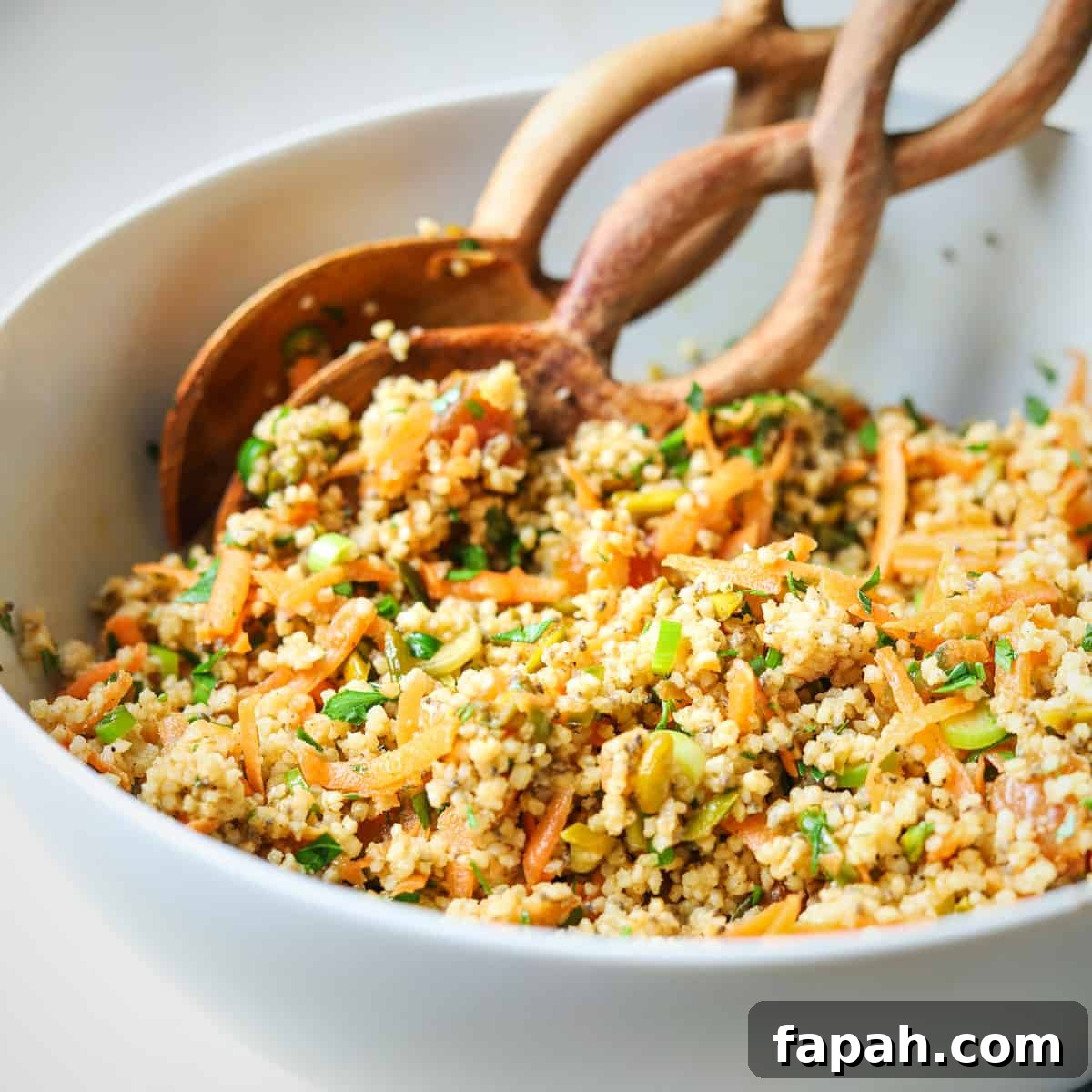
Grain side dish – Serve millet in place of rice or couscous with curries, stews or roasted vegetables. Cook it in broth, then finish with olive oil or vegan butter and fresh herbs.
Grain bowls – Build bowls with fluffy millet, roasted vegetables, greens, protein (tofu or legumes) and a flavorful sauce or hummus for a nutritious meal.
Pilaf – Substitute millet for rice in pilaf recipes. For an Instant Pot pilaf, sauté aromatics, add 1 cup millet and about 1 1/2 cups vegetable stock, pressure cook for 10 minutes, then allow a natural release before fluffing and adding toasted nuts.
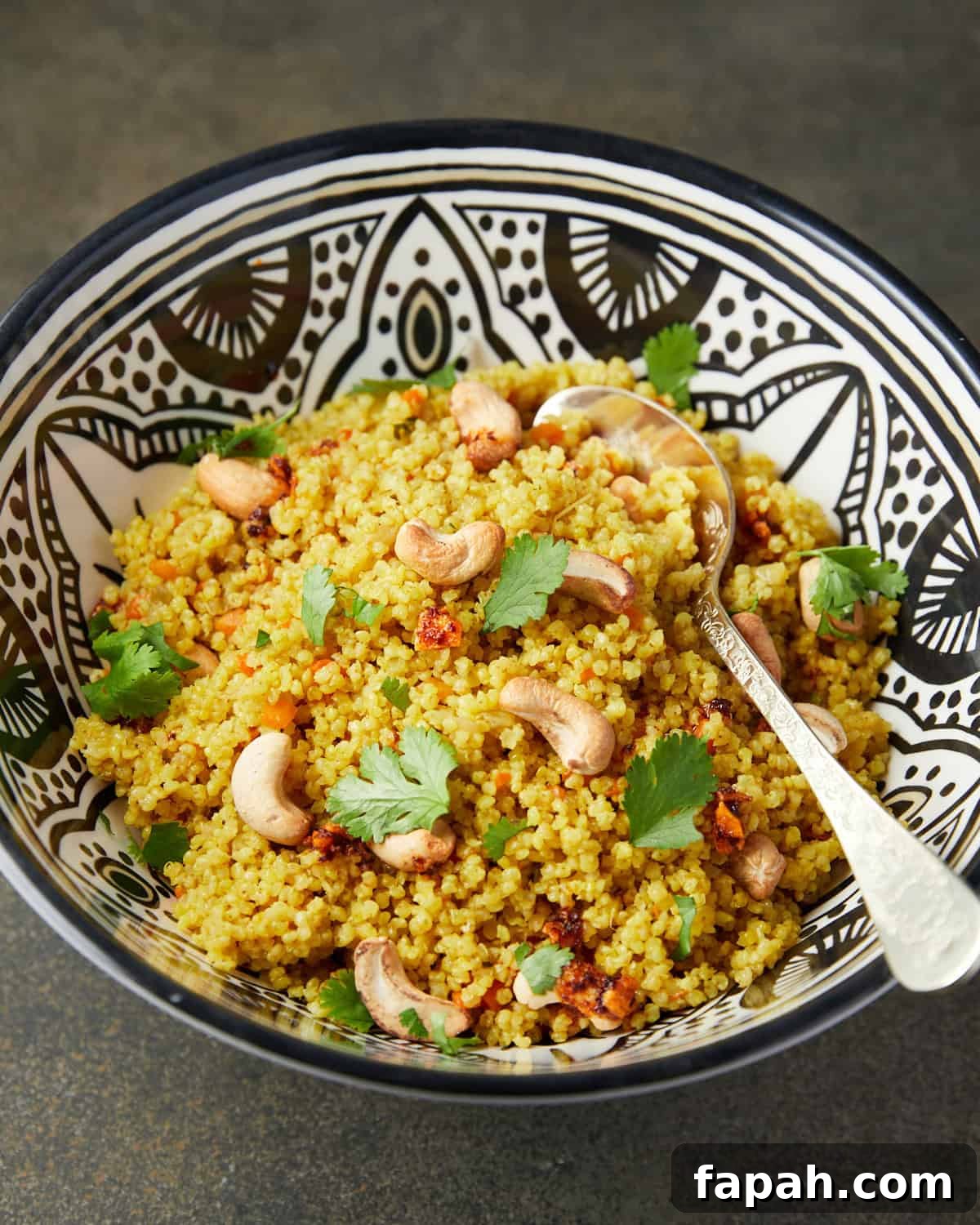
Millet flour – Ground millet can be used in gluten-free flour blends for breads, pancakes and baked goods.
Storage
Cooked millet keeps in an airtight container in the refrigerator for 4–5 days, or in the freezer for a couple of months. Use cold or bring to room temperature for salads, or reheat briefly in the microwave or on the stovetop.
FAQs
Sorghum is often referred to alongside millets and belongs to the same grass sub-family, but it is a different genus and species. It can be considered a related or “sister” grain to other millets.
Use less water and avoid prolonged soaking when you want separate, fluffy grains. Follow specific grain-to-liquid ratios and minimal stirring during cooking to keep the grains intact.
Recipe
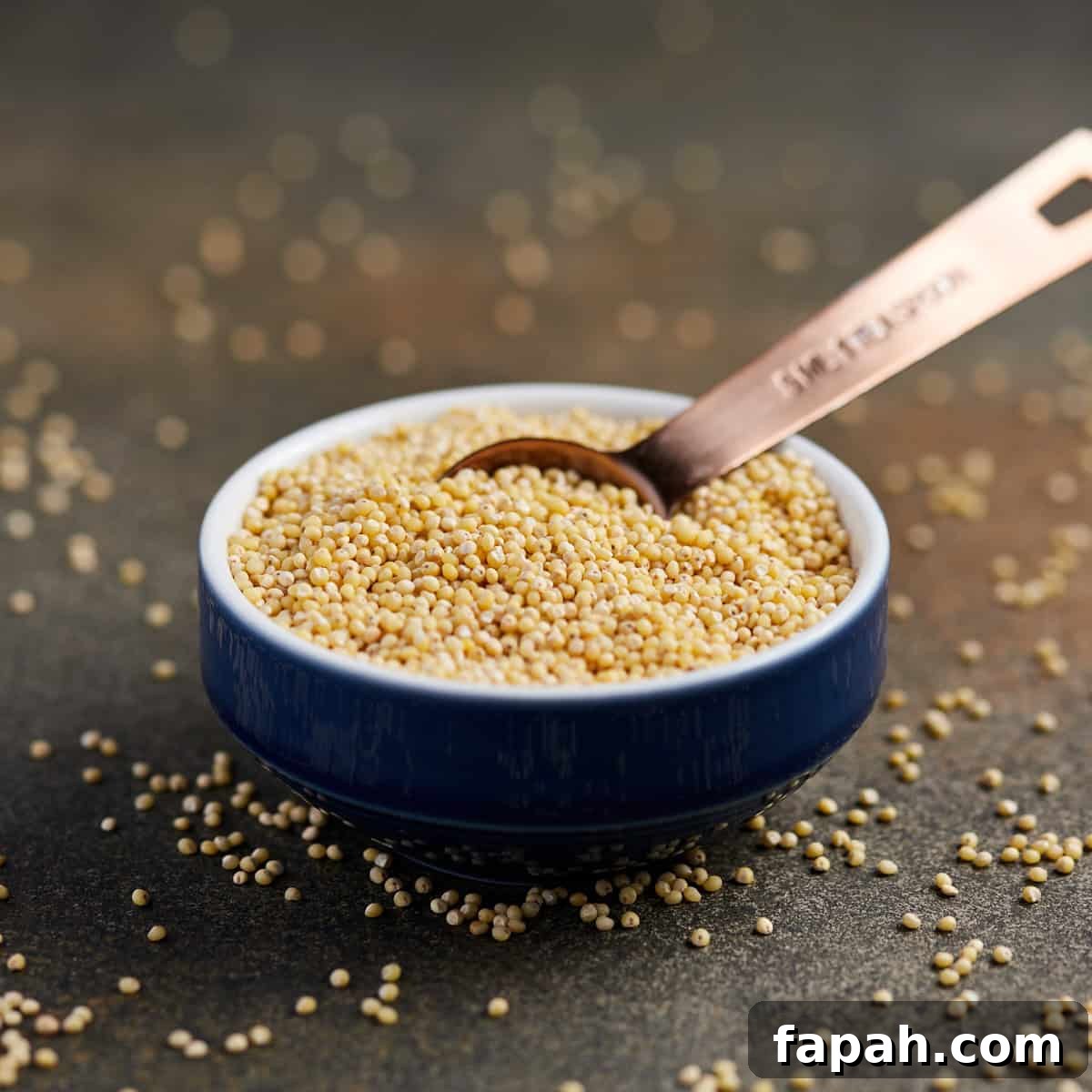
How to Cook Millet Perfectly (Stovetop or Instant Pot)
Ingredients
Millet Porridge
- 1 cup millet
- 3 cups water or vegetable stock (stovetop)
- 2.5 cups water or vegetable stock (Instant Pot)
Millet Grains
- 1 cup millet
- 2 cups water or vegetable stock (stovetop)
- 1.75 cups water or vegetable stock (Instant Pot)
Instructions
Soaking (optional)
- Soak millet for 10 minutes (or up to 12 hours) in water, then drain and rinse.
Millet Porridge
- Stovetop: Combine millet and 3 cups water or stock in a small pan. Bring to a boil, reduce heat to low, cover (lid slightly ajar) and simmer gently for 10 minutes, stirring frequently.
- Instant Pot: Combine millet and 2.5 cups water or stock in the inner pot. Seal and pressure cook on high for 10 minutes. Allow a 10-minute natural pressure release, then quick-release any remaining pressure. Stir and serve.
Millet Grains
- Stovetop: Combine millet and 2 cups water or stock in a pan. Bring to a boil, reduce heat to low, cover (lid slightly ajar) and simmer for 10 minutes. Remove from heat and stir once to fluff the grains.
- Instant Pot: Combine millet and 1.75 cups water or stock in the inner pot. Seal and pressure cook on high for 10 minutes. Allow a 10-minute natural pressure release, then quick-release the rest of the pressure. Stir and serve.
Notes
- Soaking is optional and can improve nutrient availability.
- Toast dry millet briefly to enhance nuttiness, but only before soaking.
- Cooked millet keeps 4–5 days in the fridge or up to 2 months in the freezer; reheat or use cold in salads.
- For sweet porridge: top with jam, stewed fruit or fresh fruit and maple syrup.
- For savory porridge: cook in broth and finish with oils, spring onions, herbs and tamari; add tofu or vegan bacon for protein.
- Fluffy millet grains are ideal for salads, grain bowls, soups, stews and as a side dish in place of rice or couscous.
Nutrition
If you like this recipe, please leave a star rating on the recipe card!
Related Recipes
If you enjoy millet recipes, you might also like other plant-based, gluten-free recipes that use whole grains, legumes and seasonal vegetables.
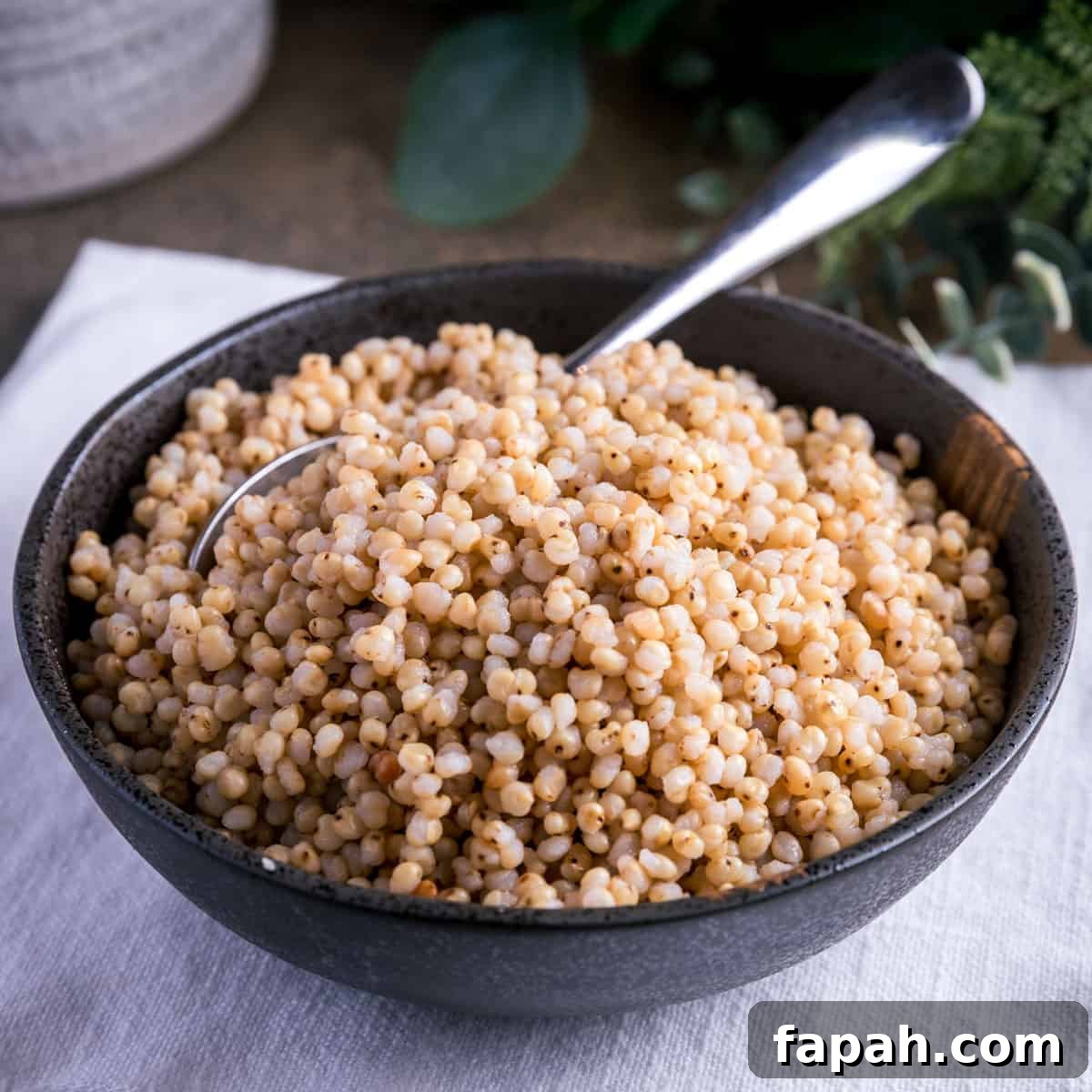
 How To Cook Wholegrain Sorghum (Instant Pot or Stovetop)
-
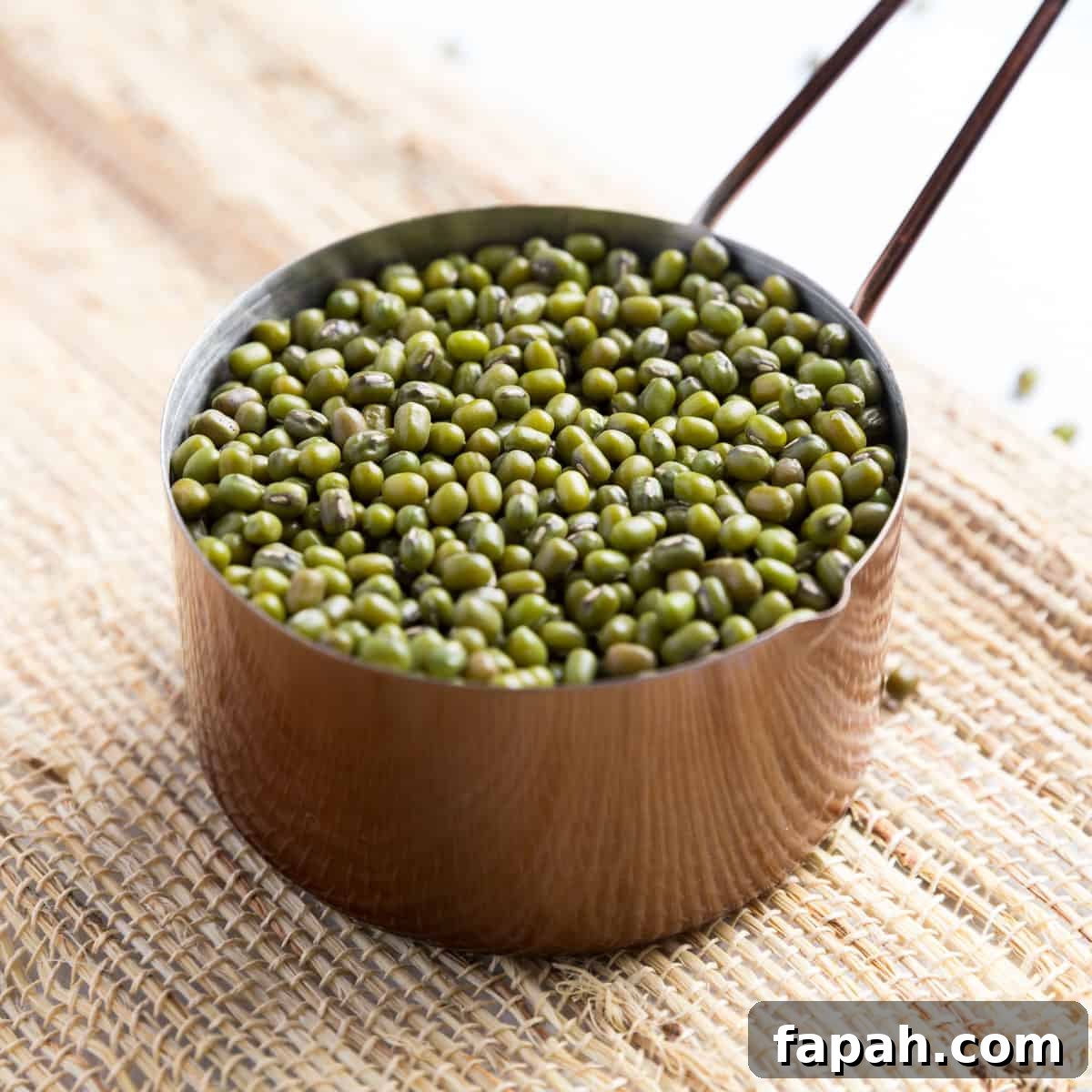
How To Cook Perfect Mung Beans in the Instant Pot
-
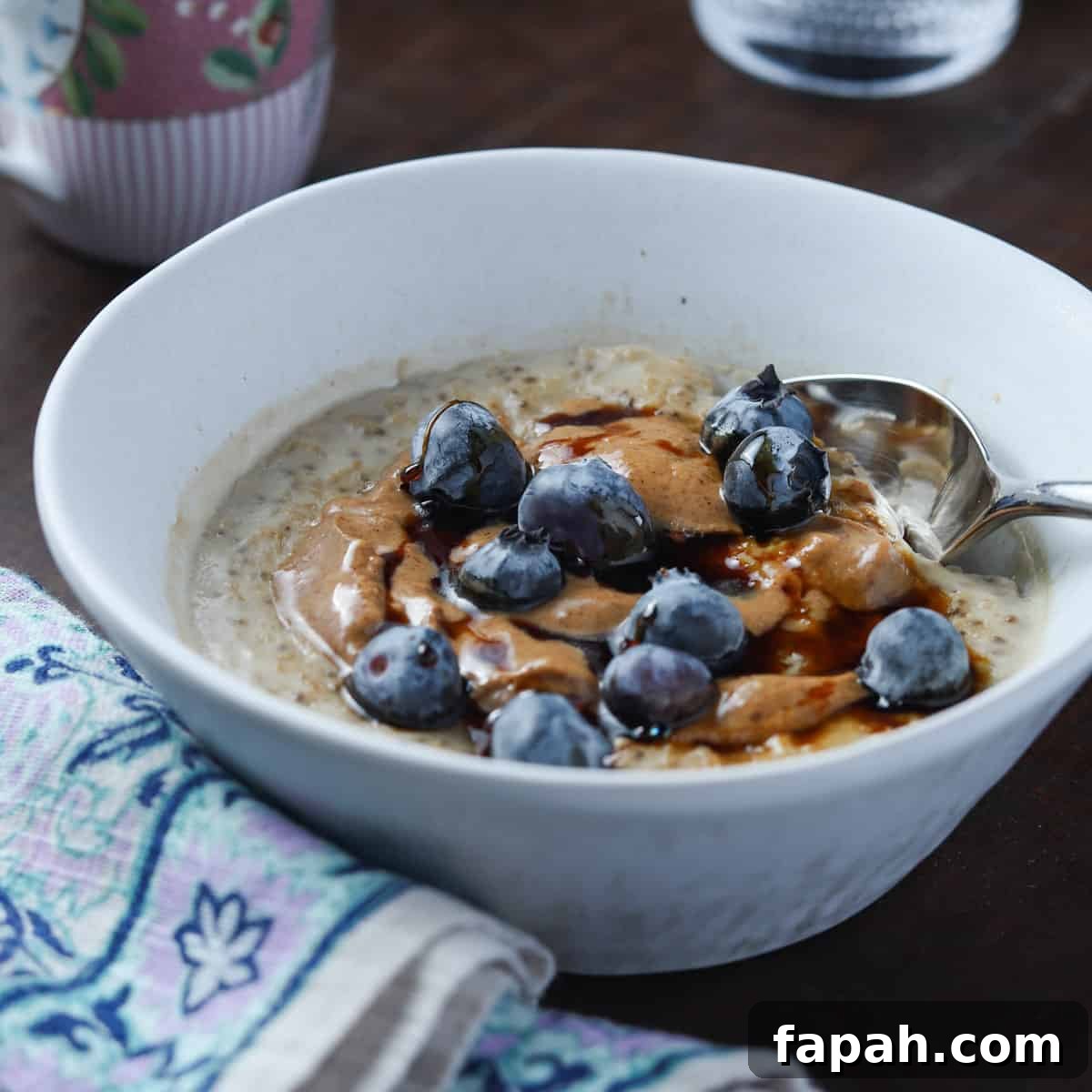
Vegan Oat and Chia Seed Porridge with Blueberries and Almond Butter
-
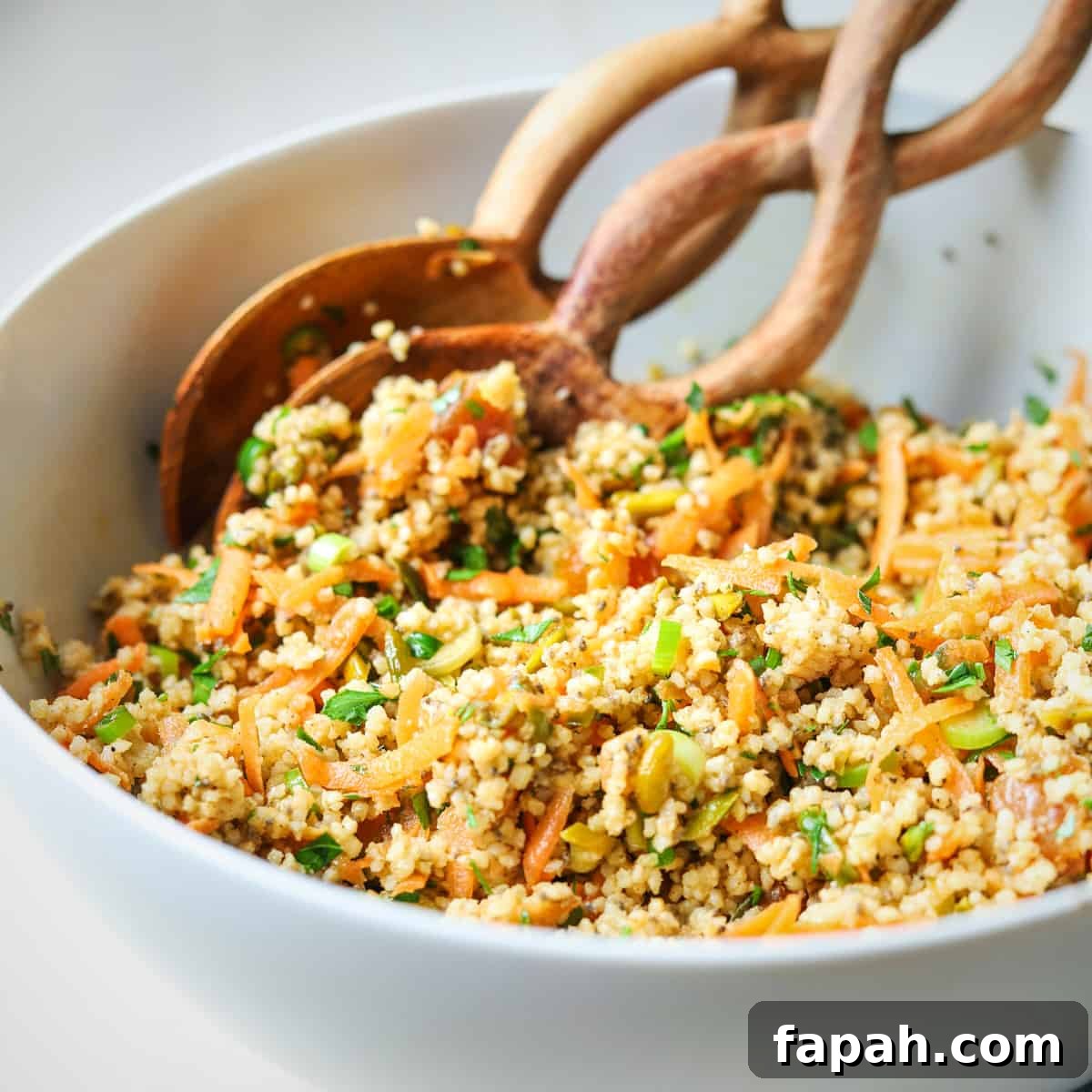
Spiced Millet Salad with Pistachios
🌿
Follow the author on social media or subscribe to updates for more recipes and tips.
🌿