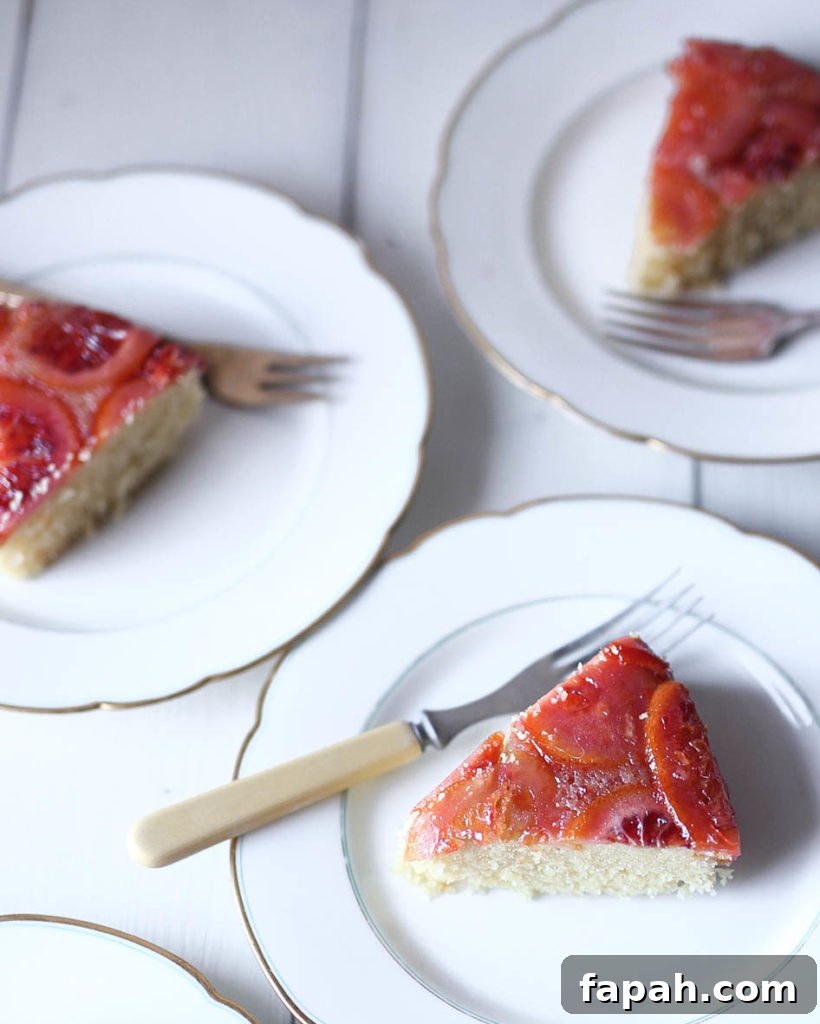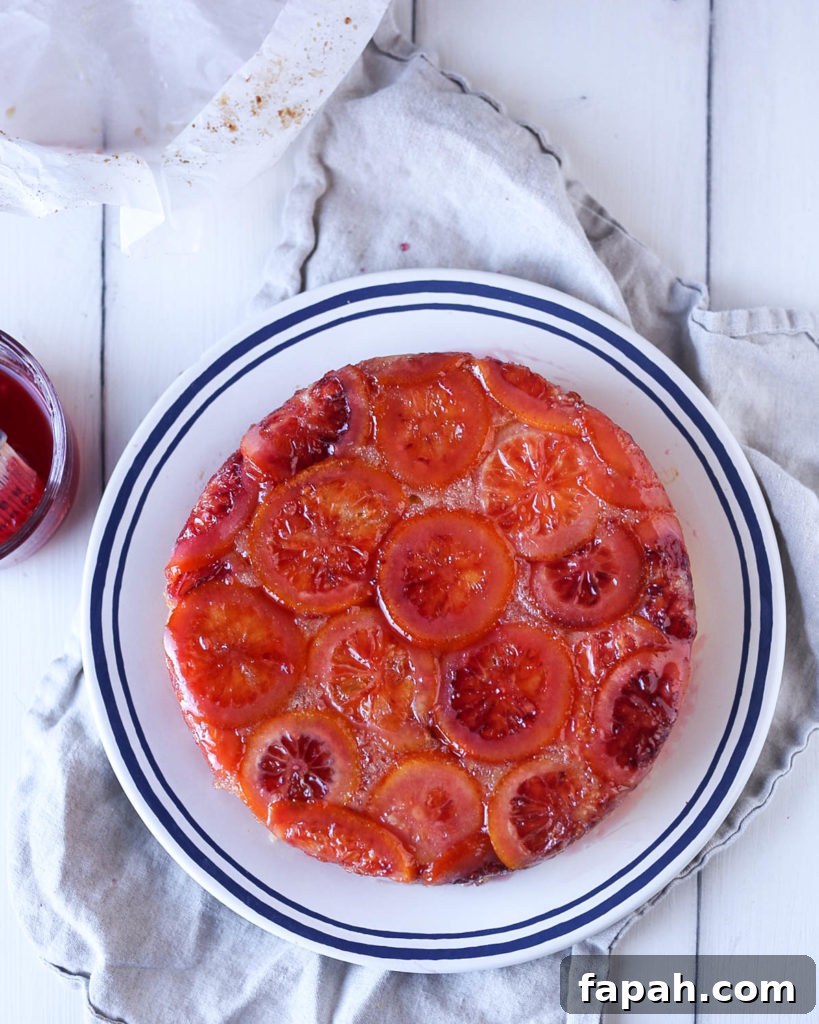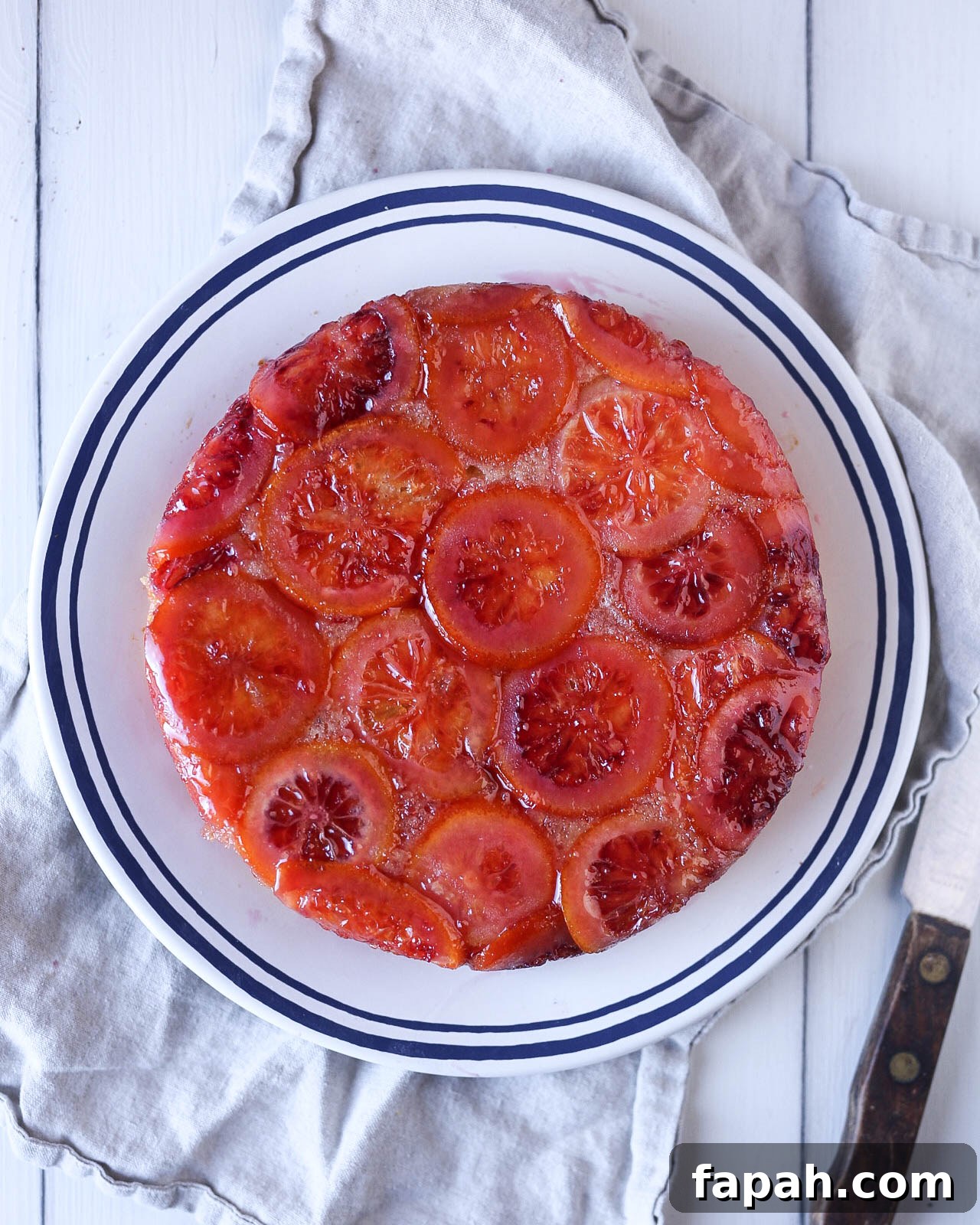
Winter, with its cold and gray days, is not my favorite season, but the arrival of blood oranges at the market always brightens it. I usually buy them by the bagful, often without a plan, and then improvise: glazed doughnuts, a fragile tart, a chocolate bundt scented with blood orange. More often than not I end up making an upside-down cake.
There are many blood orange upside-down cake recipes, but I consistently return to this one, adapted from Not Quite Nigella’s “Spectacular Upside Down Blood Orange Cake.”
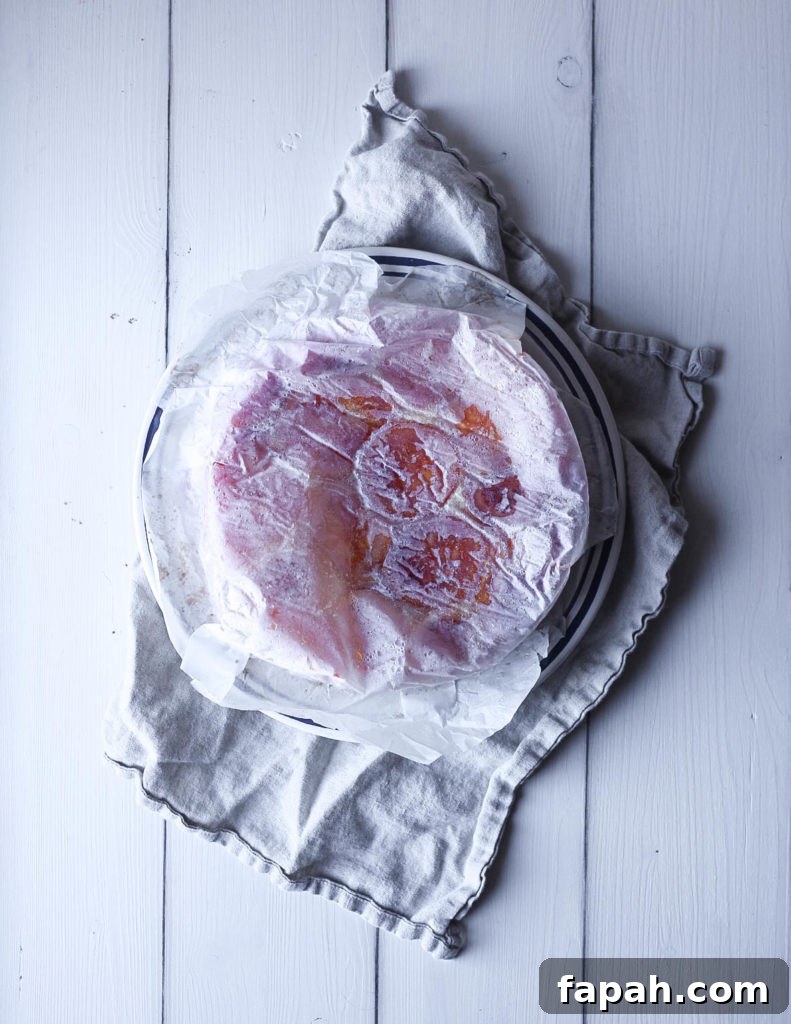
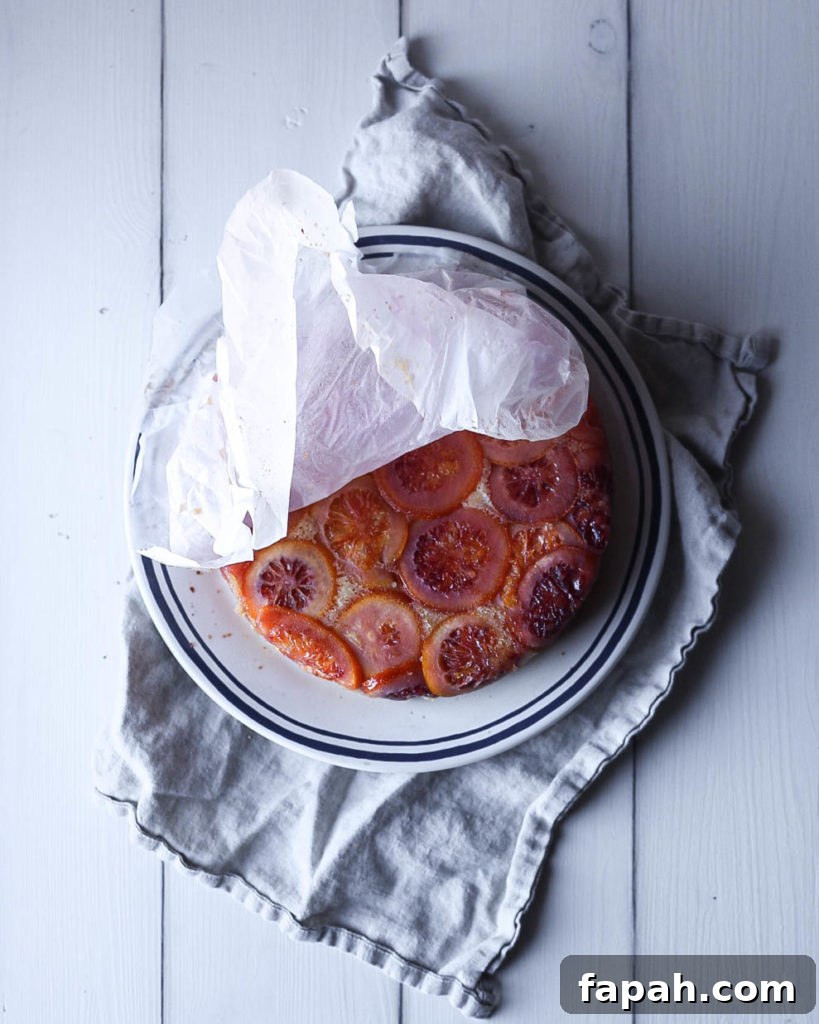
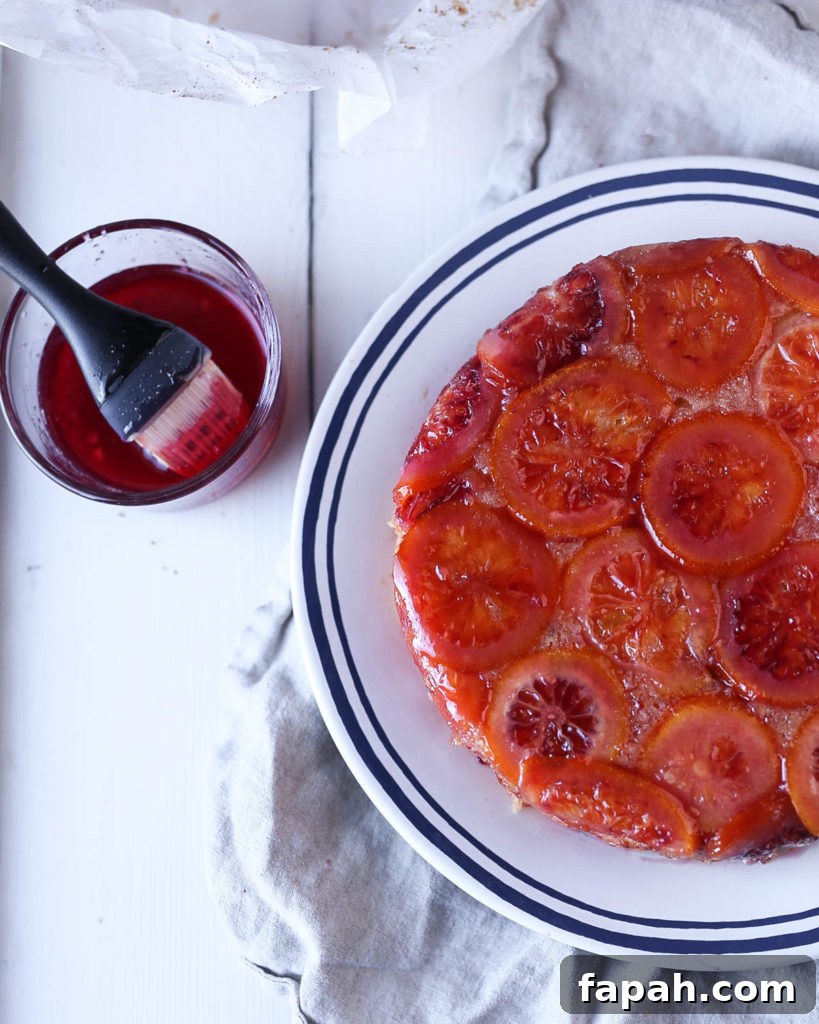
What distinguishes this recipe are a few thoughtful details. First, the blood orange slices are simmered in a sugar syrup, which mellows the pith’s bitterness and transforms the slices into jewel-like rounds. Second, the lightly candied slices line the entire interior of a parchment-lined pan—not just the bottom—so every bite of cake is edged in blood orange. Third, the syrup used to candy the slices is reduced further and brushed over the finished cake for extra shine and flavor. Finally, the cake sponge itself is both rich and light, with a tender crumb that balances the citrus topping.
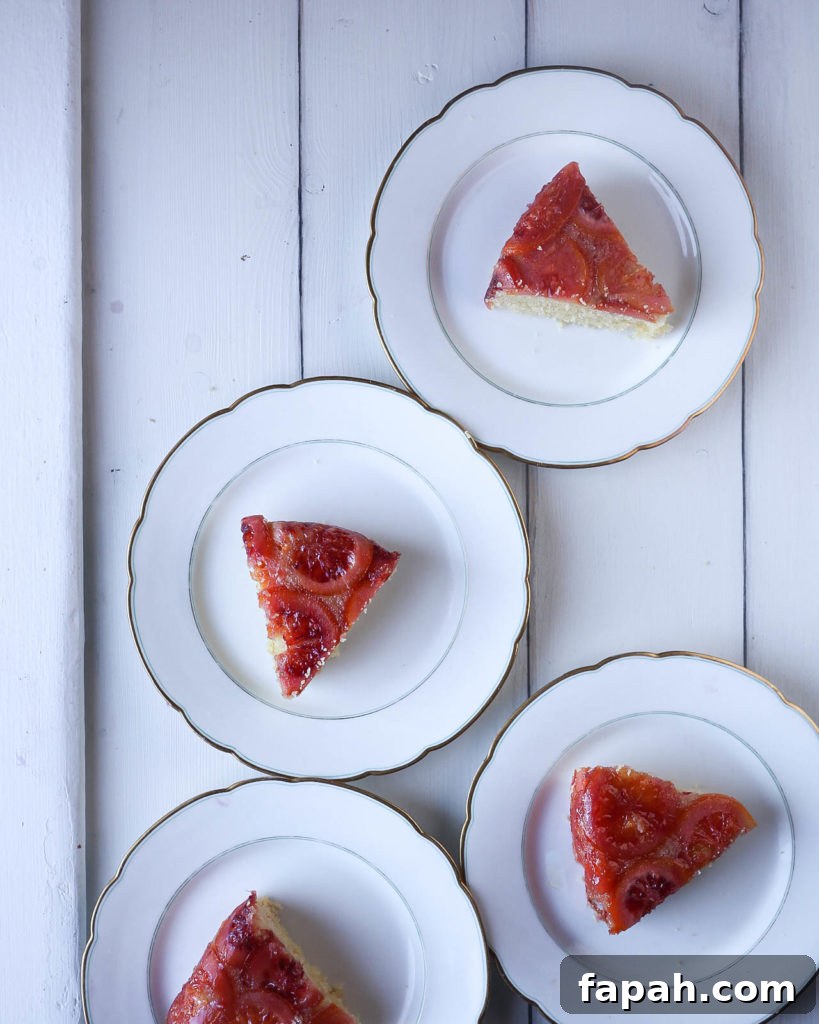
Candying the blood orange slices takes a little patience, but the sponge is straightforward. The effort is rewarded by a stunning cake that tastes as good as it looks.
My Favorite Blood Orange Upside Down Cake
Adapted from Not Quite Nigella’s “Spectacular Upside Down Blood Orange Cake.”
Dessert
blood orange cake, blood orange upside down cake, upside down blood orange cake
Ingredients
For the blood oranges and glaze:
-
2-4
blood oranges
– see notes -
1/2
cup
water -
200
g
granulated sugar
For the sponge:
-
134
g
unsalted butter
– at room temperature -
134
g
granulated sugar -
zest of one blood orange
– finely grated -
2
large eggs
– at room temperature -
1/4
tsp
vanilla extract
– optional -
134
g
almond flour or meal -
67
g
all-purpose flour -
1 1/4
tsp
baking powder -
1/4
tsp
table salt or fine sea salt -
75
g
Greek yogurt
– preferably full-fat
Instructions
-
Preheat the oven to 325°F. Lightly grease an 8-inch cake pan with butter and line it with a large (14–15 inch) circle of parchment so the entire interior is covered, not just the bottom.
-
Using a very sharp knife or a mandoline, thinly slice 2–4 blood oranges into rounds no more than 1/8 inch thick.
-
In a medium nonreactive saucepan, combine 1/2 cup water and 200 g (about 1 cup) granulated sugar over medium-low heat, stirring until the sugar dissolves. Increase heat to medium-high, add the orange slices, bring to a boil, then reduce to medium and simmer 10–15 minutes until the pith becomes translucent.
-
Remove the candied slices with a slotted spoon to a plate to cool slightly. Return the syrup to a boil and simmer 3–5 minutes until reduced and syrupy. Set the syrup aside to cool to room temperature.
-
Line the prepared pan with the candied slices, allowing them to overlap slightly and cover both the bottom and sides. Bend slices where the bottom meets the side; if they don’t adhere well, brush a little of the reduced syrup on the pan to help them stick. Set aside while you make the sponge.

-
Make the sponge: Using a hand mixer or stand mixer fitted with the paddle, cream together the butter, sugar, and blood orange zest until light and fluffy. Add the eggs one at a time, mixing well and scraping the bowl as needed. Stir in the vanilla if using.
-
In a separate bowl, whisk together the almond flour, all-purpose flour, baking powder, and salt.
-
Fold the yogurt into the batter, then gently fold in the dry ingredients until just combined—avoid overmixing.
-
Spoon the batter into the prepared pan, taking care not to dislodge the orange slices. Smooth the top and bake 45–50 minutes, until the top is golden and a skewer inserted in the center comes out clean.
-
Let the cake cool in the pan for 10 minutes, then invert onto a serving plate and gently remove the parchment. Once the cake has cooled another 20–30 minutes, brush with some of the reserved blood orange syrup. Cool completely before slicing.

Recipe Notes
- The original Not Quite Nigella recipe uses a 9-inch pan. To convert this recipe to a 9-inch pan, increase ingredient quantities by 50% and expect an extra 5–10 minutes of baking time.
- This version adds blood orange zest, a touch of vanilla, and salt to the batter. If you like, substitute or add a small amount (1/8–1/4 tsp) of almond extract for variation.
- The number of oranges required depends on their size and how thinly you can slice them. It’s common to discard the cores and ends—save any remaining flesh and juice for mimosas or a quick vinaigrette.
- The cake slices most cleanly after chilling. For the neatest slices, refrigerate the fully cooled cake for about an hour before cutting.