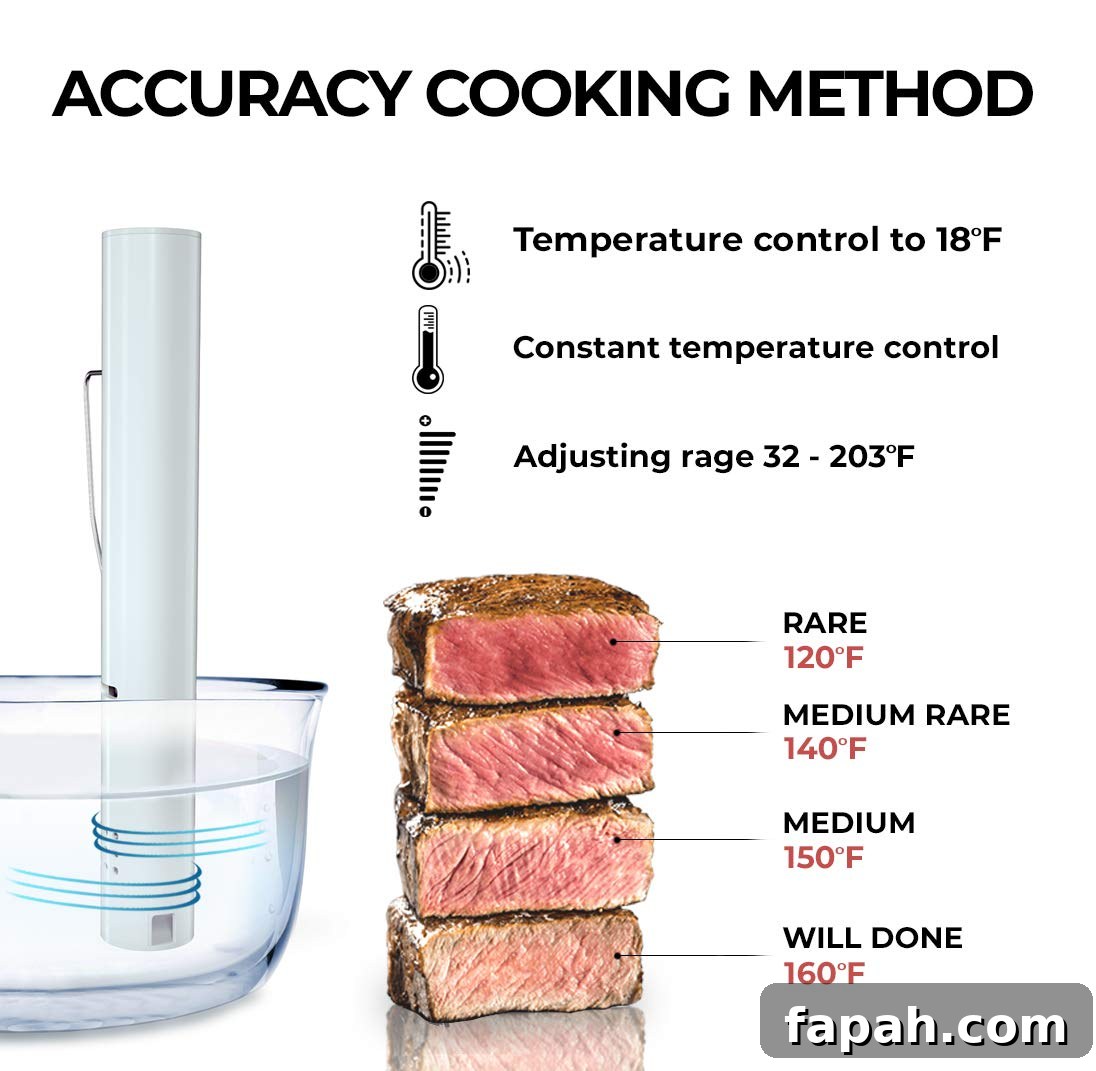
What exactly is sous vide cooking, and where did it come from? In this article we explore the origins of sous vide, how the technique developed, and the reasons for its recent surge in popularity. As sous vide equipment becomes more common in home kitchens, many people still aren’t familiar with what it does or why chefs and home cooks use it.
What is Sous Vide?
Sous vide is a French term meaning “under vacuum” and refers to low-temperature, long-time cooking. The method involves sealing food—usually in a plastic bag or jar—and immersing it in a water bath that is held at a precise temperature. Cooking times vary widely depending on the ingredient and desired result, ranging from about an hour to several days for some cuts, though some items such as eggs require much shorter times.
Why Use a Sous Vide Machine?
Although you can approximate sous vide by carefully monitoring a pot on the stove, a dedicated sous vide circulator makes the process far easier and more reliable. The device heats and circulates the water to maintain a constant, exact temperature for extended periods, which is difficult to achieve manually and safer than leaving a pot unattended.
With a sous vide machine, you simply attach the circulator or fill the container, set the target temperature and time, place the sealed food in the water, and let the device do the rest. Many recipes call for a quick sear after the bath to develop color and texture, but the core cooking is done gently and precisely in the water bath.
History of Sous Vide
Early references to low-temperature cooking date back to 1799, when Benjamin Thompson, Count Rumford, described slow cooking under pressure and praised the improved texture and flavor of the meat. Later, in the mid-20th century, engineers in the United States and France experimented with heat and pressure to preserve food, noticing that the resulting dishes retained superior texture and taste. These developments also led to the creation of heat-stable vacuum sealing techniques.
In 1974, French chef Georges Pralus applied vacuum-sealed, low-temperature cooking professionally at the Restaurant Troisgros in Roanne. He found that foie gras cooked this way retained its original appearance, lost less fat, and delivered a superior texture. Around the same time, Bruno Goussault independently refined the method and is often credited, alongside Pralus, with establishing the scientific principles and practical techniques behind modern sous vide. Their combined work helped pioneer the technique in professional kitchens.
Since those early developments, sous vide technology and equipment have evolved substantially. Circulators and immersion devices became more accurate and accessible, eventually bringing sous vide out of professional restaurants and into home kitchens worldwide. The method’s appeal stems from its consistency, the ability to hold food at the ideal doneness, and the gentle treatment that preserves flavor and moisture.
Sous vide is particularly valued for precise control over texture and doneness—steaks cooked at a target temperature will be evenly cooked edge to edge, delicate proteins like fish and eggs are less likely to overcook, and tough cuts of meat can become tender when held at moderate temperatures for long periods. The technique pairs well with finishing methods such as pan searing or broiling to create appealing crusts and browning while maintaining the perfectly cooked interior.
Whether you’re a home cook curious about trying sous vide or a seasoned chef exploring modern techniques, understanding the history and advantages of sous vide helps explain why it has grown so popular. Its combination of precision, consistency, and gentle cooking makes it a valuable tool for achieving repeatable, restaurant-quality results at home.