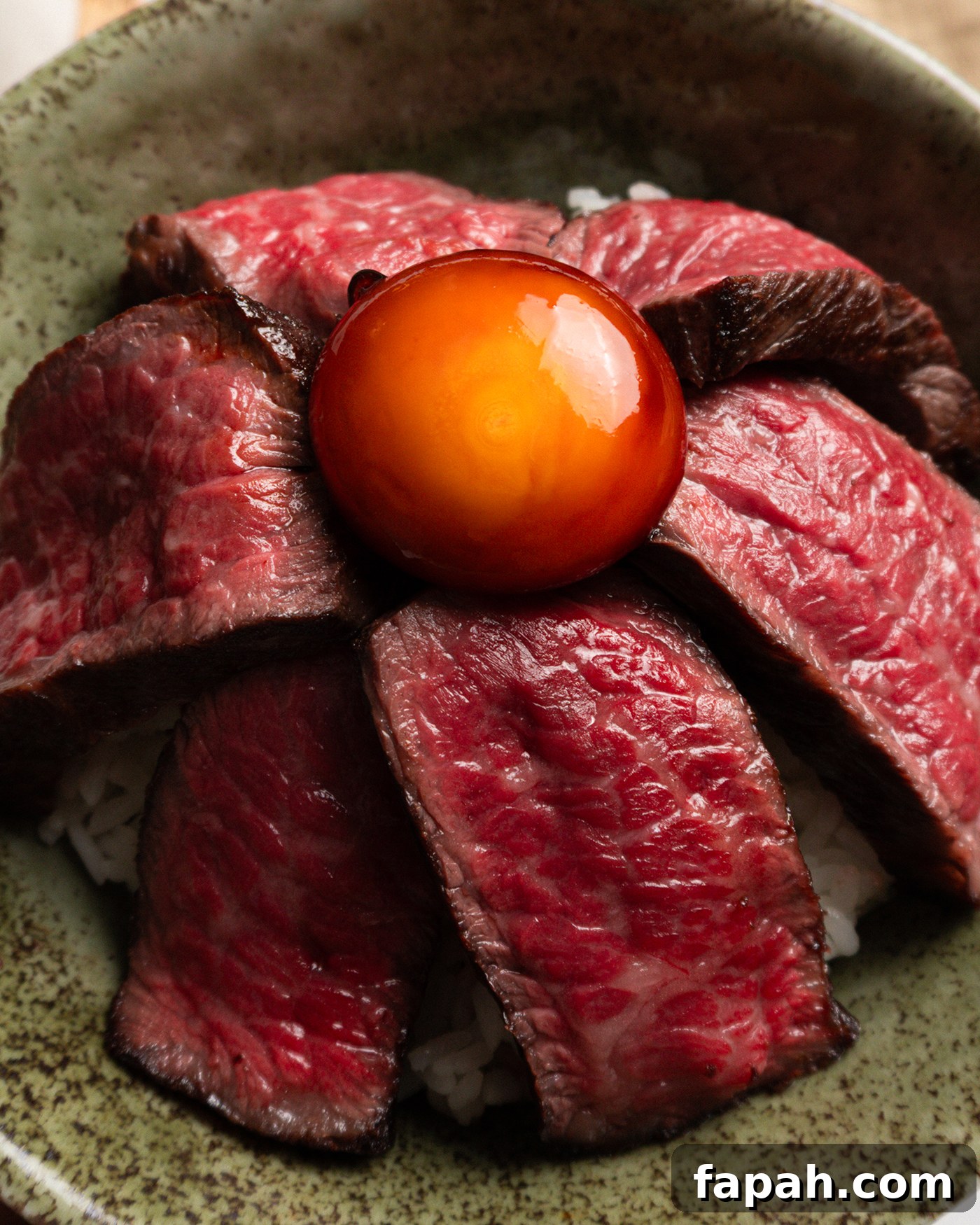
Wagyu don is a steak donburi—tender, perfectly seared slices of wagyu beef served over steamed rice and finished with a soy sauce–cured egg yolk. This simple home recipe transforms a few quality ingredients into a restaurant-style bowl that’s approachable and satisfying.
With only a handful of components and straightforward steps, you’ll learn how to cook wagyu at home and cure egg yolks for a silky, umami-rich finish. Read on for tips, ingredient notes, and a clear recipe to make Wagyu Don.
Table of Contents
- The History and Journey of Modern Donburi
- High-Quality Wagyu Beef Selection
- Equipment Needed
- Ingredients for Wagyu Don
- Recipe
- Cure egg yolks
- Cook the wagyu
- Donburi assembly
- Serving Suggestions and Accompaniments
- Final Thoughts
- More Recipes You’ll Love
- References & Further Reading
The History and Journey of Modern Donburi
Donburi traces its roots to the Muromachi period (1330–1570) with a temple dish called “houhan”—vegetables and broth served over rice. By the Edo period (1603–1867) that concept evolved into names like “kendonburi-bachi” and eventually the shortened “donburi” we know today.
A classic example is unadon (grilled eel over rice), and over time donburi expanded into countless styles: tendon (tempura), gyudon (beef), kaisendon (seafood), katsudon (pork cutlet), and many more. Modern cooks continue to adapt donburi worldwide, creating variations to suit different diets and flavor profiles.
High-Quality Wagyu Beef Selection
When choosing wagyu, prioritize even marbling and a bright pink or red color for freshness. Avoid pieces with thick external fat caps or discoloration. Your choice will depend on budget, portion size, and local availability.
Japanese A5 wagyu represents the top tier, following strict certification standards. American wagyu is typically a crossbreed between Japanese wagyu and American Angus; it has its own grading conventions and is widely used in upscale U.S. kitchens. Either can make an outstanding donburi—pick the best fresh cut you can find within your budget.
For this recipe we used American Wagyu Zabuton. If you can source a reputable supplier or butcher with quality, well-handled meat, you’ll notice the difference in flavor and texture.
Wagyu Cooking Tips
- Bring the meat to room temperature: Let wagyu sit at room temperature for about an hour so it cooks evenly.
- Pat the surface dry: Drying the meat ensures a clean, caramelized sear—use paper towels to remove surface moisture.
- Cook hot and fast: Use a heavy pan (cast iron or stainless steel), preheat it thoroughly, and sear each side for under two minutes. Rest the meat five minutes before slicing thinly against the grain.
Equipment Needed
- Heavy skillet or cast-iron pan—for high-heat searing
- Sharp chef’s knife and cutting board
- Shallow dish or small container—for curing yolks
Ingredients for Wagyu Don
This recipe shines when you use high-quality ingredients. Treat yourself—the wagyu is the star, so keep the supporting elements simple and fresh.
- ½ lb wagyu (room temperature; zabuton or other tender cut)
- Flaky sea salt, to taste
- 2–4 egg yolks
- 2 parts soy sauce (a richer soy works well)
- 1 part mirin
- Steamed rice, for serving
Donburi sauce—a blend of dashi, soy sauce, mirin, sake, and sugar—is common for many rice bowls, but for wagyu it’s optional. The cured yolk and a light seasoning let the beef’s richness shine. If you prefer a sauce, use it sparingly so it doesn’t overpower the meat.
Recipe
Cure egg yolks
- Gently separate the egg yolks from the whites and place the yolks in a shallow dish.
- Mix 2 parts soy sauce with 1 part mirin and pour enough to submerge the yolks at least halfway. (Adjust volume depending on dish size.)
- Cover and refrigerate for 4 hours, flipping the yolks carefully halfway through the curing time. When ready, they should be flavorful, glossy, and slightly firm on the outside.
Cook the wagyu
- While the yolks cure, bring the wagyu to room temperature—about 1 hour on the counter.
- Preheat a heavy skillet over high heat until very hot. Pat the wagyu dry, season lightly with flaky salt, and sear for under 2 minutes per side depending on thickness.
- Transfer the meat to a cutting board and rest for 5 minutes, then slice thinly across the grain.
Donburi assembly
- Mound steamed rice in a bowl. Arrange thin wagyu slices over the rice and place a soy sauce–cured egg yolk in the center. Break the yolk when ready to eat for a rich, saucy finish.
Serving Suggestions and Accompaniments
Serve the wagyu don with simple Japanese sides such as pickles (tsukemono) or miso soup. A light salad or steamed vegetables balance the richness. For drinks, sake or a crisp, low-acidity beverage pairs well and keeps the bowl feeling elegant.
Final Thoughts
Wagyu donburi is an elegant but easy dish: a premium cut of beef prepared simply, then finished with a savory cured yolk and rice. With a few careful steps—proper warming, quick searing, and gentle curing—you can produce a memorable, restaurant-quality bowl at home.
Enjoyed this recipe? Try it with your favorite wagyu cut and tag your photos to share your results.
Wagyu Don with Soy Sauce Cured Egg Yolk
Print
Follow Us
Equipment
-
Heavy skillet or cast-iron pan
-
Sharp knife and cutting board
Ingredients
- ½ lb wagyu room temp
- Flaky sea salt to taste
- 2-4 egg yolks
- 2 parts soy sauce
- 1 part mirin
- rice for serving
Instructions
Cure egg yolks
-
Separate the egg yolks and place them in a shallow dish.
-
Submerge the yolks at least halfway in a mixture of 2 parts soy sauce and 1 part mirin.
-
Cover and refrigerate for 4 hours, flipping the yolks gently halfway through.
Cook the wagyu
-
Bring the wagyu to room temperature while the eggs cure (about 1 hour).
-
Preheat a heavy pan over high heat. Pat the wagyu dry, season with salt, and sear for under 2 minutes per side.
-
Let rest 5 minutes, then slice thinly against the grain.
Donburi assembly
-
Mound rice in a bowl, arrange the wagyu slices on top, and place a soy-cured egg yolk in the center. Break the yolk before serving to coat the rice and beef.
This recipe encourages sharing with proper credit. Do not republish the full content without permission.
More Recipes You’ll Love
References & Further Reading
Selected sources on wagyu and donburi history are available for additional context and are useful if you want to explore purchasing and background information.