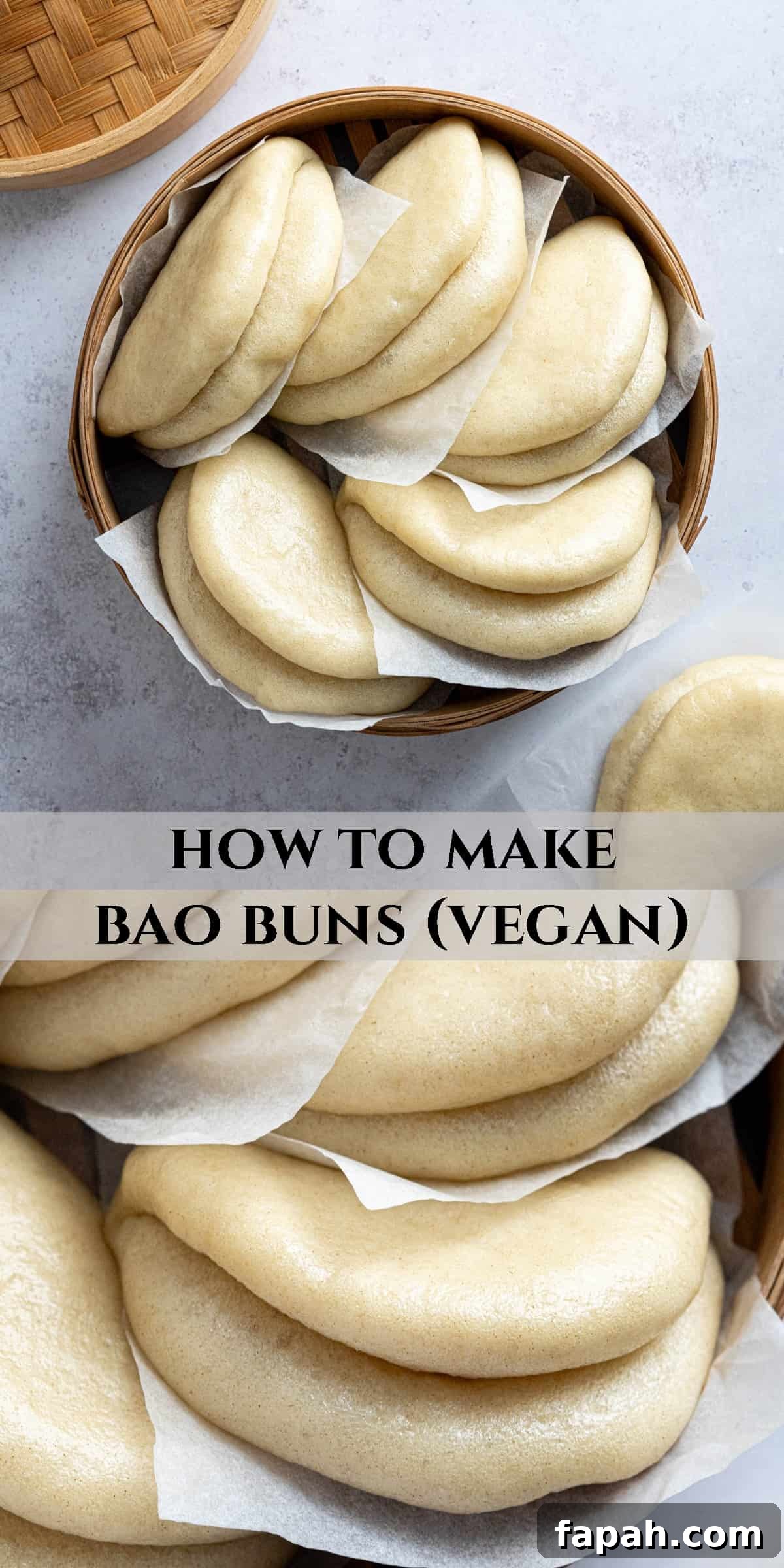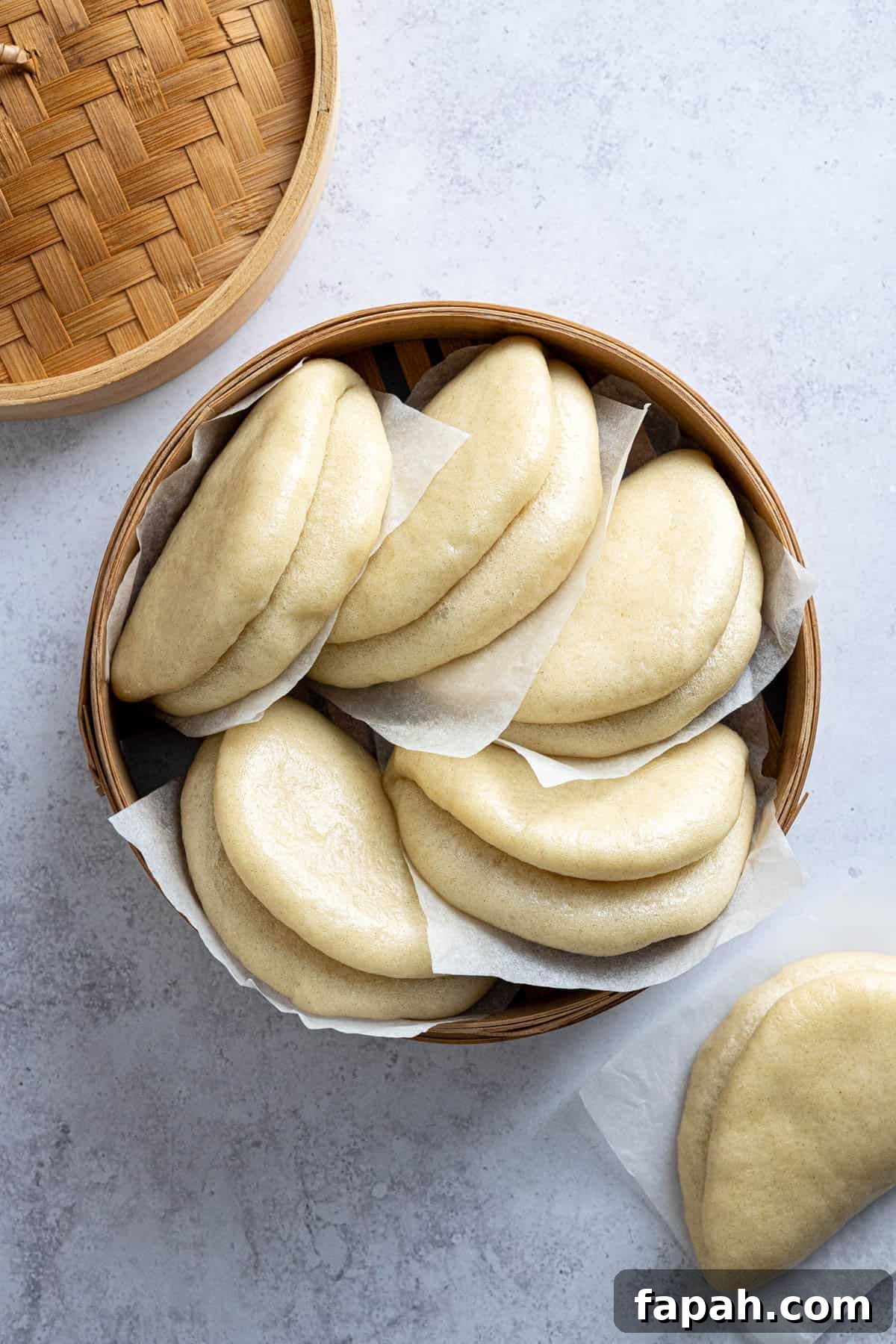
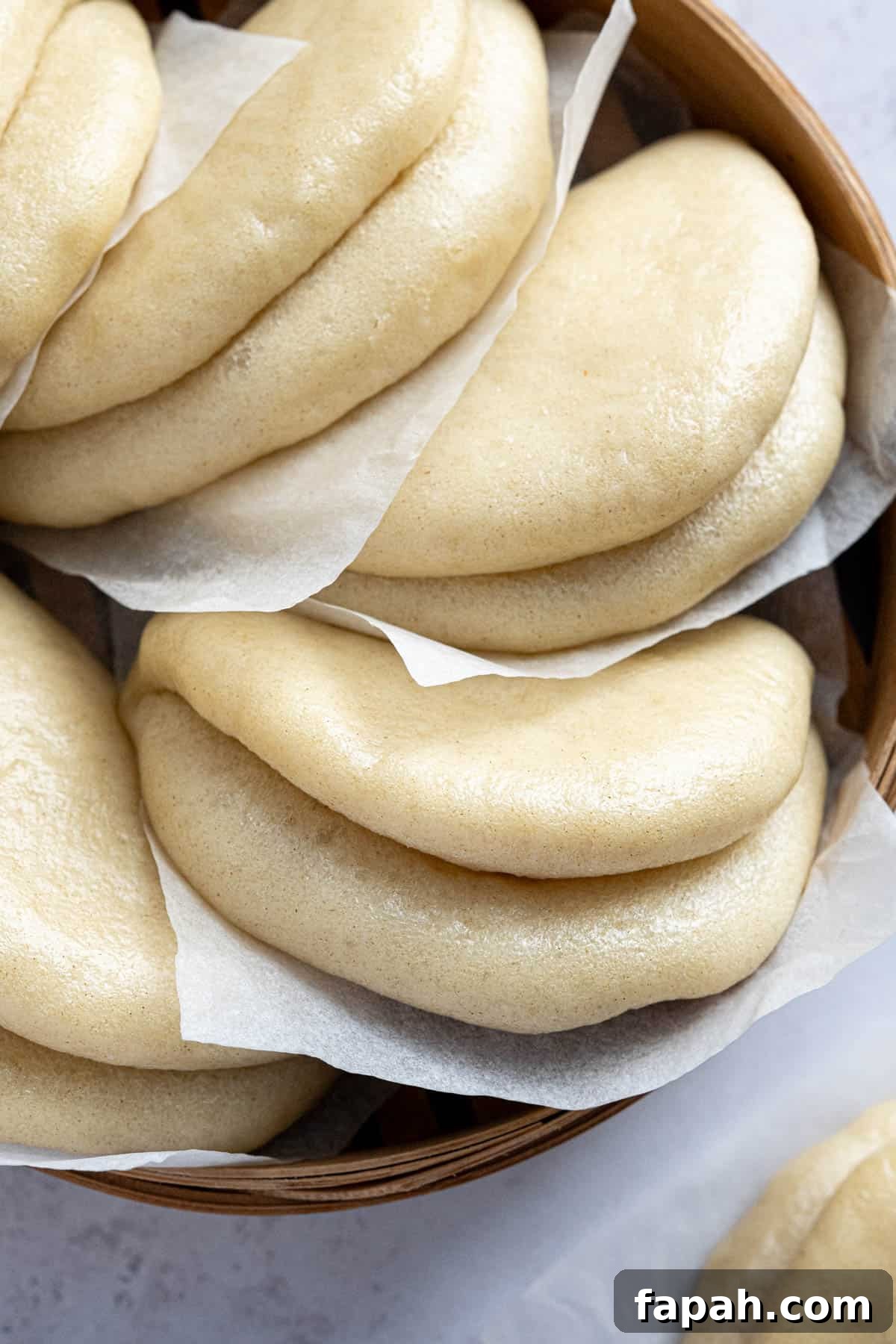
These steamed lotus leaf bao buns are incredibly soft, light and easier to make than you might expect. They freeze well, are vegan-friendly and can be filled with sweet or savory fillings for a versatile meal.
What Are Bao Buns?
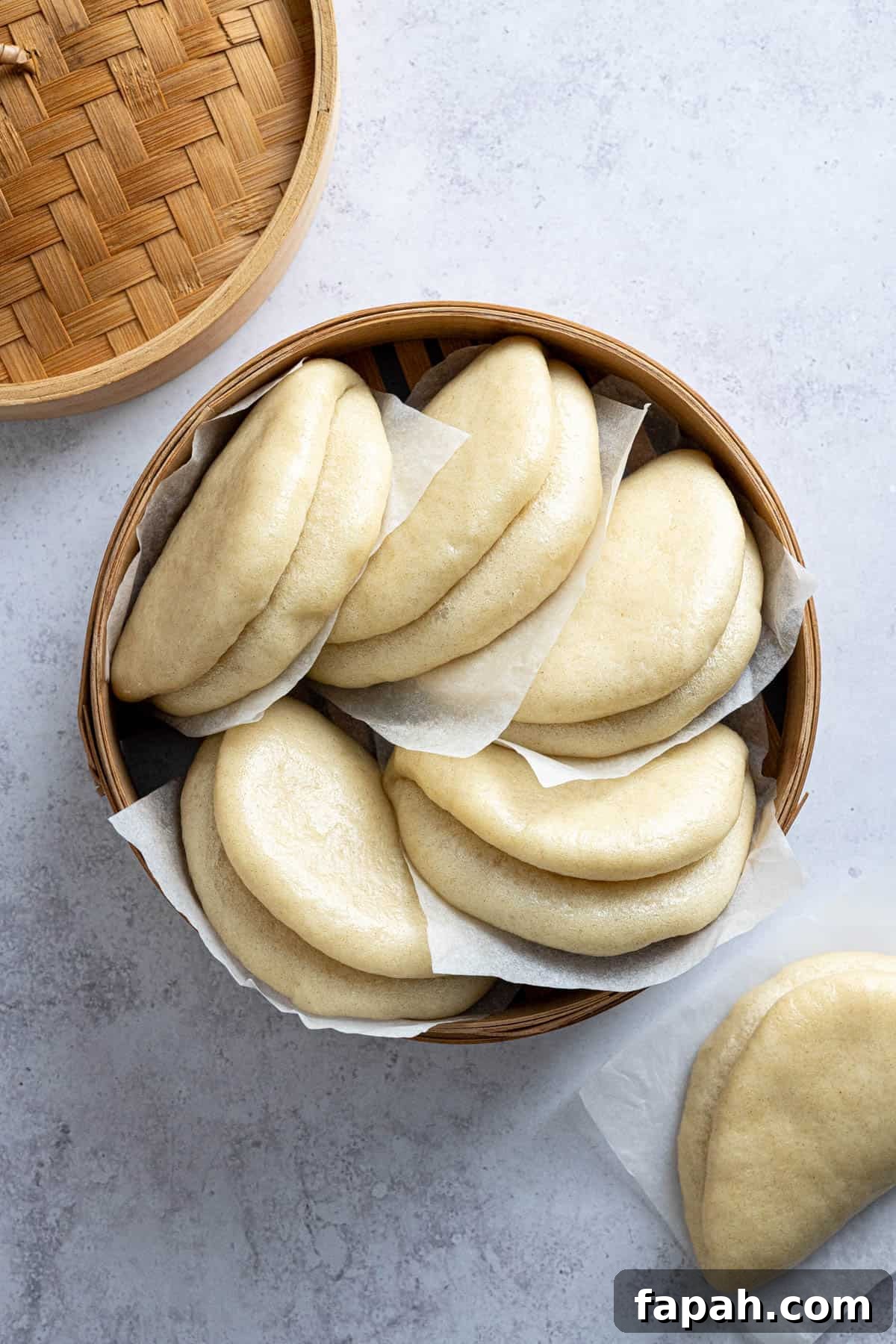
The term “bao buns” is a bit redundant—”bao” means bun—but it’s the common name used in the West. Bao are a type of yeasted Chinese bread that can be plain or filled with sweet or savory ingredients. They’re typically steamed, though some variations are baked or pan-fried.
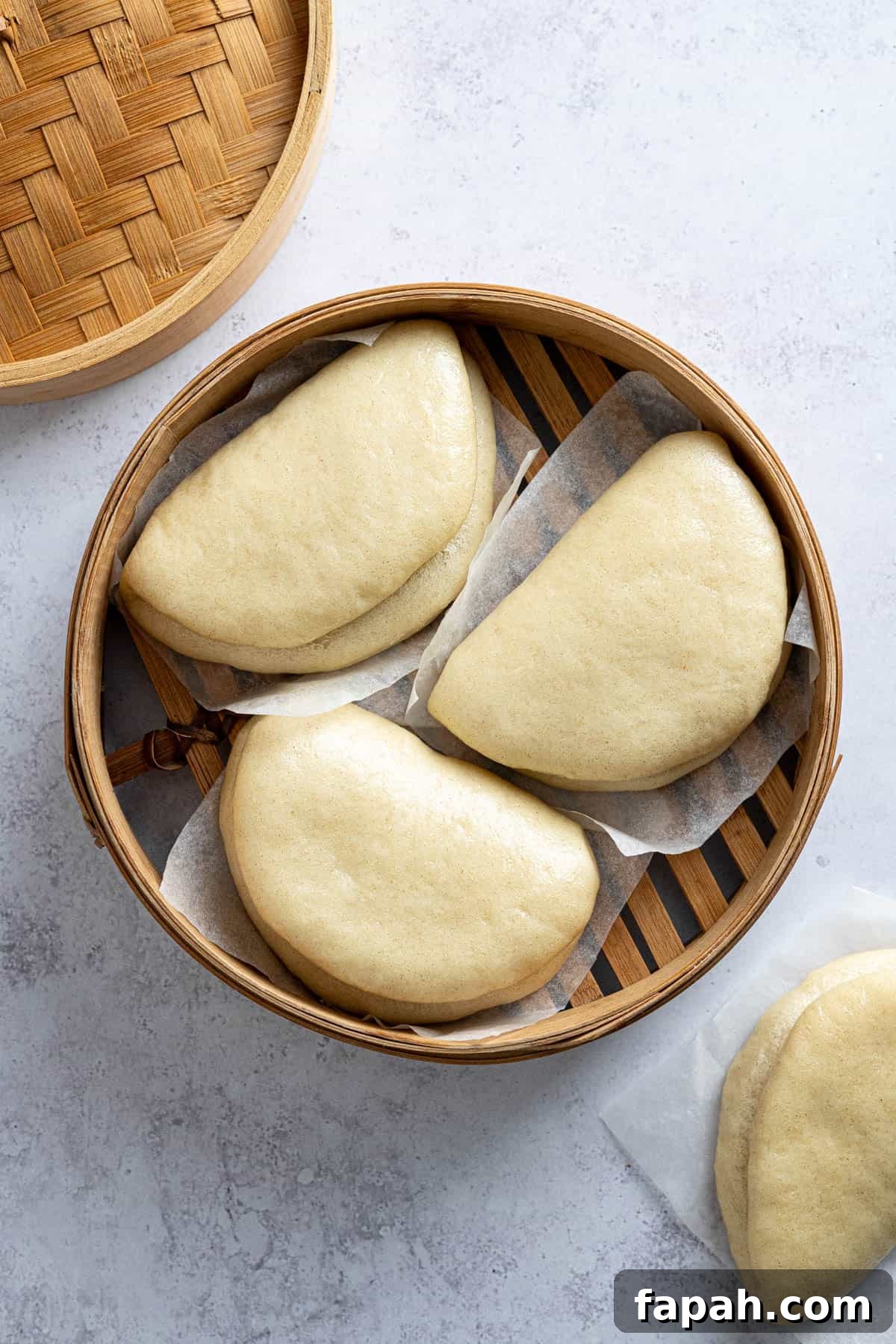
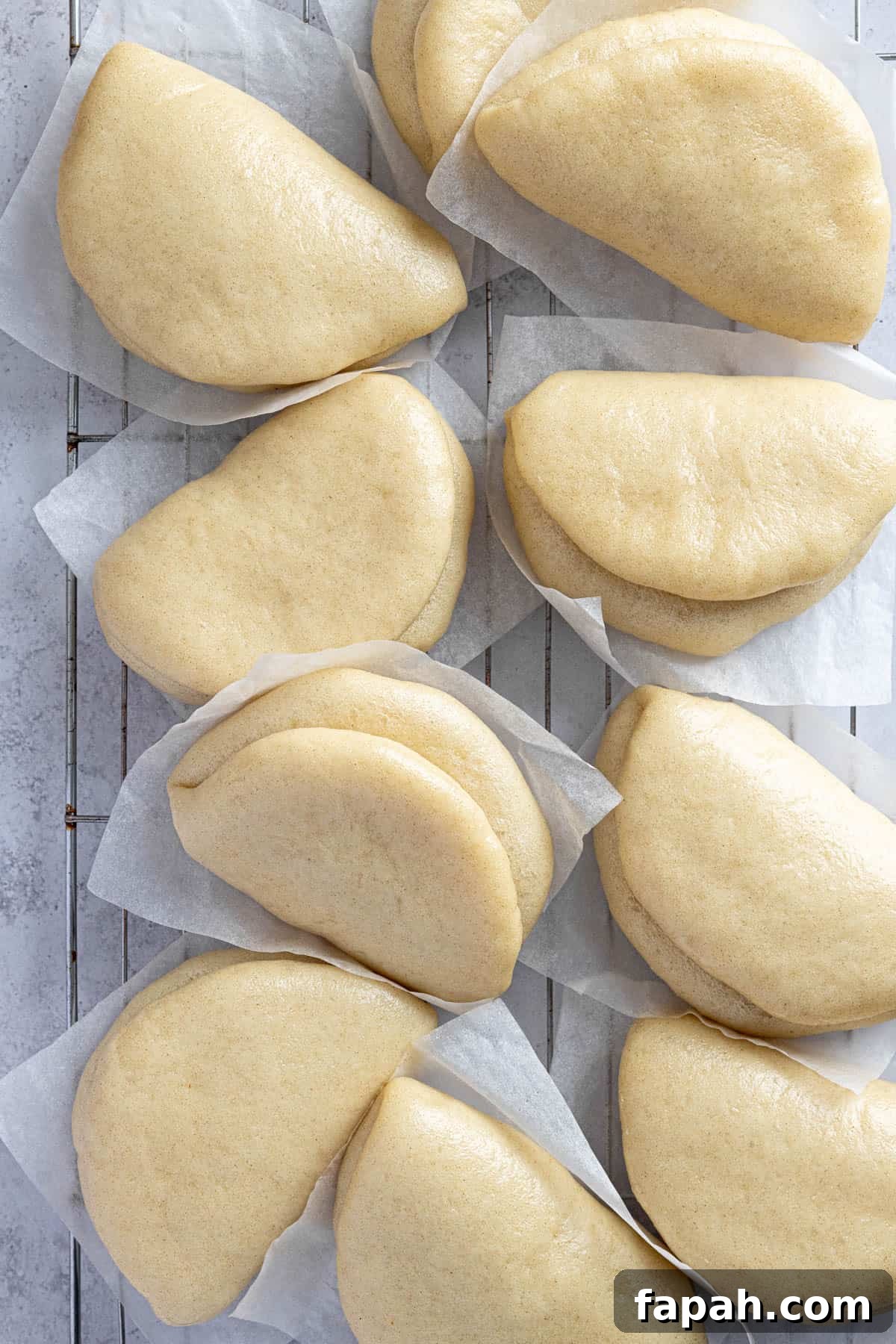
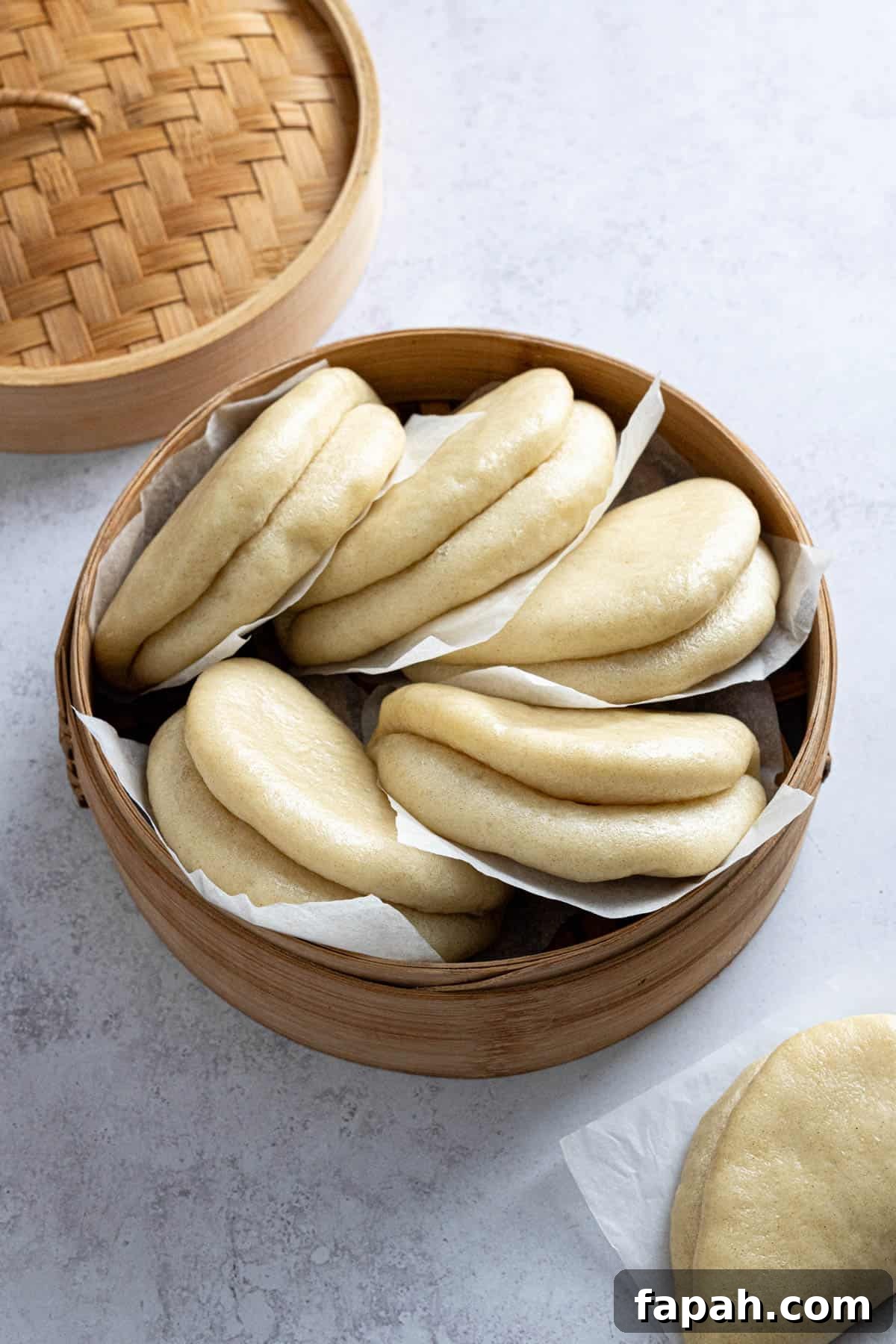
This recipe makes the well-known folded style called lotus leaf buns. They are shaped into a folded semicircle so that, once steamed, they open like a pocket ready to be filled. Try them with a sticky hoisin tofu filling for a delicious vegan option.
Ingredient Details
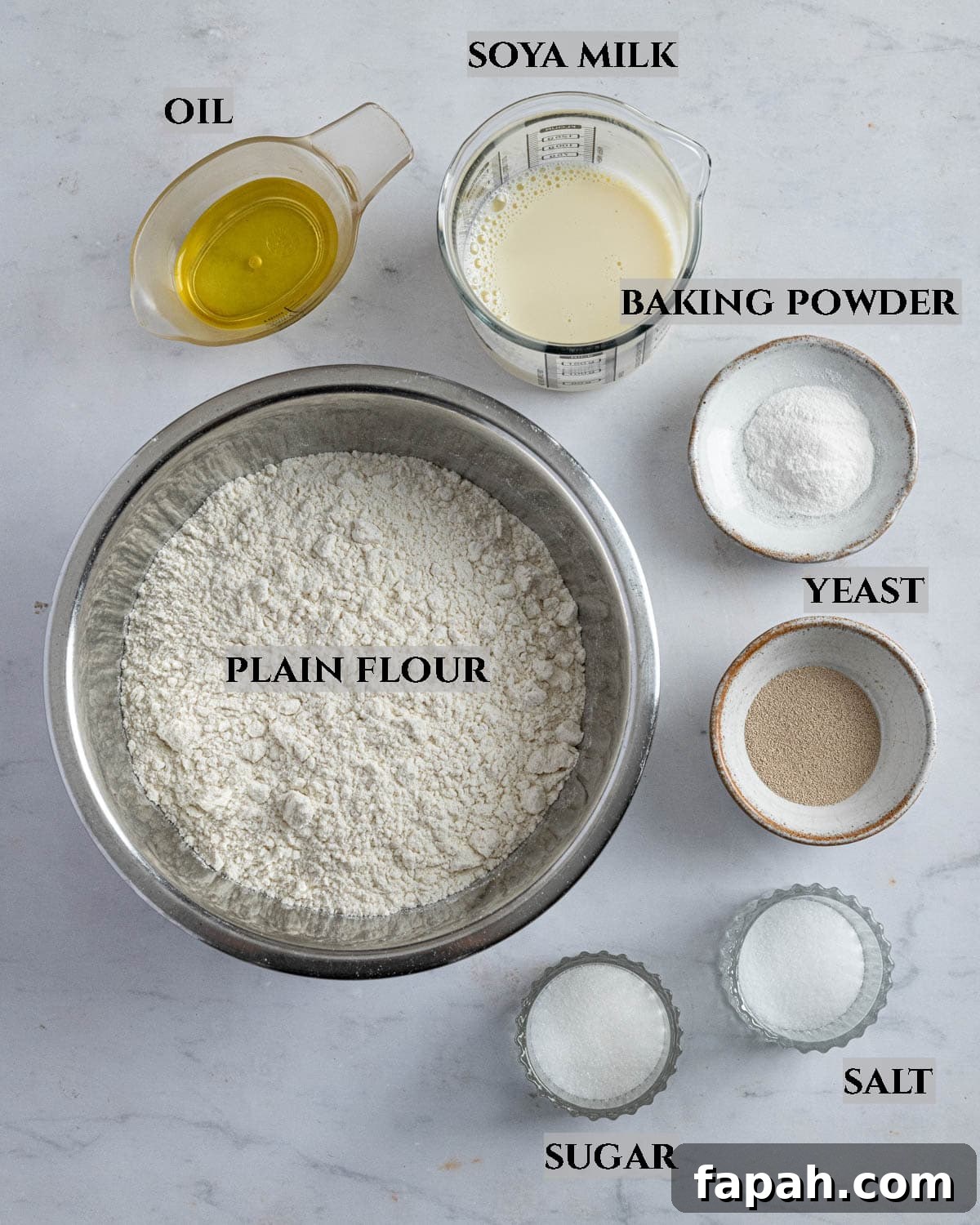
Plain flour: Unlike many bread recipes that use strong (bread) flour, bao buns are meant to be very soft and fluffy, so plain (all-purpose) flour gives the right tender crumb.
Yeast: Instant yeast makes the dough straightforward—add it directly to the flour without pre-activating.
Baking powder: Used alongside yeast to help create a light, airy texture.
Milk: Unsweetened non-dairy milk works well; soy milk is preferred for baking because of its higher protein content, which behaves more like dairy milk.
Oil: A small amount of neutral oil (or olive oil) keeps the buns soft. Extra oil is needed for brushing before shaping.
Sugar: A little caster or granulated sugar adds a faint sweetness that complements savory fillings.
Salt: Essential for flavor—do not skip it.
Equipment
You’ll need a steamer of some sort. A bamboo steamer is ideal because it reduces condensation on the buns and helps prevent sogginess. A metal steamer pan or insert also works well. If you can’t steam all the buns at once, steam in batches and keep the remaining shaped buns refrigerated so they don’t over-proof.
How To Make Bao Buns
(Full measurements and printable instructions are in the recipe card below)
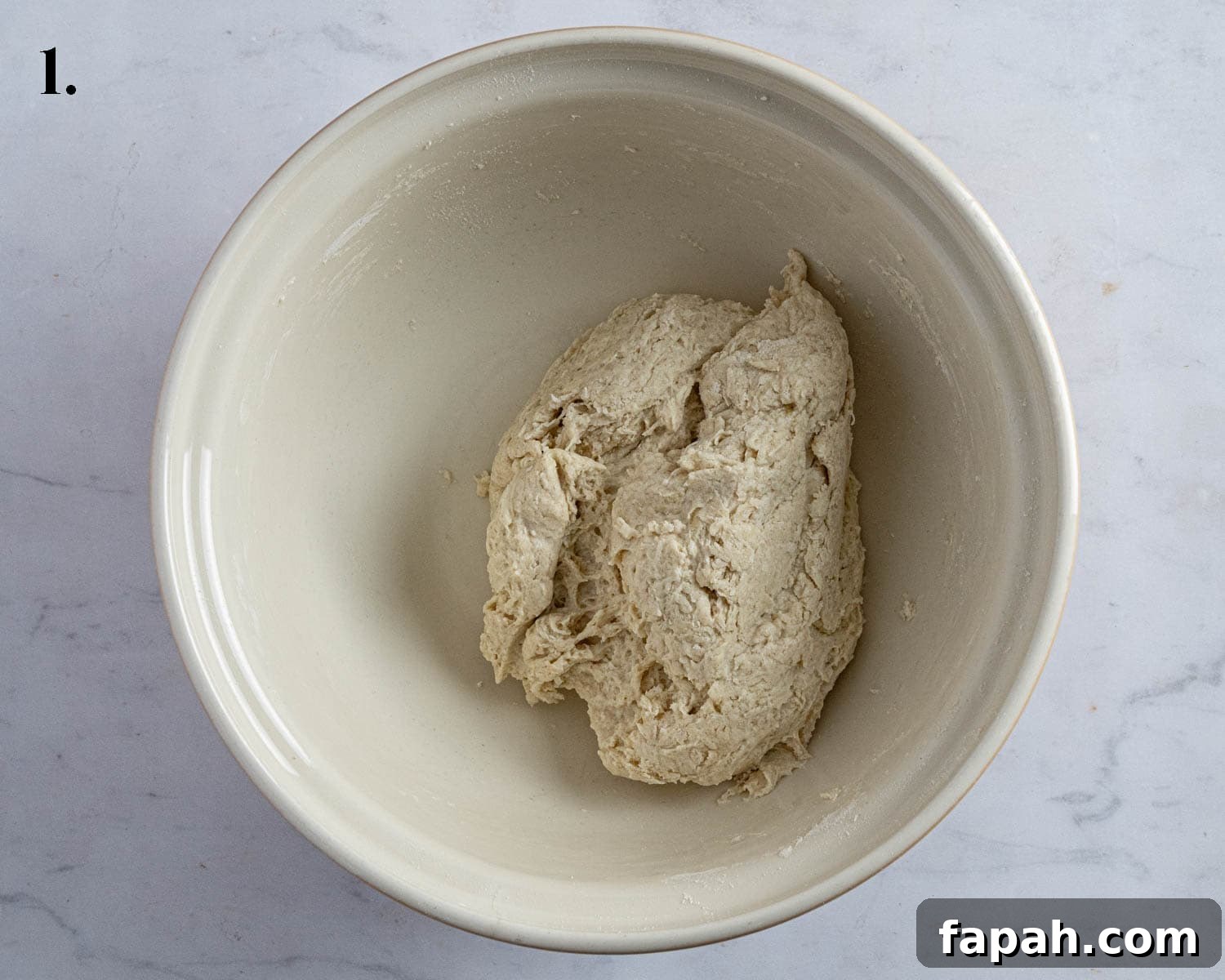
Step 1: Combine the flour, instant yeast, baking powder, sugar and salt in a large bowl. Stir in the non-dairy milk, warm water and oil to form a rough dough.
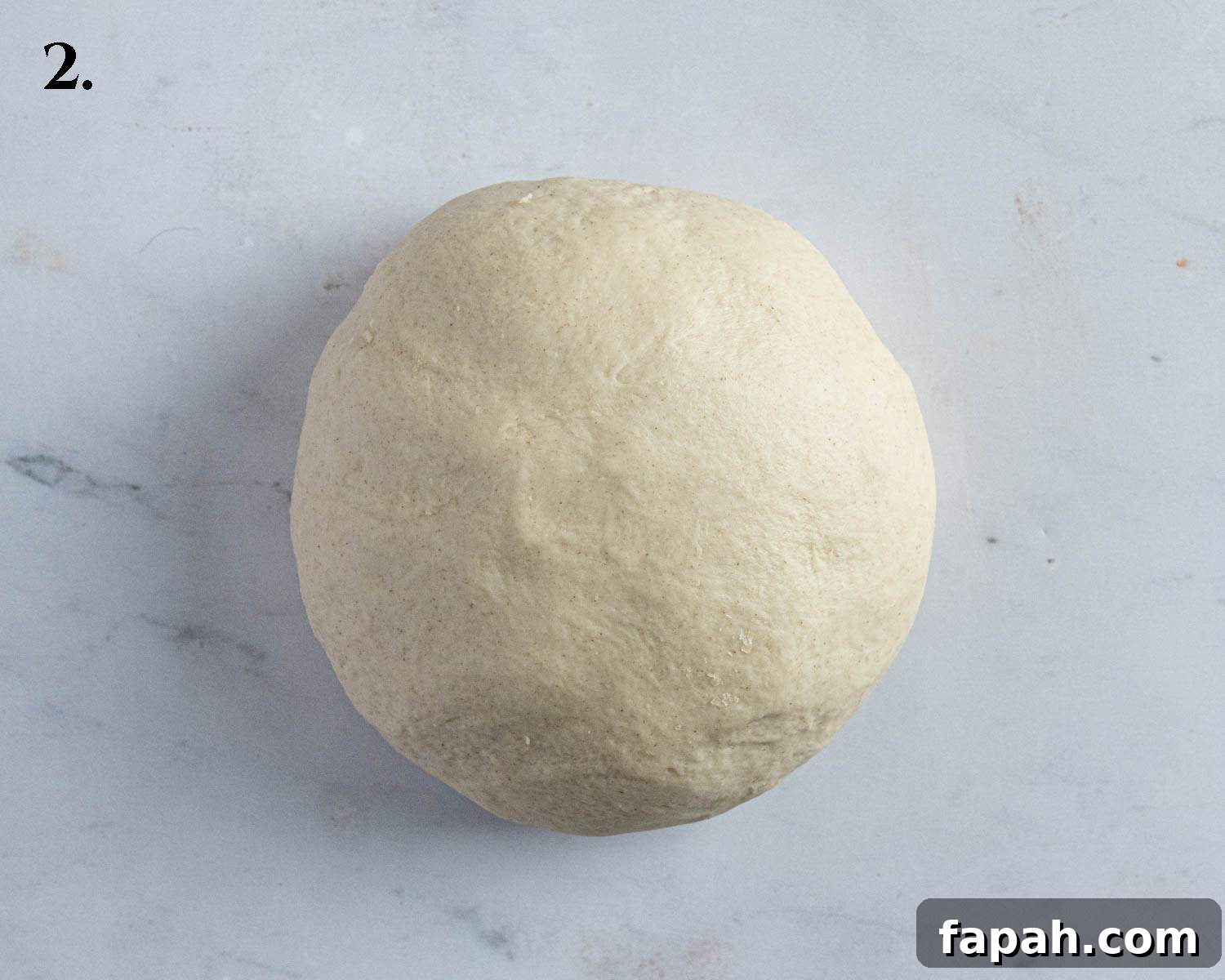
Step 2: Knead the dough for about 10 minutes until it’s smooth, elastic and slightly tacky. Add a spoonful of flour only if the dough is excessively sticky—too much flour makes dry buns.
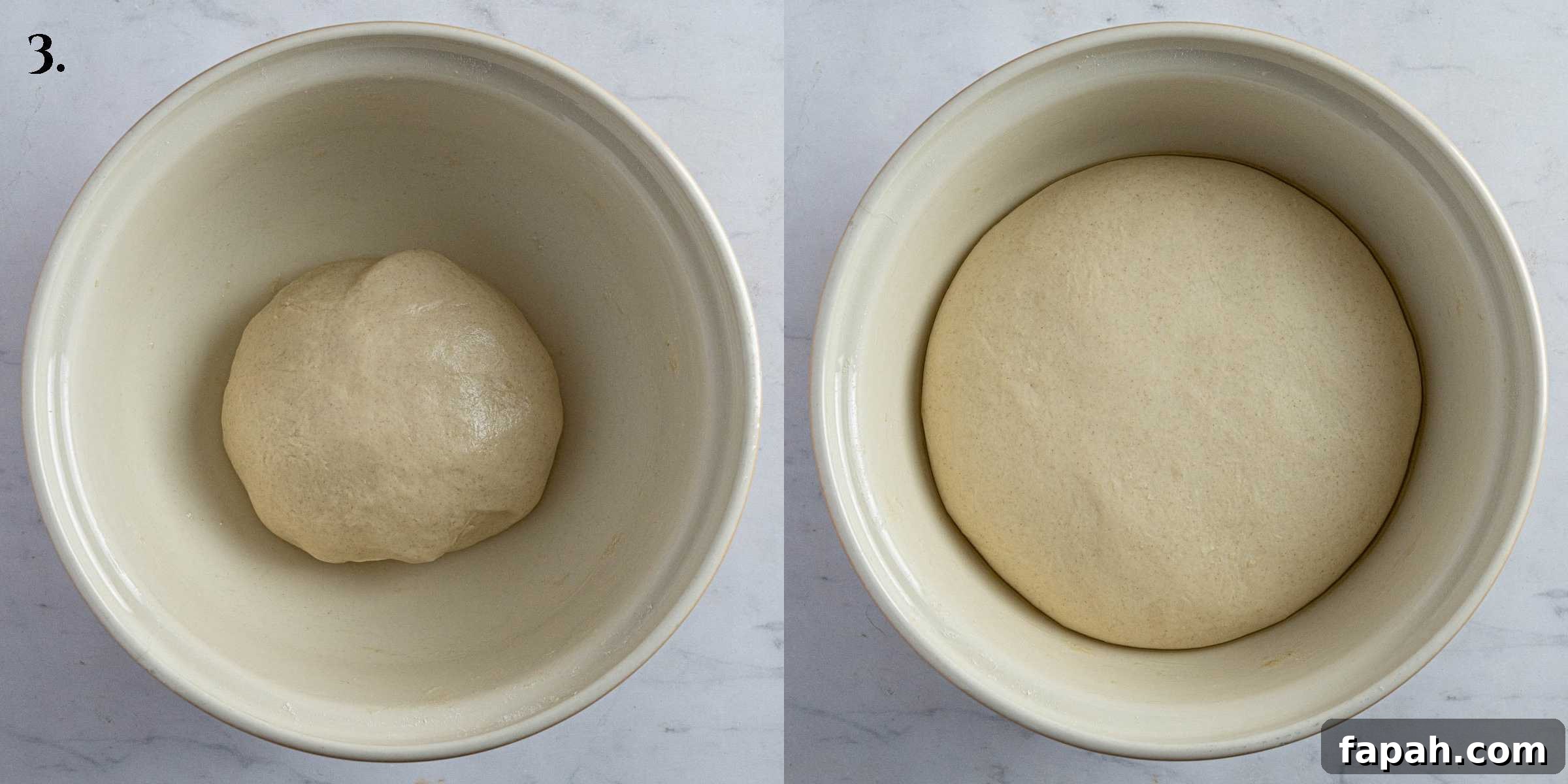
Step 3: Place the dough in a lightly oiled bowl, cover and leave to rise until doubled in size, about 1 hour depending on room temperature.
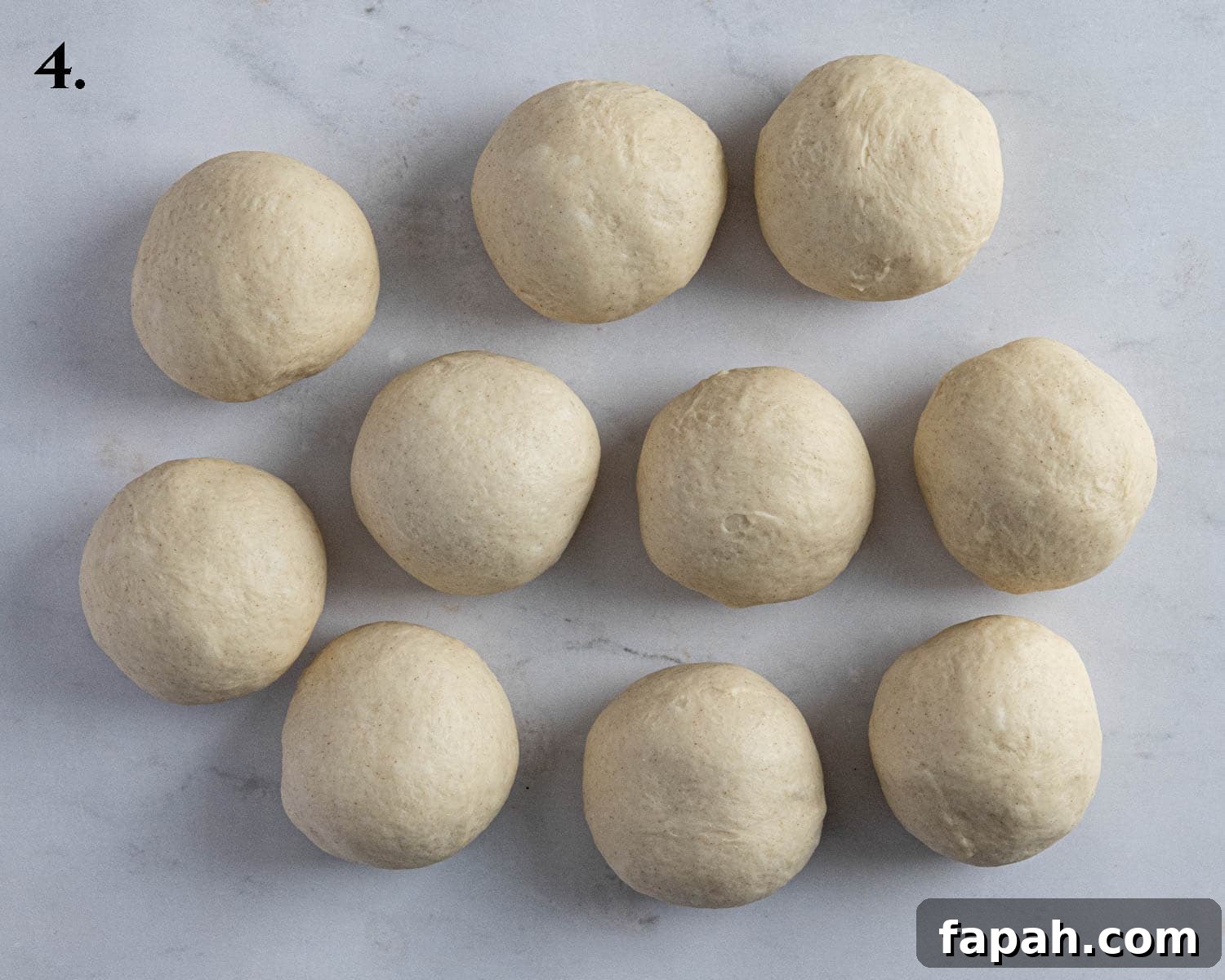
Step 4: Punch down the risen dough, knead briefly and divide into 10 equal portions using a scale for accuracy. Shape each portion into a smooth ball.
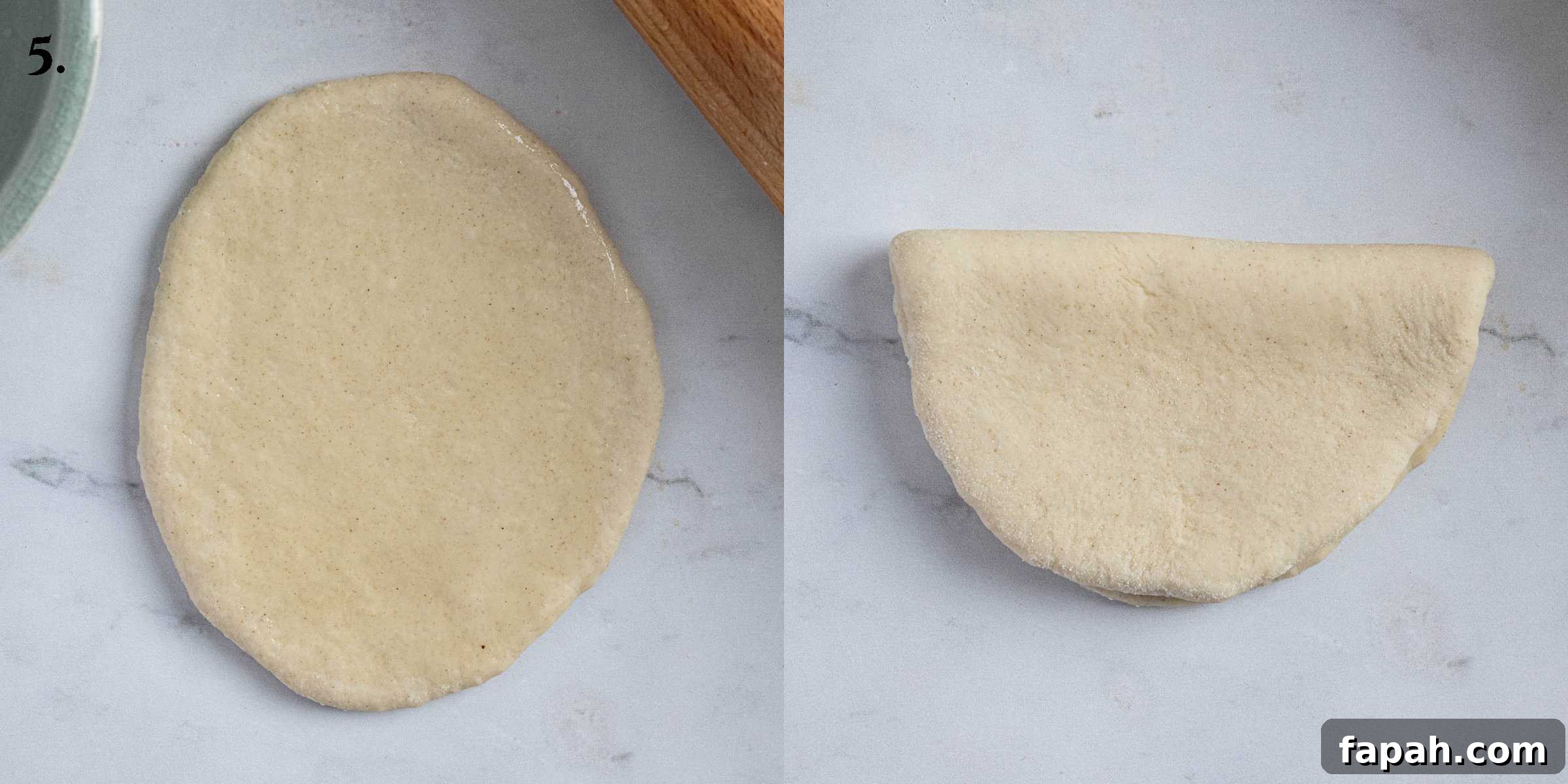
Step 5: On a lightly floured surface, roll each ball into an oval about 9 x 12 cm (roughly ½ cm thick). Brush lightly with oil and fold in half to form the lotus leaf semicircle. Repeat for all pieces.
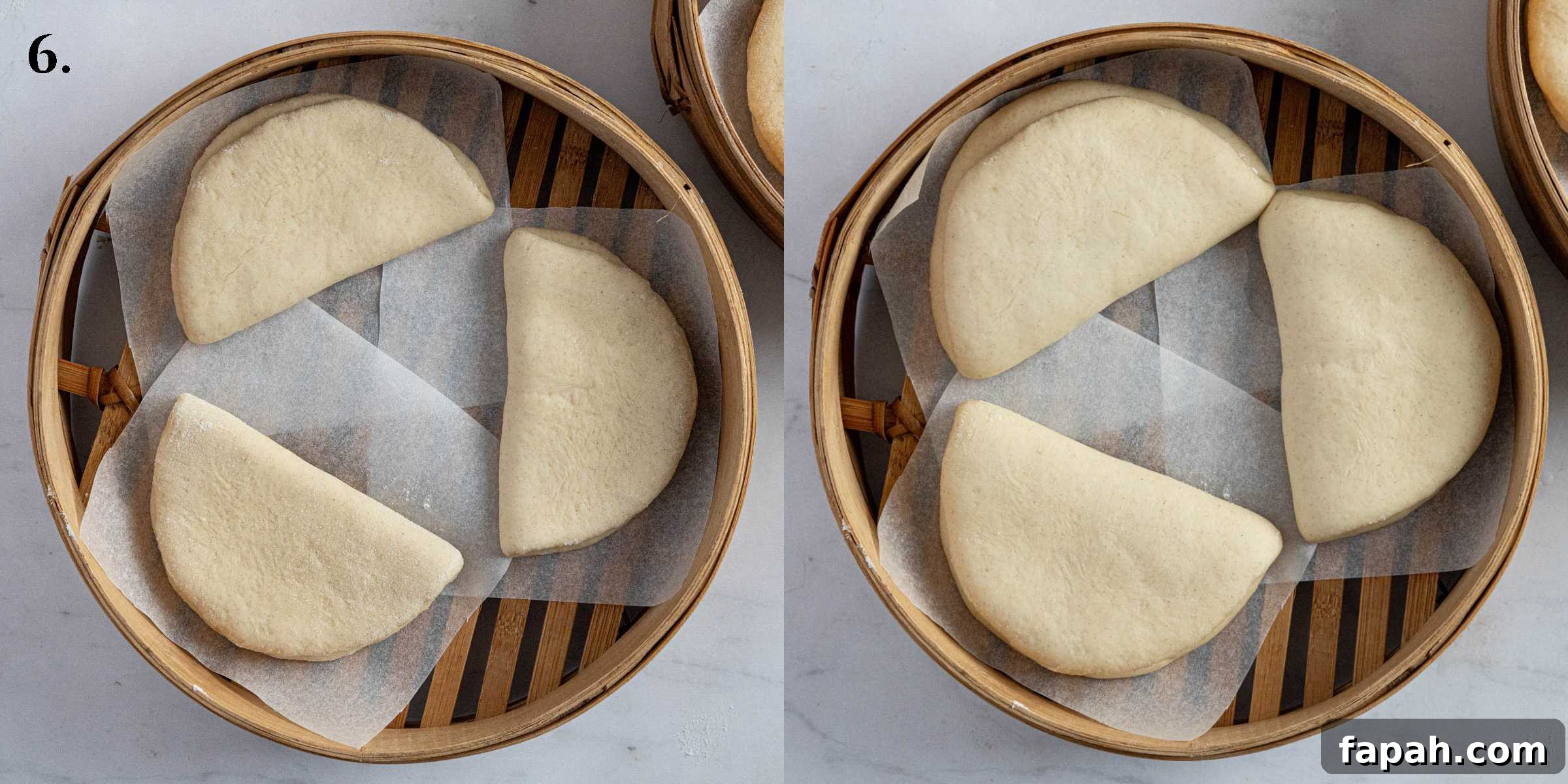
Step 6: Put each folded bao on a square of baking paper and arrange them in the steamer with room between each bun. Cover and let rise again for 30–40 minutes until puffy.
Step 7: Set the steamer over a wok or large frying pan and add cold water to the pan so it won’t touch the buns. Put the lid on the steamer.
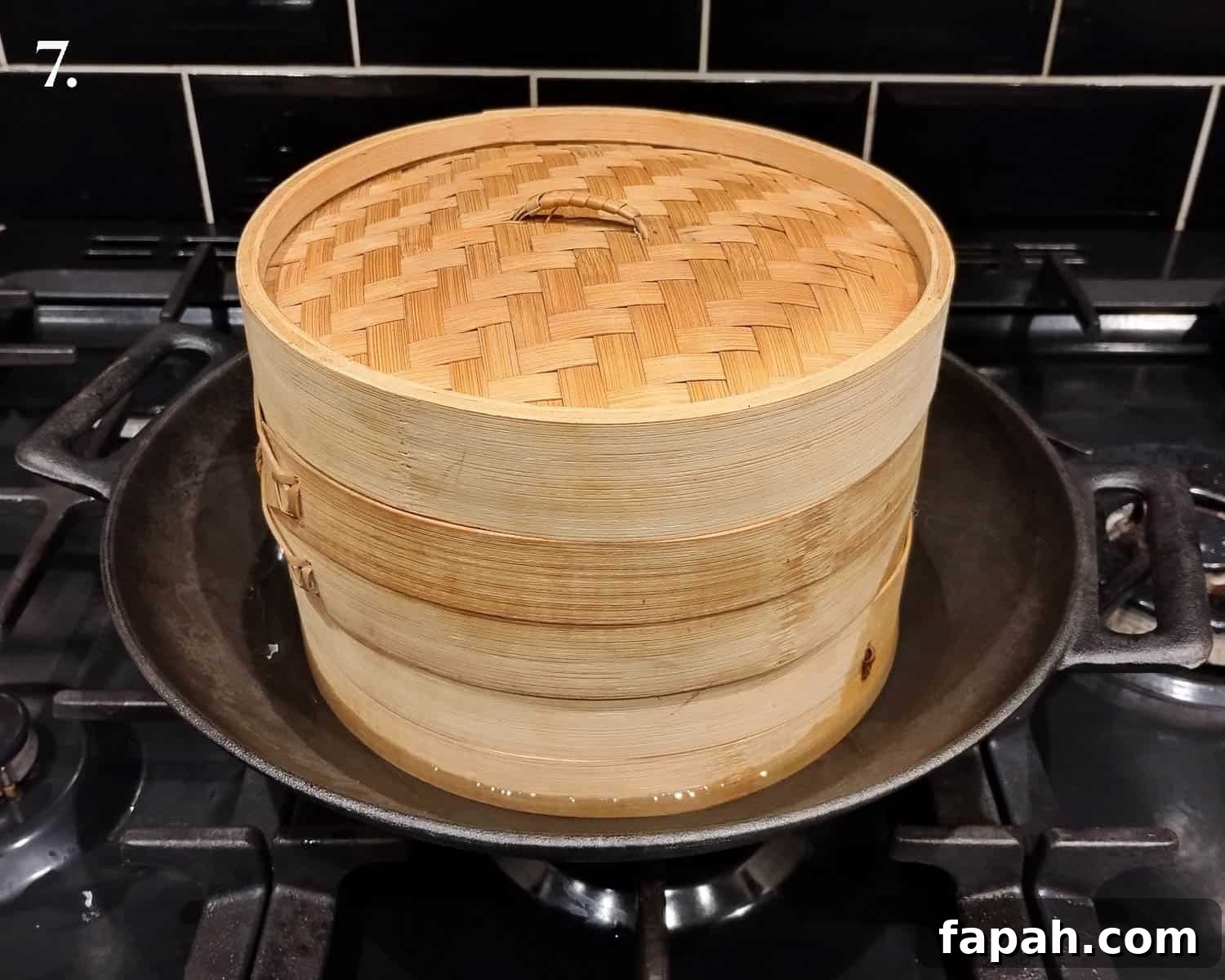
Step 8: Bring the water to a boil over high heat, then reduce to medium and steam the buns for 10 minutes. After steaming, remove the pan from the heat and let the buns rest for 5 minutes with the lid closed to prevent them from collapsing. They are now ready to serve.
Top Tips
Use metric weights and a digital scale for consistent results—cup measurements vary widely. Check that your yeast is fresh, as stale yeast can prevent proper rising. Flour absorption varies between brands and with humidity, so add extra flour sparingly; the dough should remain slightly tacky. Rising times depend on room temperature: warm days speed it up, cool days slow it down.
Do not pour boiling water into the pan; start with cold water and heat up with the buns in place so they come to temperature gradually. After steaming, keep the lid closed and allow the buns to rest five minutes to avoid deflation.
FAQs
No. A metal steamer pan or a steamer insert inside a large lidded pan will work. If you use a metal setup, place a tea towel or a couple of sheets of kitchen paper under the lid to catch condensation so it doesn’t drip onto the buns.
Yes. Cool the buns completely and freeze on the day you make them to retain freshness. Store in an airtight freezer bag or container. Defrost at room temperature and reheat briefly in a steamer or microwave before serving.
They’re best eaten the day they’re made unless frozen. Stored in an airtight container at room temperature, they will keep for a day or two. Reheat in a steamer for a couple of minutes or briefly in the microwave.
This recipe relies on gluten for structure, so it cannot be directly converted to gluten free without extensive changes. If you need gluten-free bao, use a recipe specifically developed for gluten-free flours.
If you try this recipe, please rate it or leave a comment and tag @domestic_gothess on Instagram with #domesticgothess to share how it went.
All images and content are copyright protected. If you share the recipe, please use the site’s share buttons and link back to the original post rather than reposting the full content.
How To Make Bao Buns (Vegan)
Equipment
- bamboo steamer, steamer pan or steamer insert
Ingredients
- 300 g (2 ½ cups) plain (all-purpose) flour
- 5 g (1 ½ teaspoons) instant yeast
- 1 teaspoon baking powder
- 2 teaspoons sugar
- 1 teaspoon salt
- 90 ml (6 tbsp) unsweetened non-dairy milk (I use soy)
- 90 ml (6 tbsp) warm water
- 1 Tablespoon neutral oil (plus extra for brushing)
Instructions
- Mix the flour, yeast, baking powder, sugar and salt in a large bowl or mixer. Stir in the milk, water and oil to form a rough dough.
- Knead for about 10 minutes until smooth and stretchy. The dough should be slightly sticky—add a spoonful of flour only if necessary.
- Place the dough in a lightly oiled bowl, cover and leave to rise until doubled in size, about 1 hour.
- Punch down the dough, knead briefly and divide into 10 equal pieces. Shape each piece into a smooth ball.
- Roll each ball into an oval (approx. 9 x 12 cm), brush lightly with oil and fold in half to form a semicircle.
- Place each bao on a square of baking paper and arrange in the steamer. Cover and let rise for 30–40 minutes until puffy.
- Place the steamer over a pan with cold water (water level below the buns). Cover and bring to the boil, then reduce to medium and steam for 10 minutes.
- Remove the pan from the heat without lifting the lid and rest for 5 minutes. Serve warm.
Notes
- See the main post for step-by-step photos and extra tips.
- Use metric weights for best results—scales give more consistent outcomes than cups.
- If you can’t steam all buns at once, keep the extras covered and refrigerated after they’ve risen to prevent over-proofing between batches.
- If using a metal steamer or insert, layer a tea towel or kitchen paper under the lid to stop condensation dripping onto the buns.