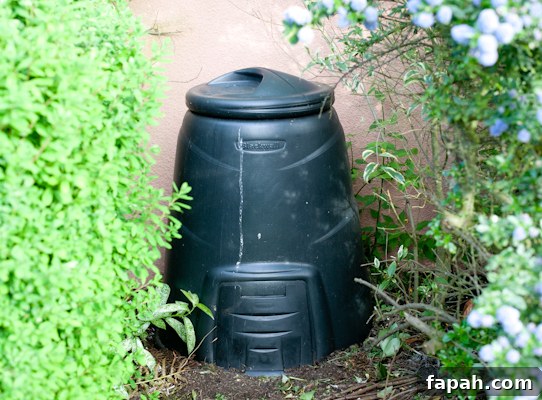
We’ve previously covered different methods for making compost and explained the basics of composting. Recently several readers asked how to get consistently good compost from a dalek-style plastic composter. After a few experiments and some adjustments over the years, I’ve refined a simple, reliable approach. Below are the practical steps that helped me produce rich compost from dalek bins.
Shred Material Before Adding
Particle size matters. Smaller pieces break down much faster than large, woody scraps. Soft kitchen waste and fresh cuttings decompose quickly, but twigs and thick prunings can take years if left whole. Reducing material size at the start gives your compost a big head start.
An electric garden shredder makes this easy and significantly speeds up composting. I run prunings and cuttings through a shredder before adding them to the dalek; it takes only minutes and noticeably shortens the overall composting time. If you don’t have a shredder, use secateurs or garden shears to cut woody material into small pieces.
I also shred cardboard and paper before composting and chop vegetable scraps into small pieces in the kitchen caddy. These small efforts make the decomposition process quicker and more even.
Avoid Too Much Green
A common issue is adding too much “green” material — fresh grass clippings, soft cuttings and vegetable waste. A pile dominated by greens can become slimy, smelly or slow to break down. To maintain balance and promote proper decomposition, add plenty of “browns,” which are carbon-rich materials like shredded woody prunings, dry leaves, cardboard or shredded paper.
You don’t need an exact formula; a rough 50:50 balance by volume works well for me, though greens often weigh more because they retain water. When I empty the kitchen caddy I add a few handfuls of shredded paper, and after mowing I mix in some dry leaves or shredded cardboard to keep the ratio healthy.
Watch Moisture Levels
Dalek composters are good at retaining heat and moisture thanks to their snug lids, but that can also mean they don’t get natural rainwater and may dry out. The microbes that break down organic matter need moisture to thrive. If the interior is too dry decomposition slows and you might even find ants, which indicates a dry environment.
The compost should feel slightly damp when you reach into the middle — moist but not dripping. If it’s dry, add a watering can of water and mix it in. Whenever you add dry materials (shredded paper, dry leaves, wood chips), give the heap a good soak. When you squeeze a handful from the center, it should feel moist and hold shape without water running out.
Once you achieve the right moisture in a dalek, the sealed design helps keep it stable, reducing the need for frequent watering.
Introduce More Oxygen
Aeration is another challenge with closed plastic composters. Traditional open heaps can be forked to introduce air, but a dalek is more confined. Regularly introducing oxygen speeds up decomposition and prevents anaerobic (smelly) conditions.
A simple tool that helps is a compost aerator or turning tool. These are like a giant corkscrew that you push into the pile and pull up to mix and aerate the center. I give each dalek a turn about once a week to redistribute material and keep oxygen levels healthy throughout the heap. If you don’t have a tool, remove the lid and stir the contents with a garden fork or similar implement whenever possible.
Conclusion
With these straightforward adjustments — shredding materials, balancing greens and browns, maintaining moisture and aerating regularly — dalek composters can produce excellent compost in a matter of months. While some dismiss plastic daleks as ineffective, the problem is usually technique rather than the bin itself. Daleks are compact and portable, making them an excellent option when space is limited. Follow these tips and you’ll be turning out quality homemade compost suitable for gardens and potting mixes.